Work Page 4-26
1930's B&D Tenor
Heirloom banjo, owned by the son of the original owner.
He was a very skilled musician who could play many instruments, but was trained in clarinet and soprano saxophone.
He was a very skilled musician who could play many instruments, but was trained in clarinet and soprano saxophone.
This particular example is not branded anywhere inside or out.
It is obviously in the style of the B&D Special, as can be seen by its design and embellishment factor.
My guess is always that any un-branded banjo that is made at a major factory was sold to mail order distributors and music stores that wanted to pay less than a branded instrument so they could sell to that market and compete with other economical offerings sold by the competition.
The Bacon Banjo Co. had many collaborations over the years.
This one was made after the flood in Groton CT that laid waste to the factory, and the remains were later sold to Gretsch who carried on the line until the 1960s.
It was made from some of the older parts that were saved and a few newer ones.
It does have the solid bar truss in the neck.
INITIAL PICS
*********************
It is obviously in the style of the B&D Special, as can be seen by its design and embellishment factor.
My guess is always that any un-branded banjo that is made at a major factory was sold to mail order distributors and music stores that wanted to pay less than a branded instrument so they could sell to that market and compete with other economical offerings sold by the competition.
The Bacon Banjo Co. had many collaborations over the years.
This one was made after the flood in Groton CT that laid waste to the factory, and the remains were later sold to Gretsch who carried on the line until the 1960s.
It was made from some of the older parts that were saved and a few newer ones.
It does have the solid bar truss in the neck.
INITIAL PICS
*********************
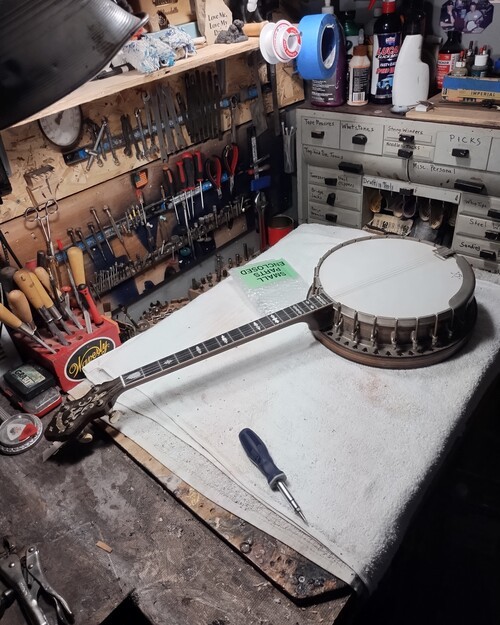
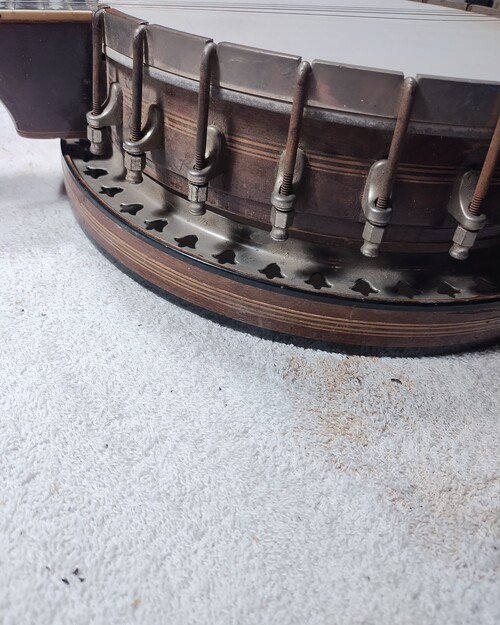
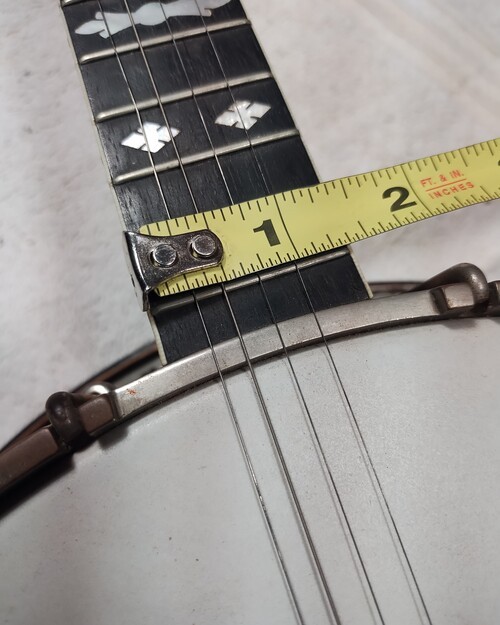
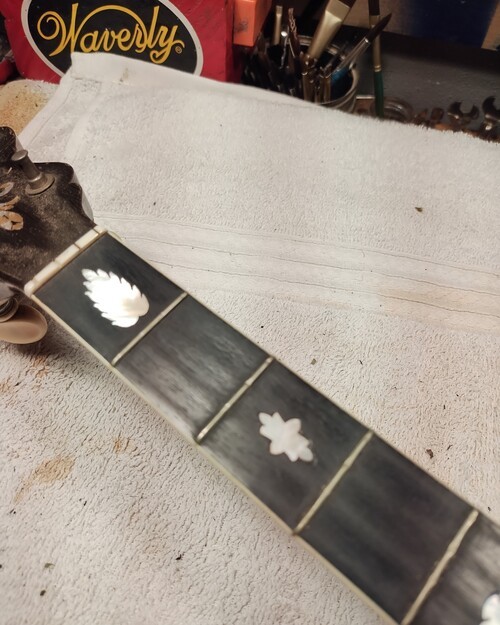
Well-played example.
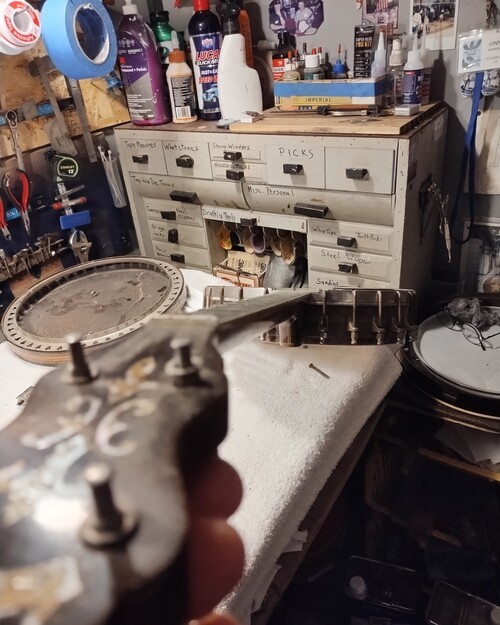
Slight uplift, will heat press.
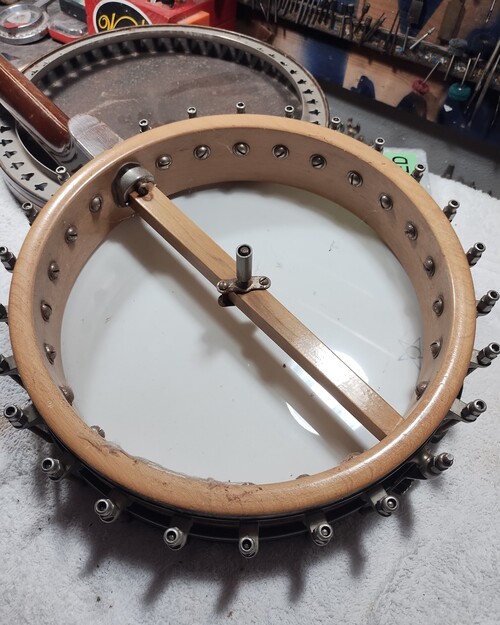
No makers marks inside.
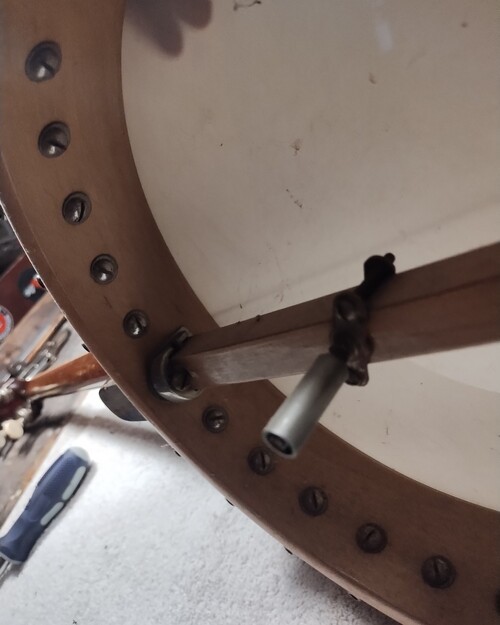
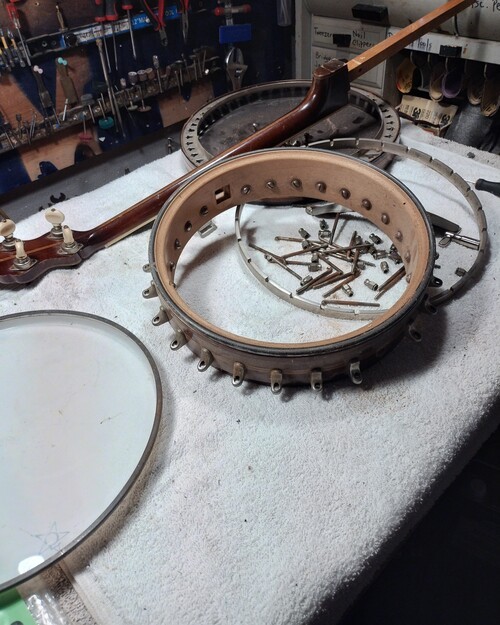
Simple 1/8" head bearing in a turned groove.
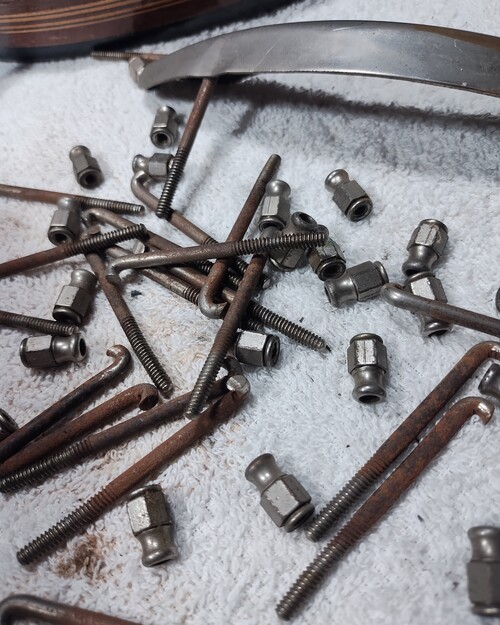
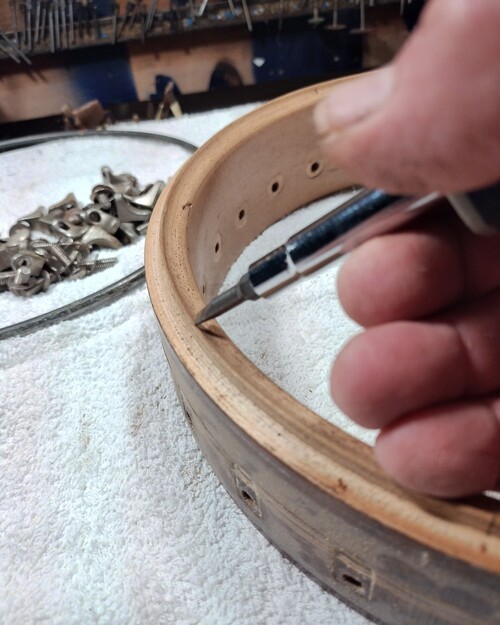
Excellent turning work from the original lathe operator.
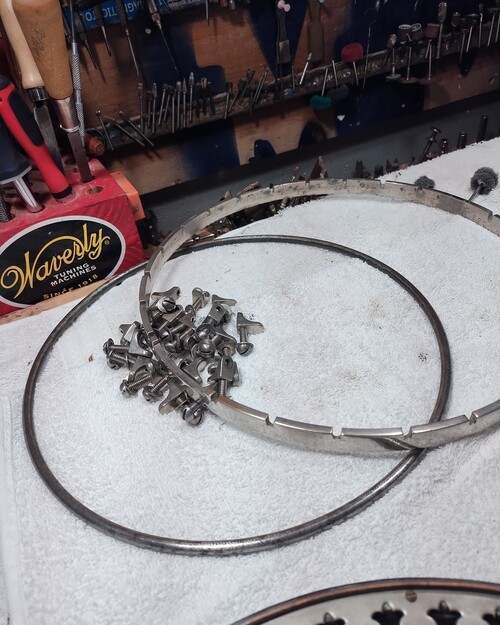
Now for the hooks.
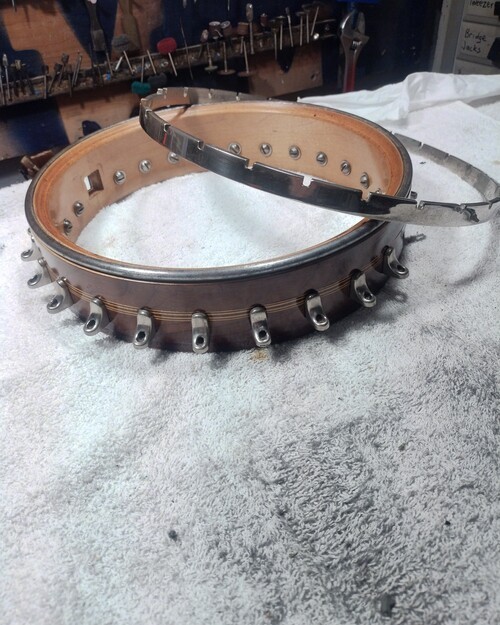
Rim finish completed, installing hardware.
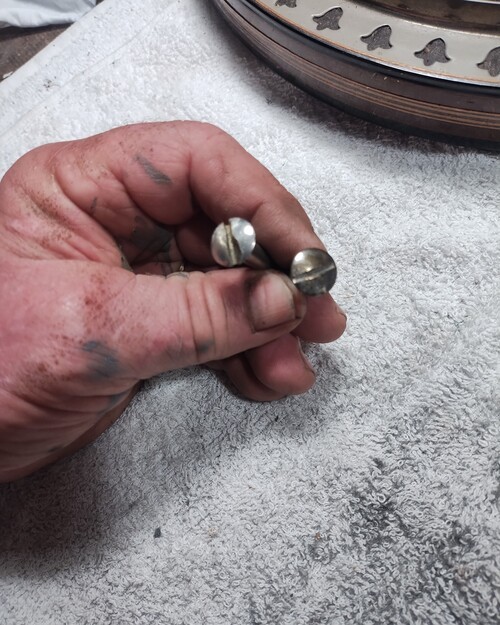
I will swap the resonmator screw for a better one.
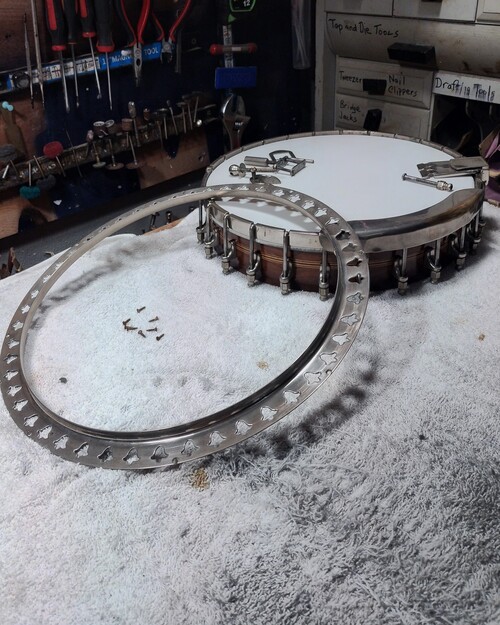
Flange cleaned, it will get all new mounting screws.
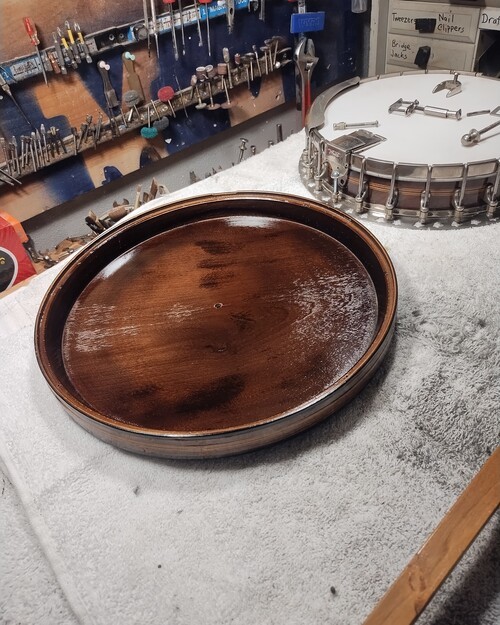
Fresh finish inside resonator.
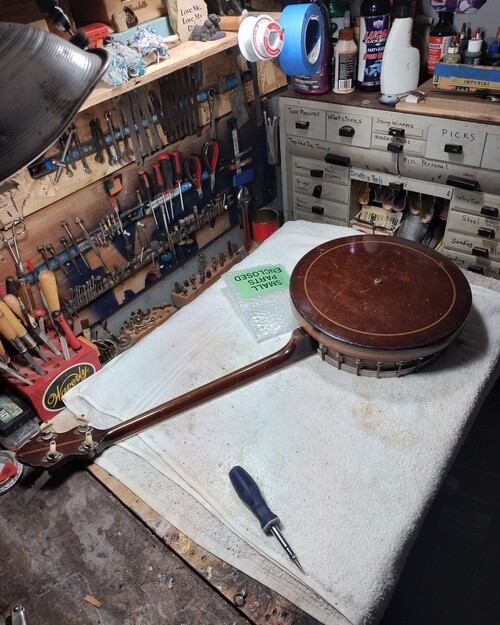

Fairly slim neck.
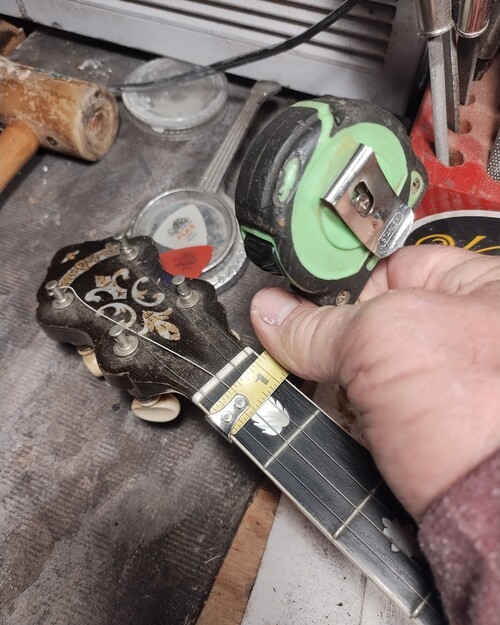
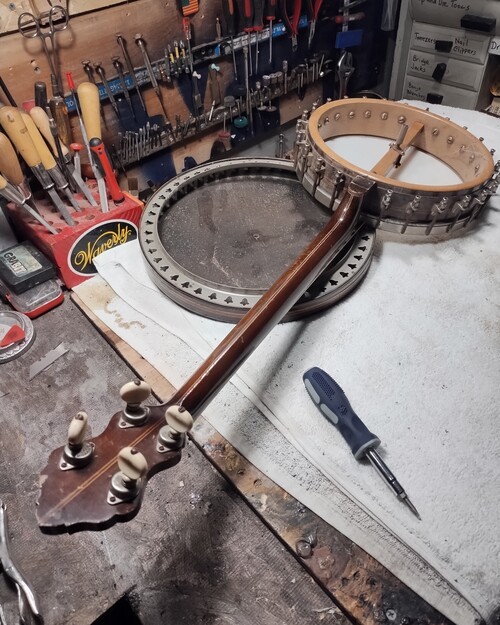
Grover 2:1 pegs.
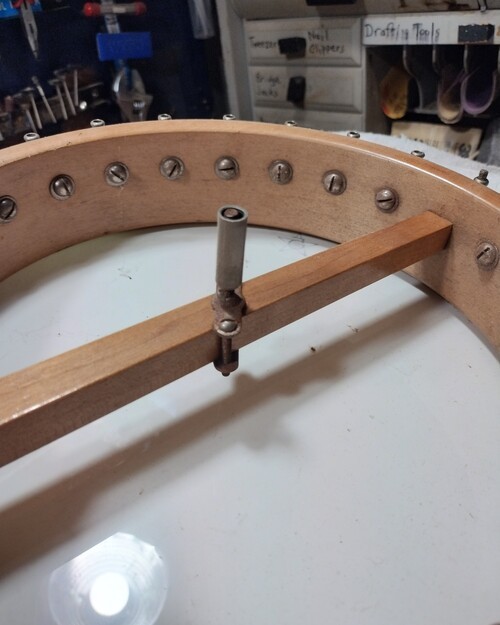
That collar keeps the resonator from caving in.
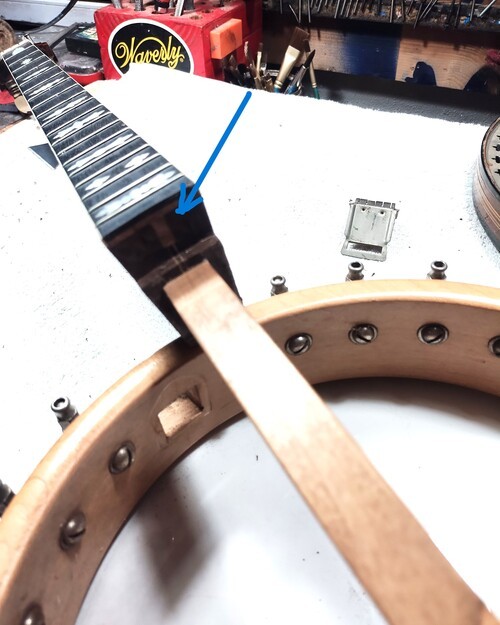
That filler stick hides the end of the bar truss.
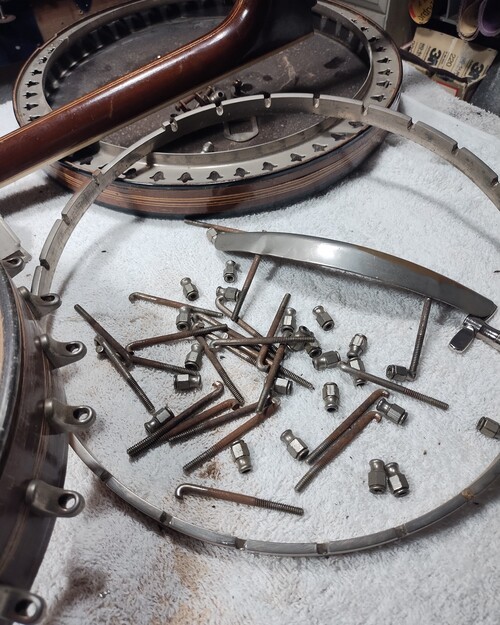
A lot of patina on the hooks.
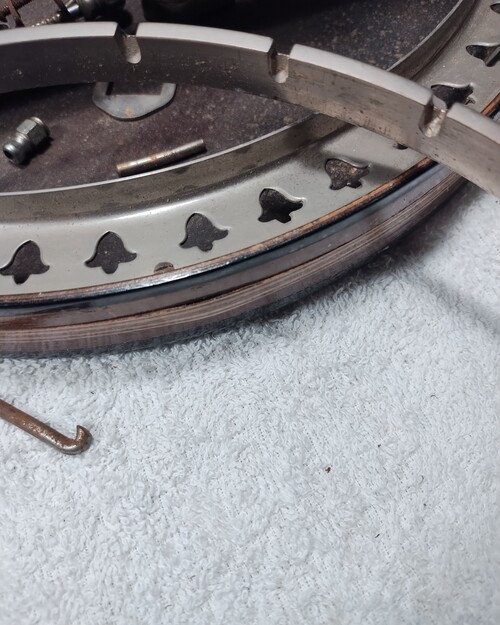
Some de-laminations on the sidewall marquetry.
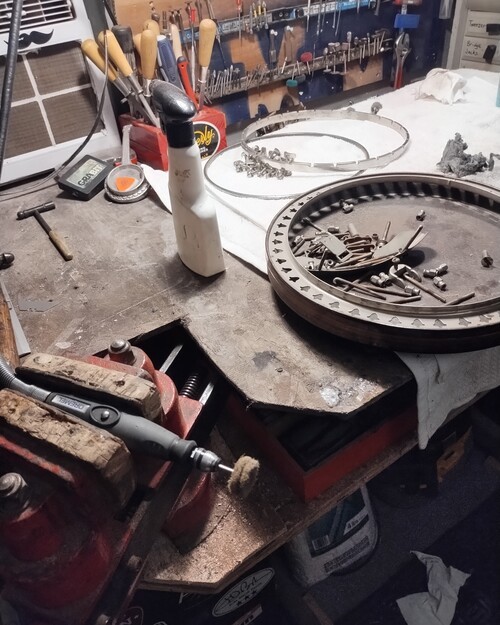
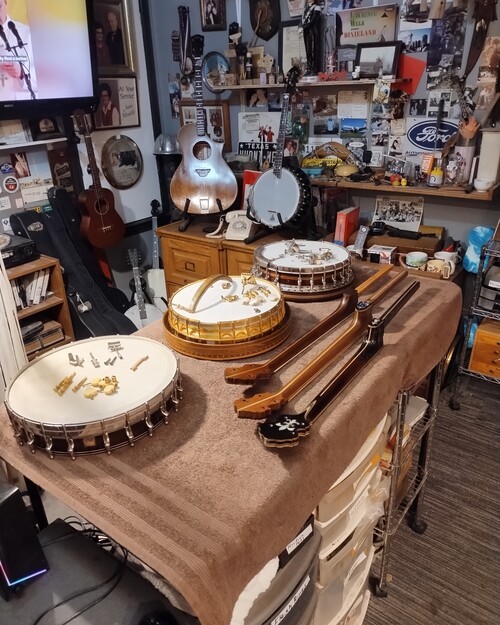
Cleaning hardware.
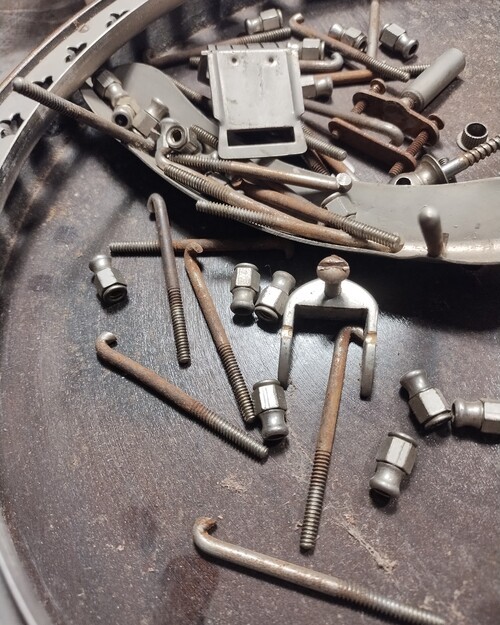
I will wire wheel them, and them steel wool.
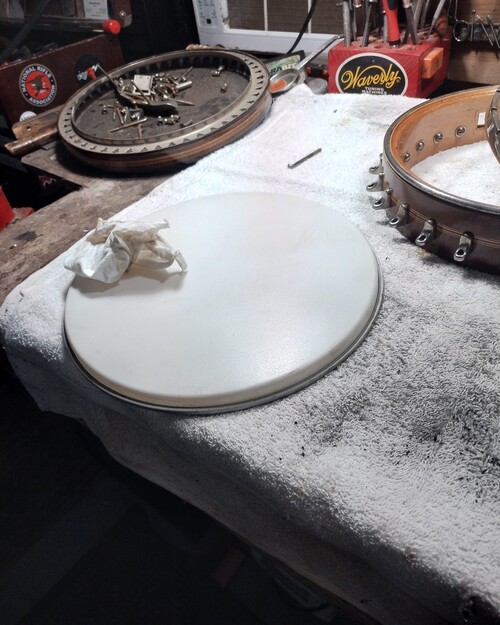
Will re-use this 5 star head, i cleaned it, it is in VGC.
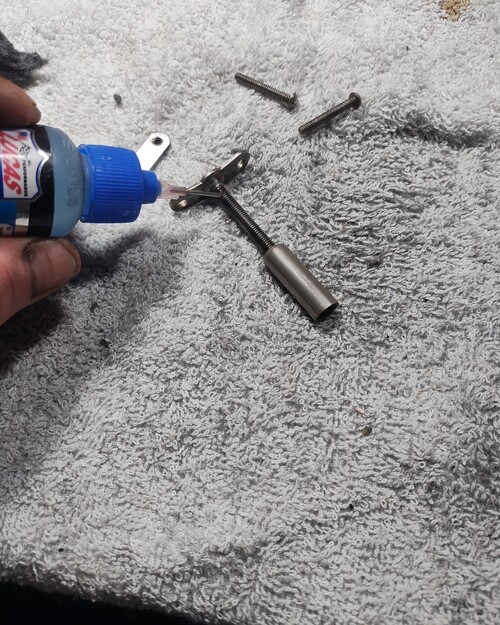
Attaching hardware cleaned and oiled.
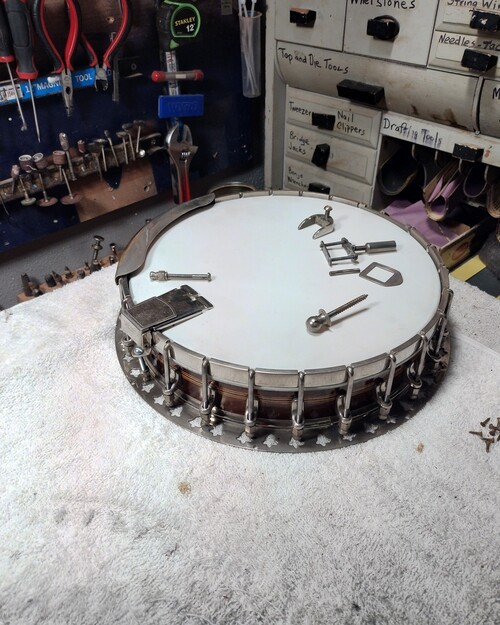
Found a nice Presto to go onto it.
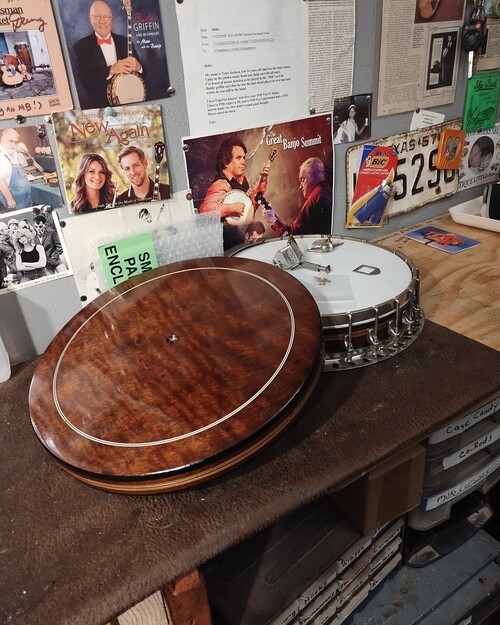
Side marquetry repaired, look at that flamed Walnut with new nitro.
NECK WORK
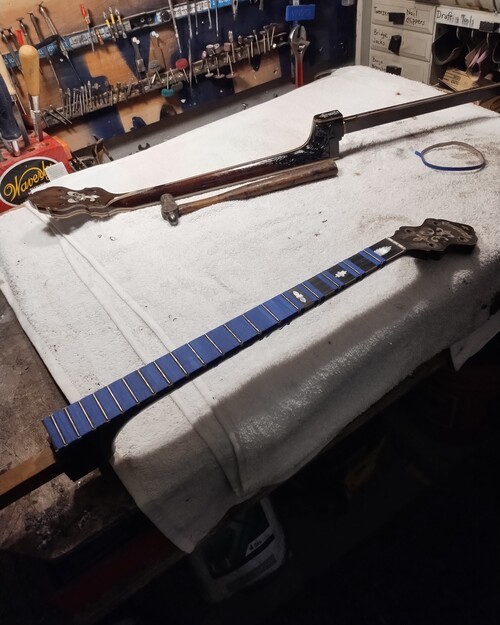
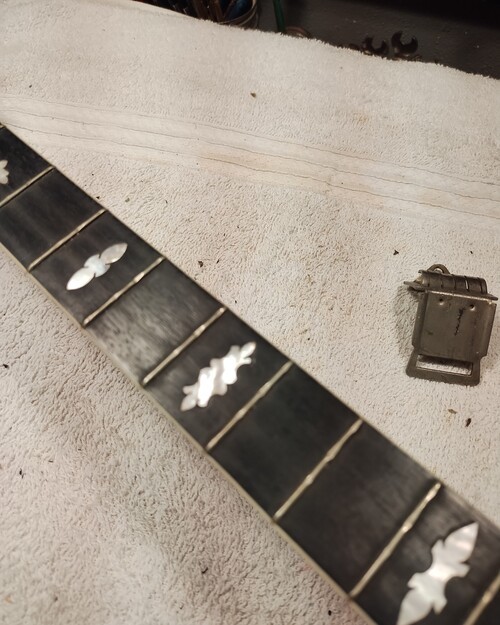
Ready to pull frets.
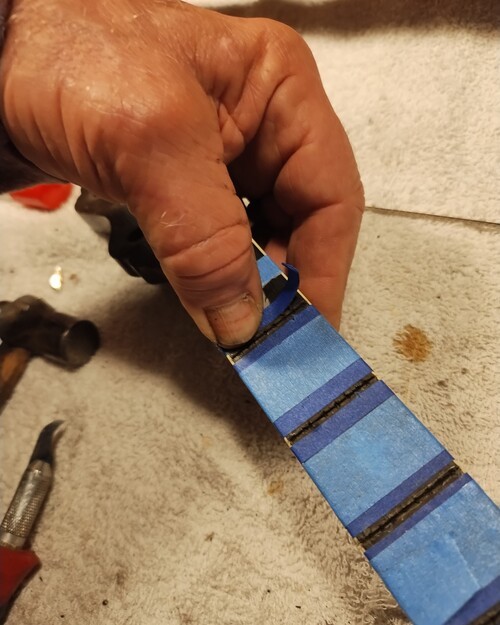
The tape remembers where it goes, press it back in.
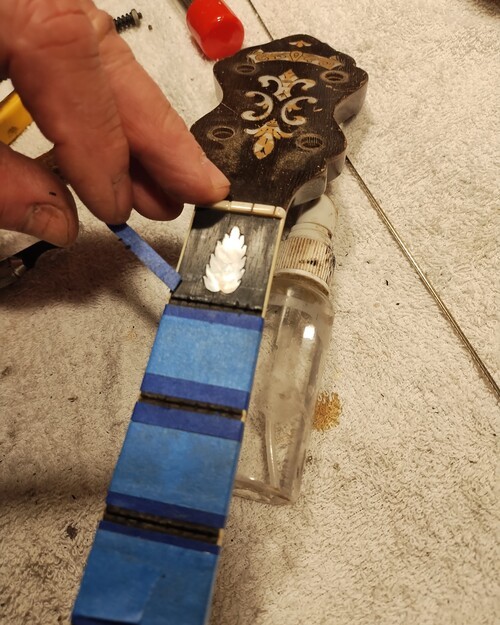
The rest will come out in the leveling.
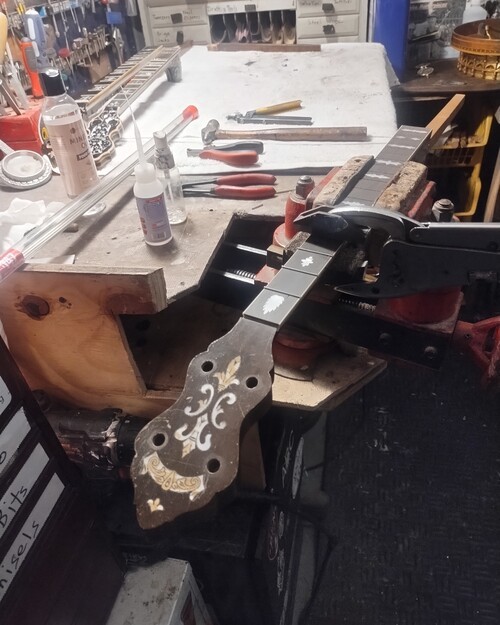
Compression fretting with 147 Stew Mac wire.
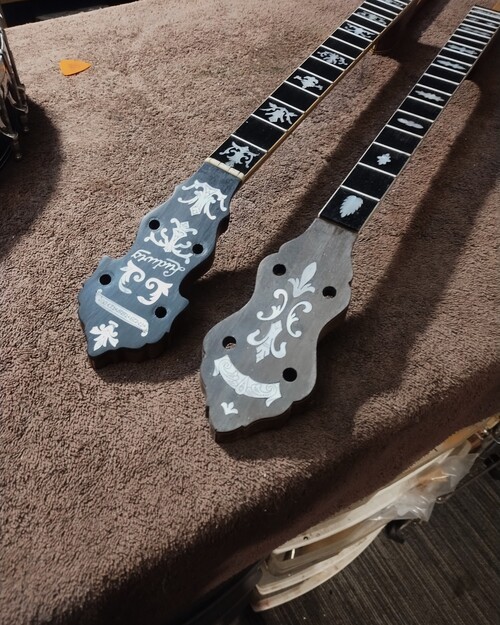
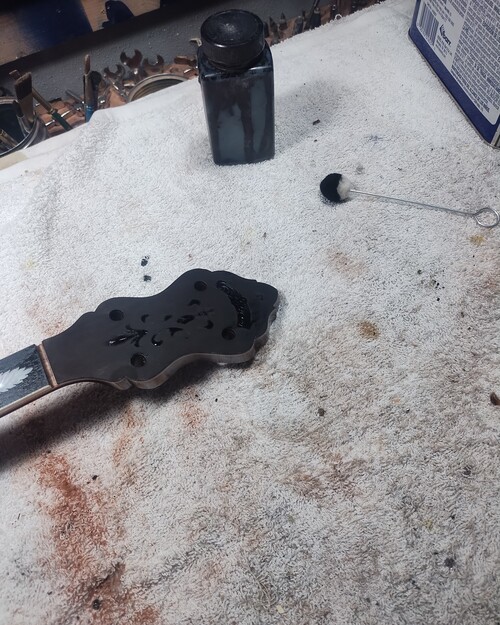
Pegheads dye applied.
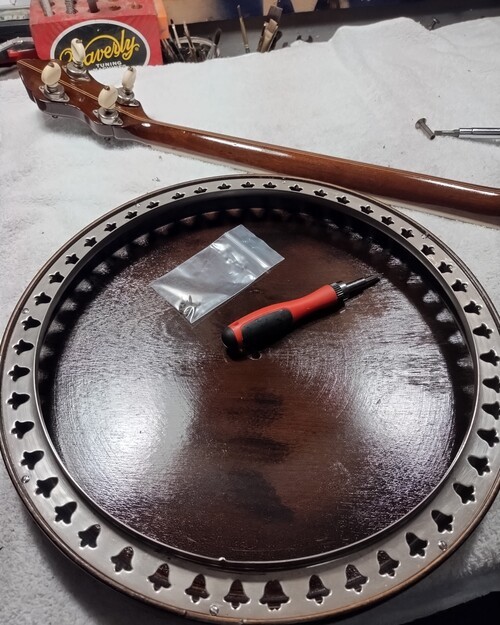
New screws for the flange.
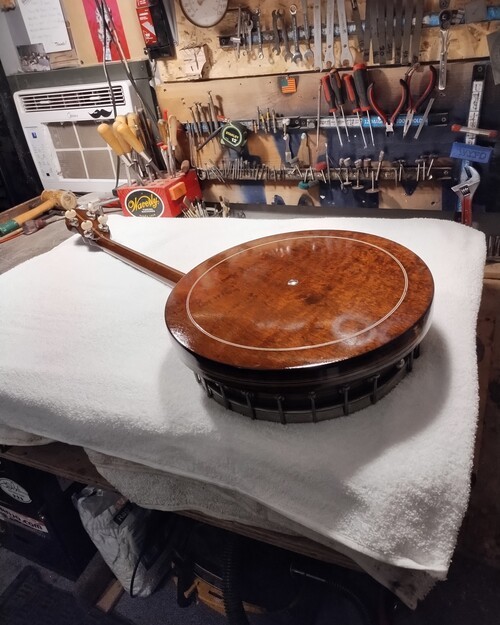
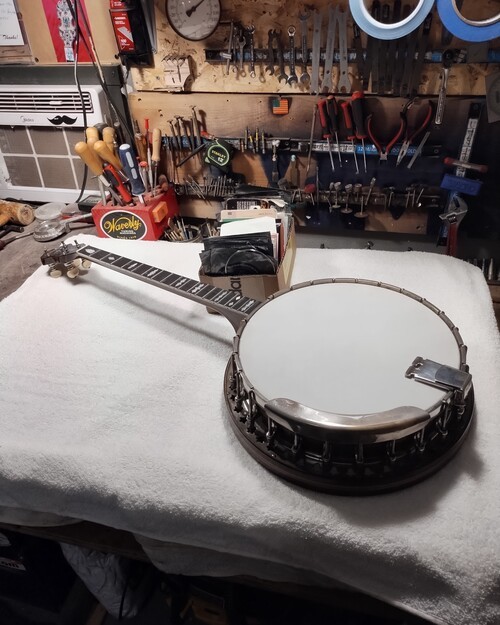
Will tune it to CGDA.
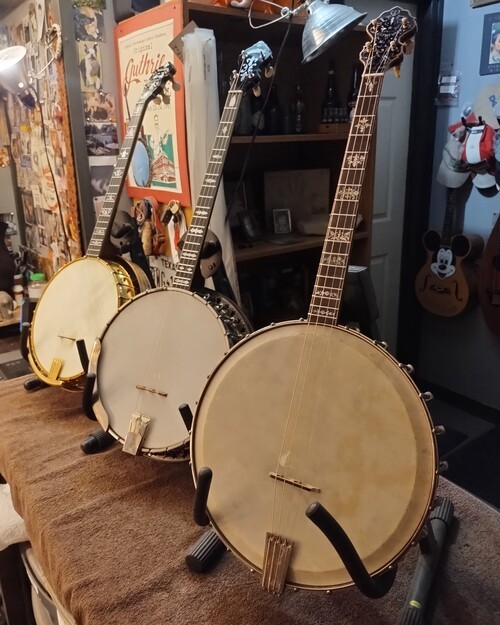
Center stage.
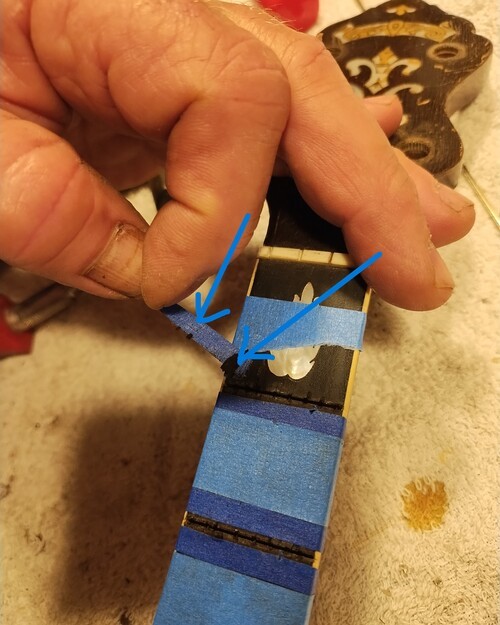
The big chips matter, the small ones do not.
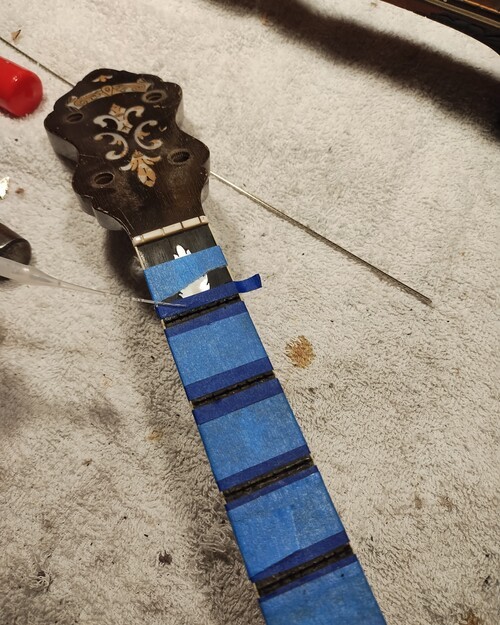
Some thin CA to wick in under it, do not get it in the slots.
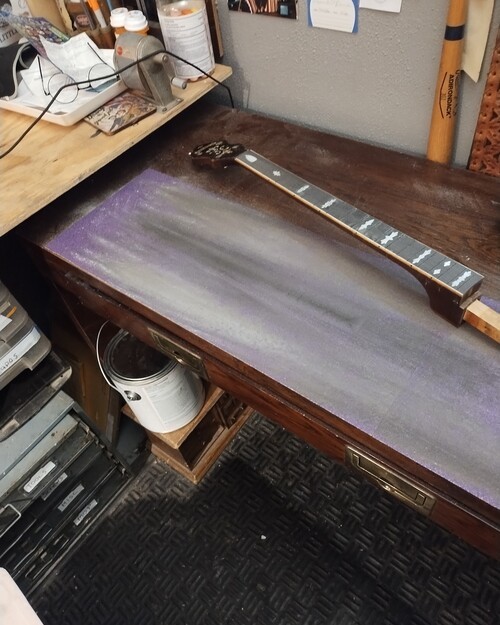
Slight leveling is all it needed.
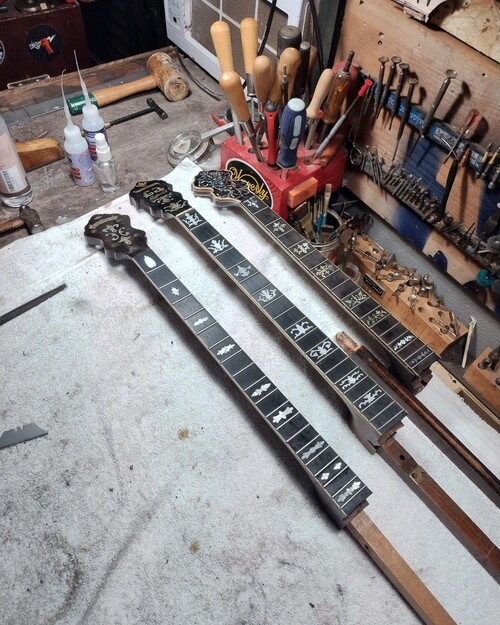
Stripped and ready for finish.
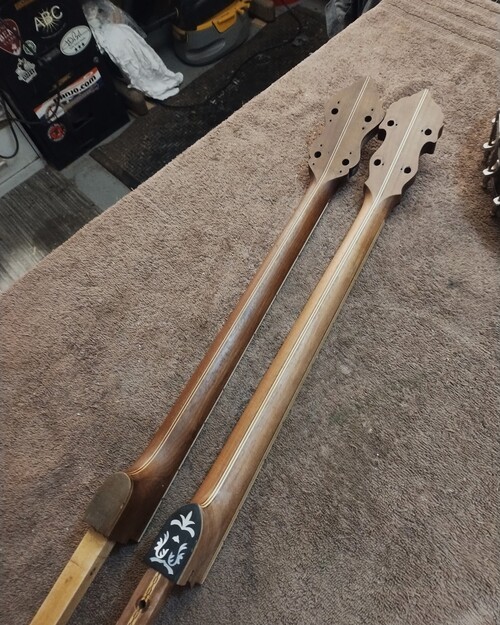
Taking on clear nitro.
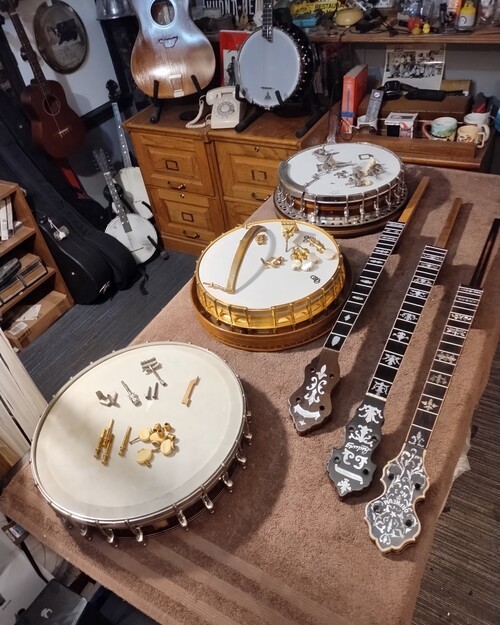
Next I will dye the pear wood headstock overlay.
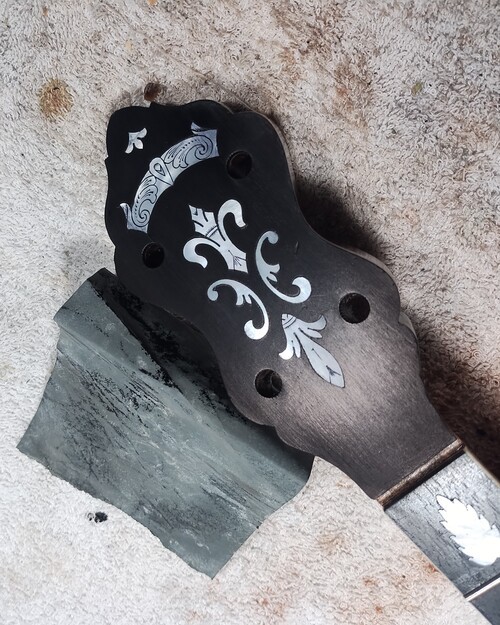
2000 grit to remove it from the MOP
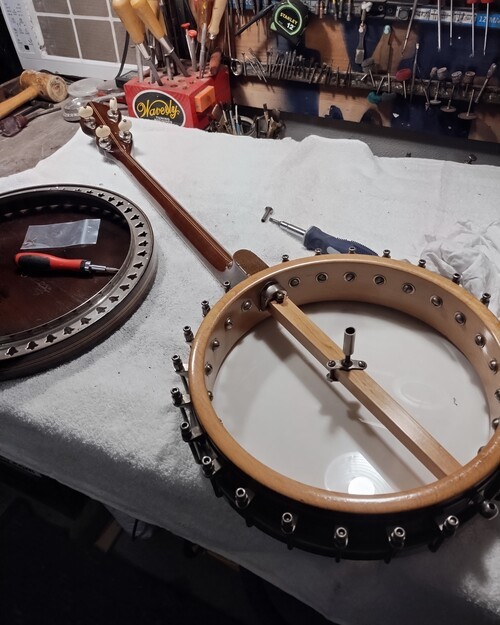
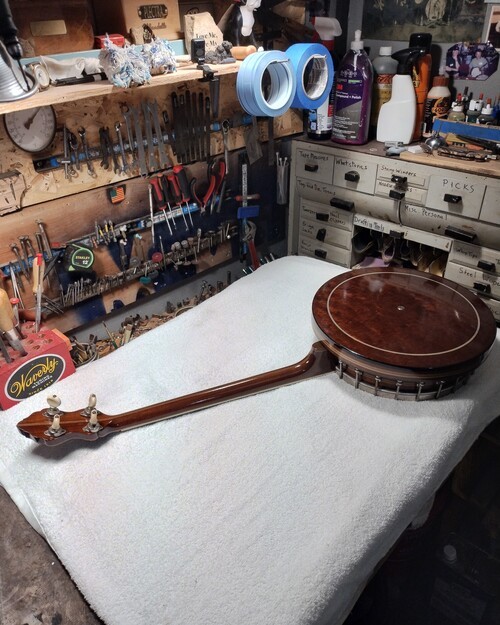
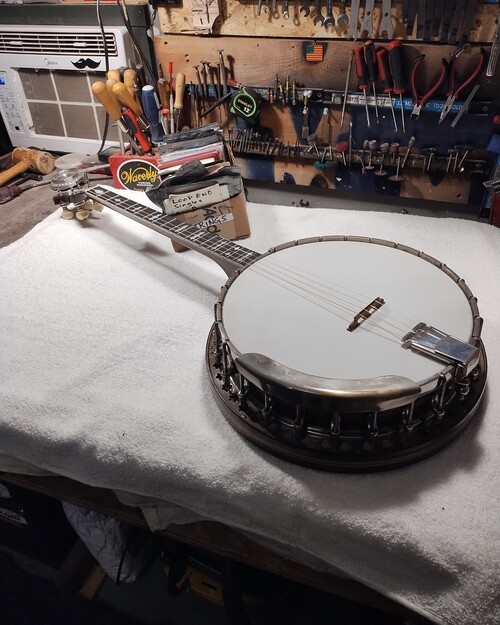
Tuned to pitch, settling in for final adjustments.
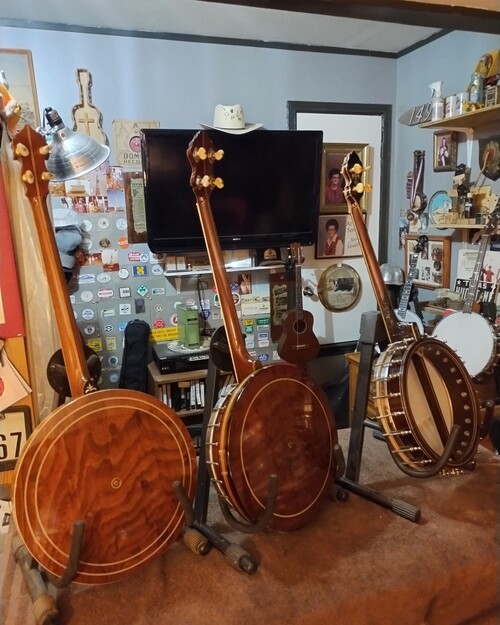
Thanks for looking and sharing.
VM
VM