Work Page 6-23
Hunter Burgamy's
1920s B&D Silver Bell
Roy Smeck Stage Model No.3
19 fret tenor
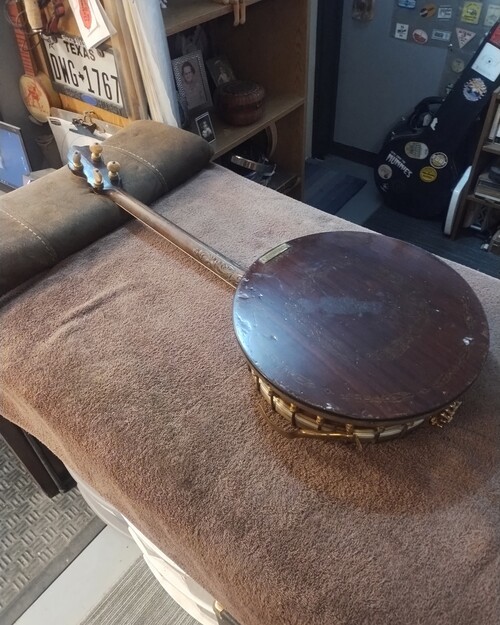
On these models the wood is advertised as rosewood but it was really African Padauk, otherwise called Vermillion
A distant cousin of rosewood.
Very hard, makes an orange sawdust.
Banjo was sublected over time, to both heat and high humidity.
Partial restoration (No re-plating)
Make playable
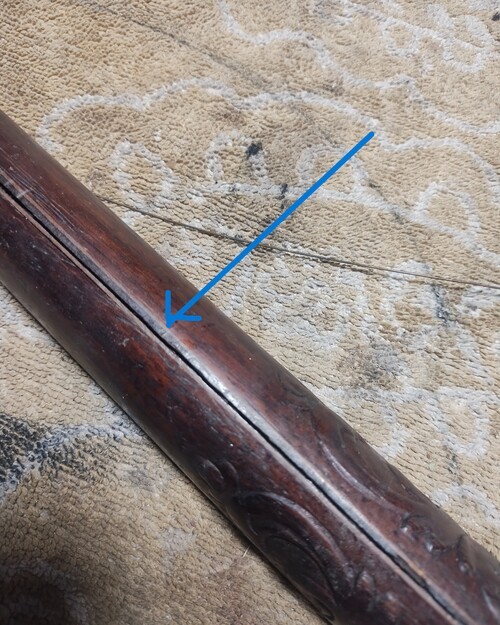
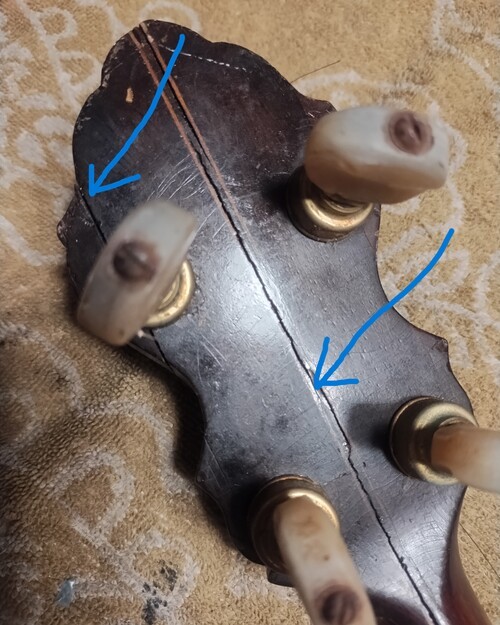
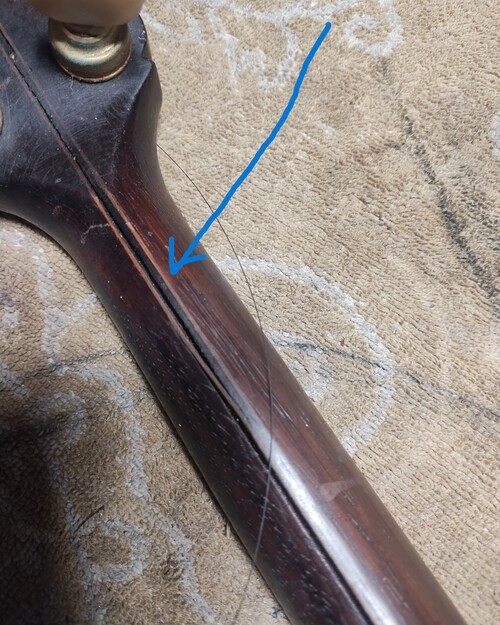
Repair damaged neck (Split in center laminates)
Inspect frets, replace as needed.
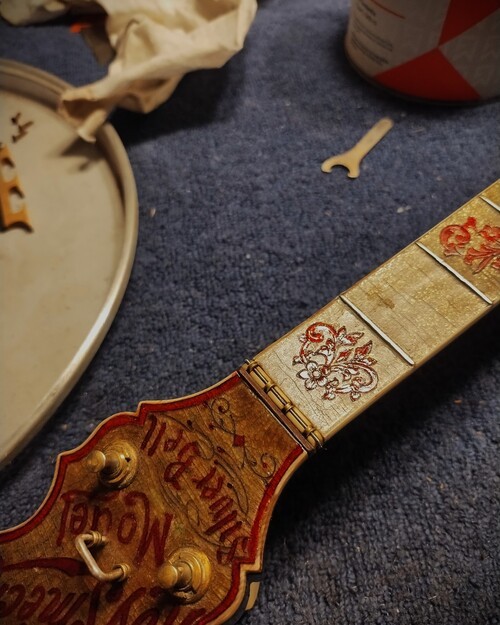
Clean fingerboard and repaint marker detail
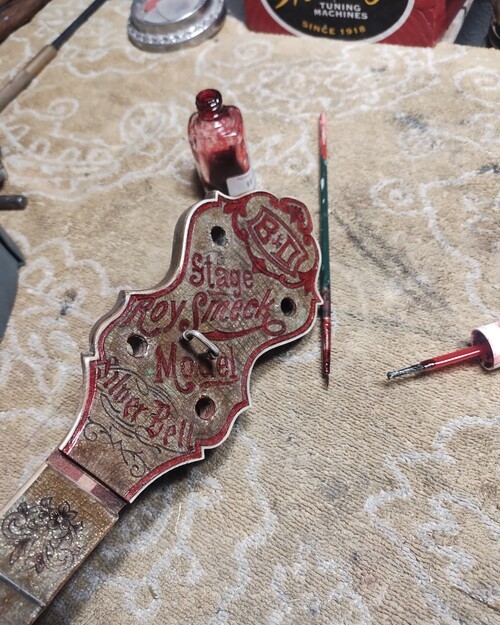
Clean peghead overlay and repaint detail
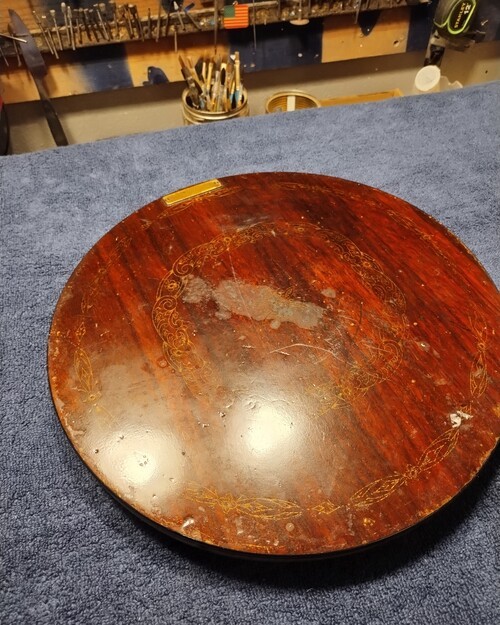
Strip and refinish all wood
Clean detritus and gold lacquer from all metal and polish leaving what plating still exists.
Remove heavy rust from tension hooks (plating all gone)
Coat all metal in Nikolas Gold metal lacquer.
19 fret tenor
On these models the wood is advertised as rosewood but it was really African Padauk, otherwise called Vermillion
A distant cousin of rosewood.
Very hard, makes an orange sawdust.
Banjo was sublected over time, to both heat and high humidity.
Partial restoration (No re-plating)
Make playable
Repair damaged neck (Split in center laminates)
Inspect frets, replace as needed.
Clean fingerboard and repaint marker detail
Clean peghead overlay and repaint detail
Strip and refinish all wood
Clean detritus and gold lacquer from all metal and polish leaving what plating still exists.
Remove heavy rust from tension hooks (plating all gone)
Coat all metal in Nikolas Gold metal lacquer.
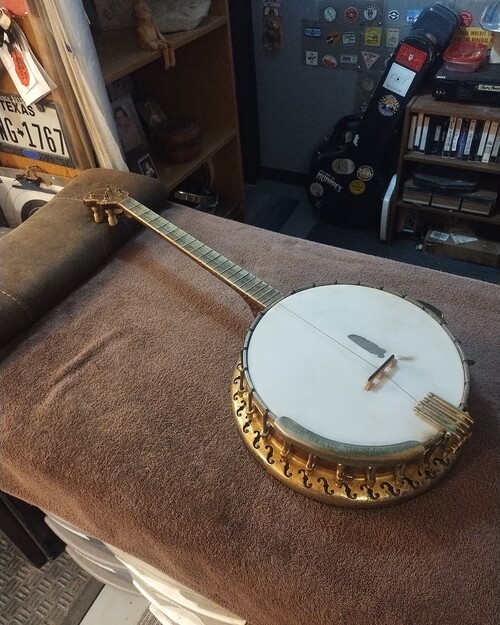
Earliest Smeck that used Goldaluer
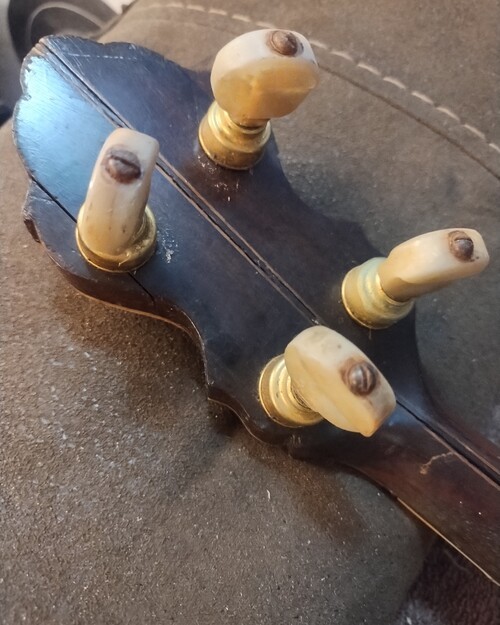
Waverly pegs and MOPs.
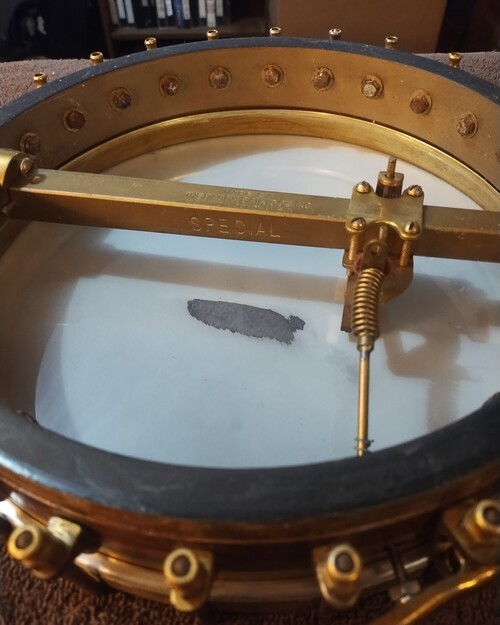
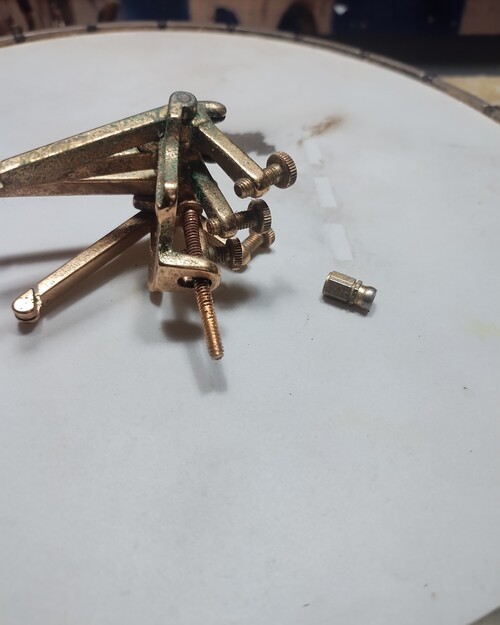
ABM tailpiece, modern, stiff, needs service.
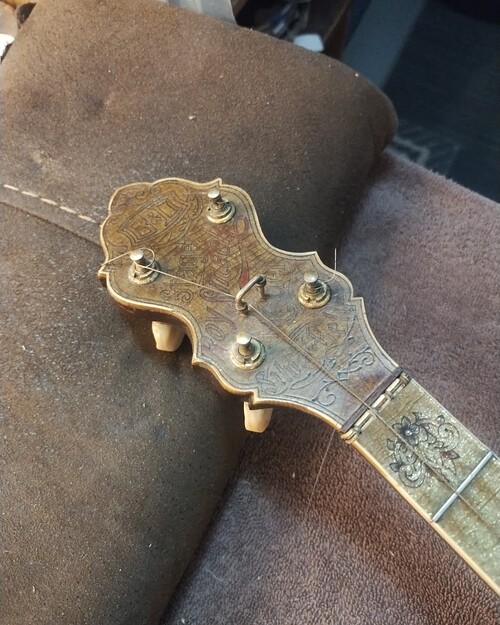
Celluloid gassed out, no fix for that.
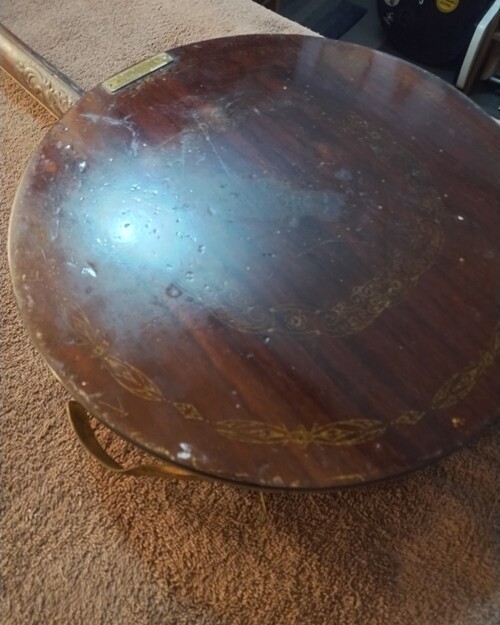
This is an applique, not relief cut and gold filled.
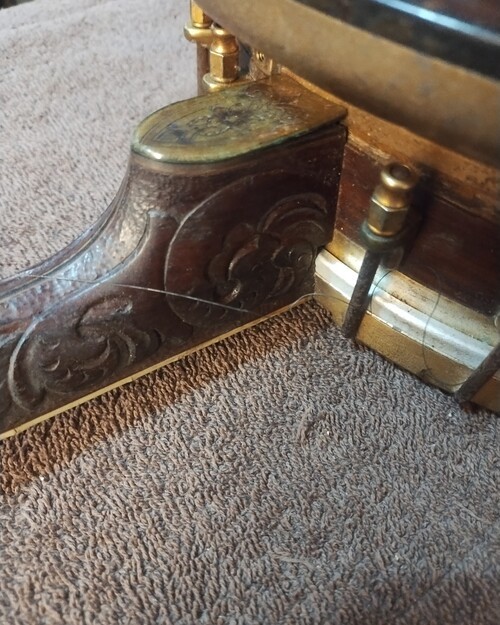
Celluloid lifting.
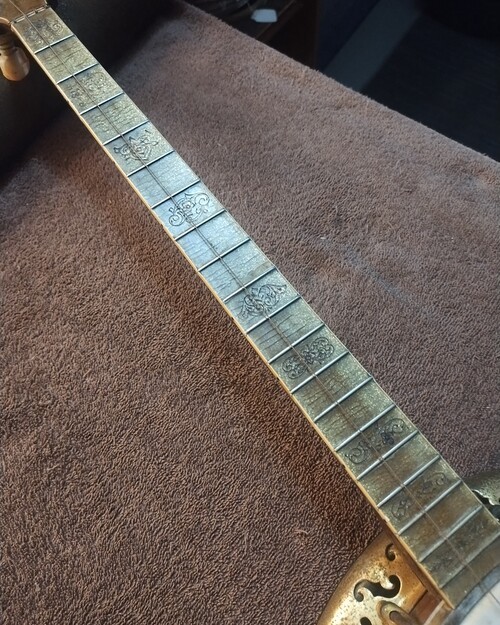
All marker paint gone.
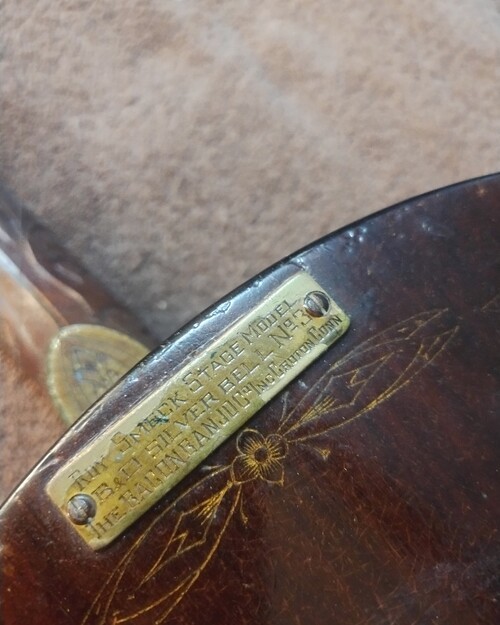
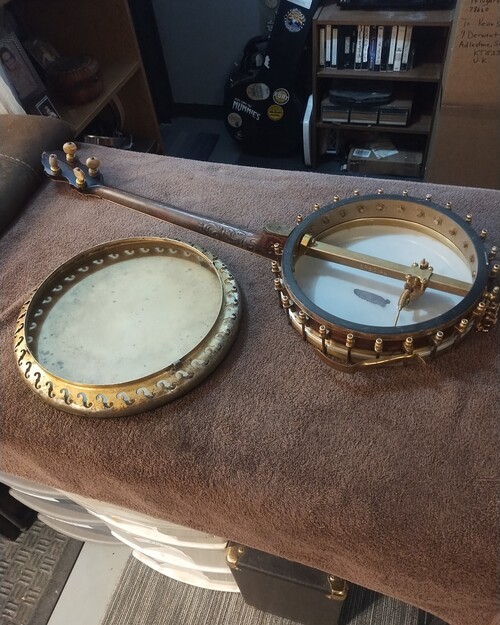
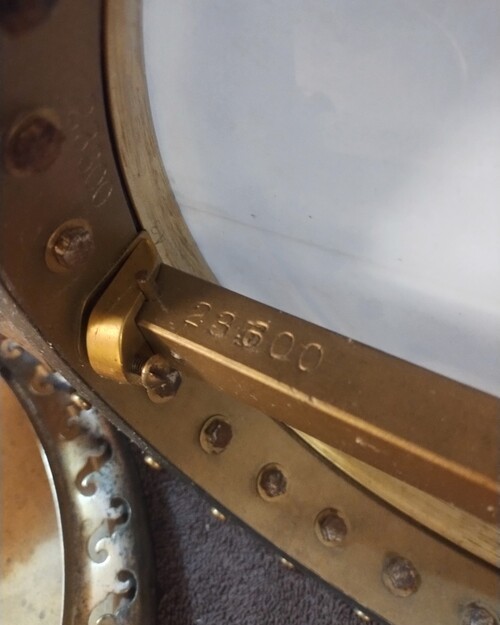
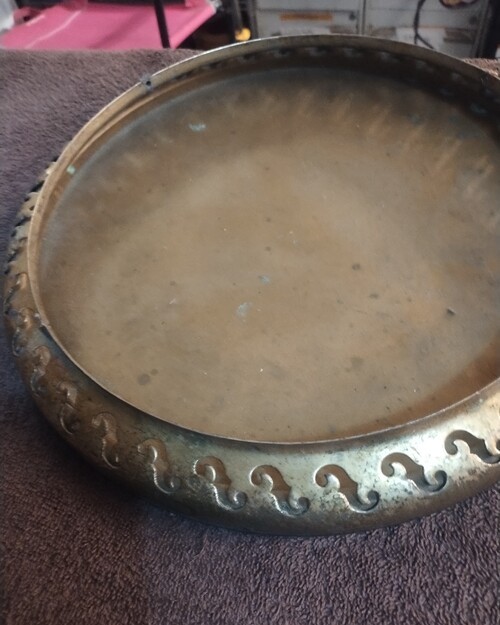
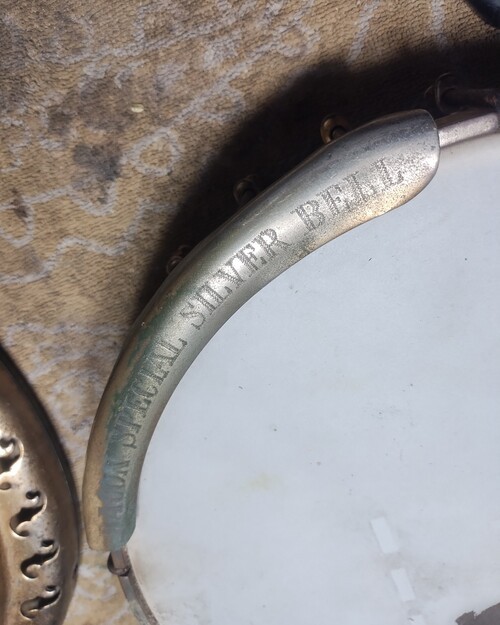
Next 2 pics
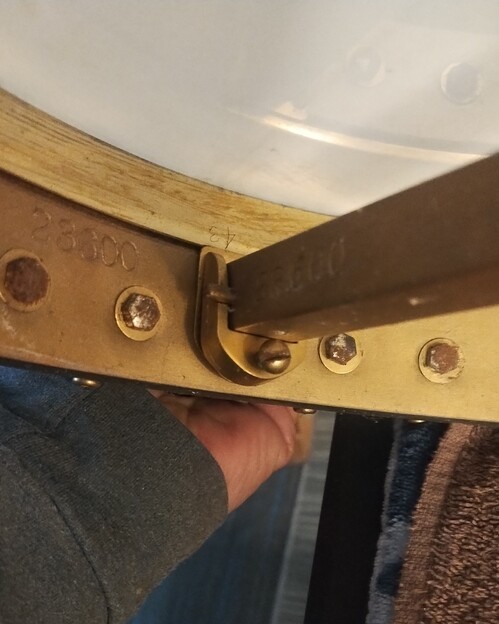
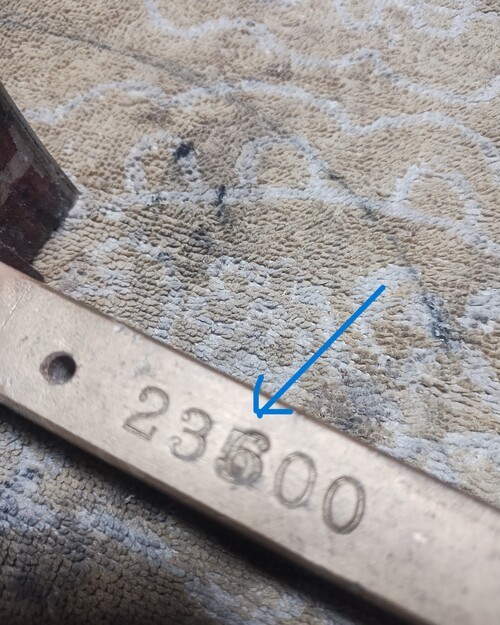
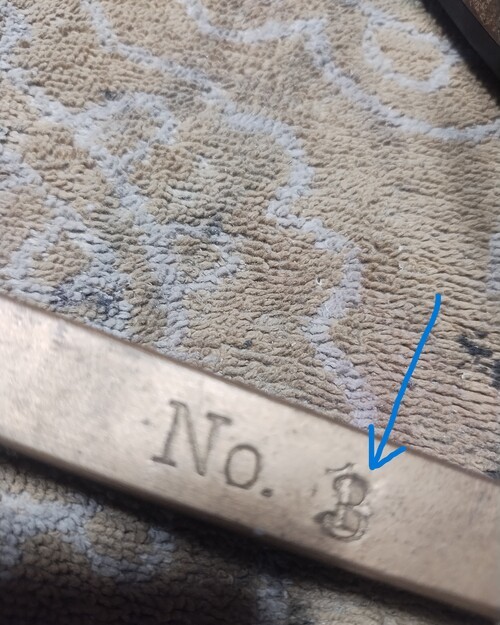
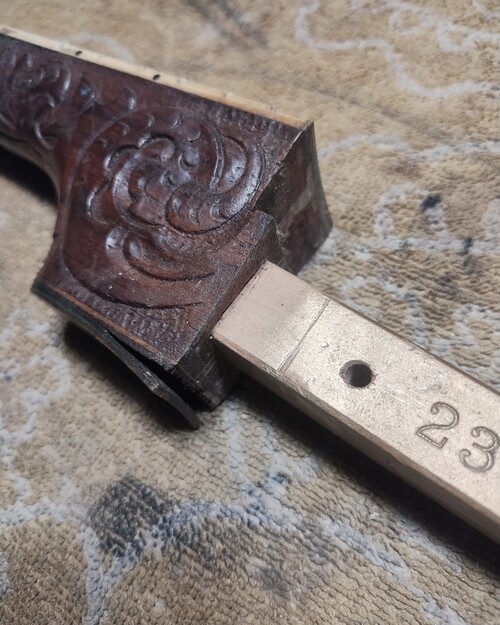
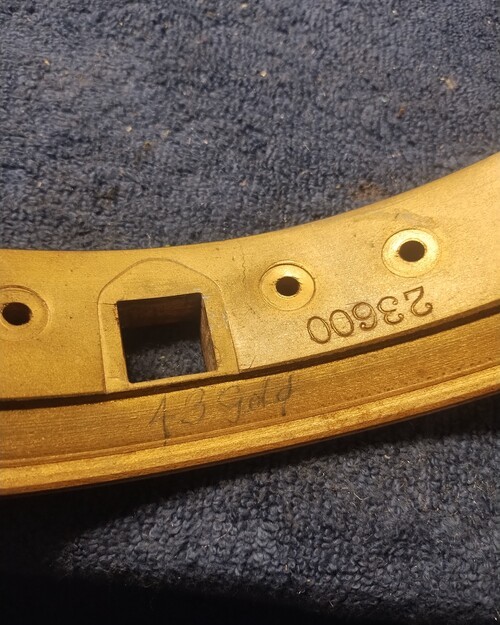
My explanation of the double stamping on the dowel is simple.
The rim is 23600 with no double stamp. When the "special "neck was made, the dowel, most likely out of a bin with no serial numbers but stamped No.1 was used, and the 3 was stamped over the 1.
Trust me...NOBODY CARED THEN. And when the serial number was added to match the rim, some night shifter picked up the wrong stamp and had to go back over with the 6. Its the same font. So nothing NEFARIOUS has happened and those (experts?) that think they can strongarm people into selling at a lesser value should be leveraged to a point of charging them a higher price for the errors, which make the instrument more unique, but no less valuable.
The instrument is not for sale, I am making a point.
RANT OVER
My explanation of the double stamping on the dowel is simple.
The rim is 23600 with no double stamp. When the "special "neck was made, the dowel, most likely out of a bin with no serial numbers but stamped No.1 was used, and the 3 was stamped over the 1.
Trust me...NOBODY CARED THEN. And when the serial number was added to match the rim, some night shifter picked up the wrong stamp and had to go back over with the 6. Its the same font. So nothing NEFARIOUS has happened and those (experts?) that think they can strongarm people into selling at a lesser value should be leveraged to a point of charging them a higher price for the errors, which make the instrument more unique, but no less valuable.
The instrument is not for sale, I am making a point.
RANT OVER
Next is something I have never encountered in 28 yrs of working on banjos.
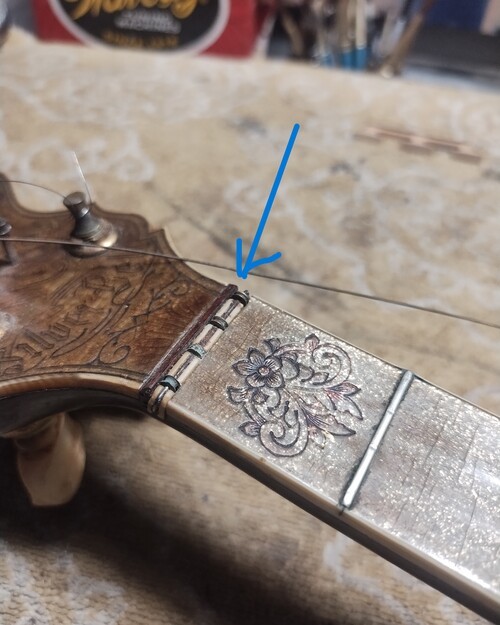
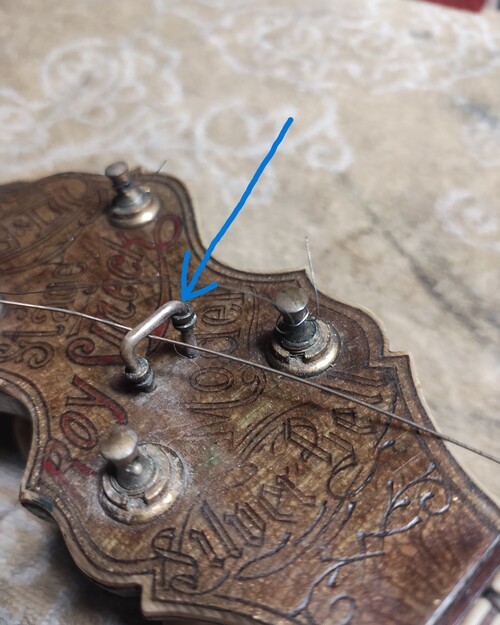
The nut, in this instrument, as well as the hand fabricated string guide post is special.
The skill to make them and the foresight is top notch.
The rollers were made from the balls from ball end strings.
They are on a piece of steel wire, and they ride in cut-outs in the bone.
The wire has trough cut for it across t he span, and one one end, it is bent in a double 90 deg., and inserted into the nut base.
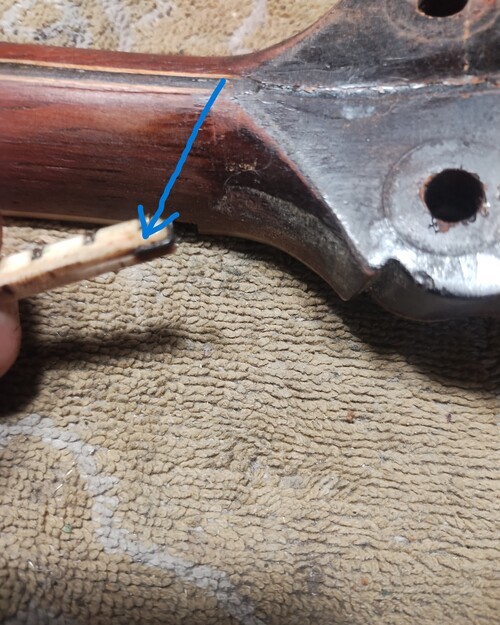
On the other, it is a double 90 that goes around and under the nut, and there is a precise cut under the bone that facilitates the ability to swing it around the bottom and clip it in.
This all took time and skill.
A roller wheel nut, and string guide post.
BRAVO!
The nut, in this instrument, as well as the hand fabricated string guide post is special.
The skill to make them and the foresight is top notch.
The rollers were made from the balls from ball end strings.
They are on a piece of steel wire, and they ride in cut-outs in the bone.
The wire has trough cut for it across t he span, and one one end, it is bent in a double 90 deg., and inserted into the nut base.
On the other, it is a double 90 that goes around and under the nut, and there is a precise cut under the bone that facilitates the ability to swing it around the bottom and clip it in.
This all took time and skill.
A roller wheel nut, and string guide post.
BRAVO!
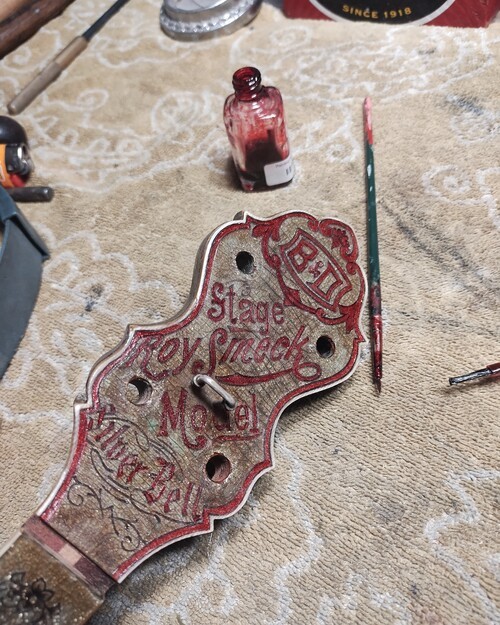
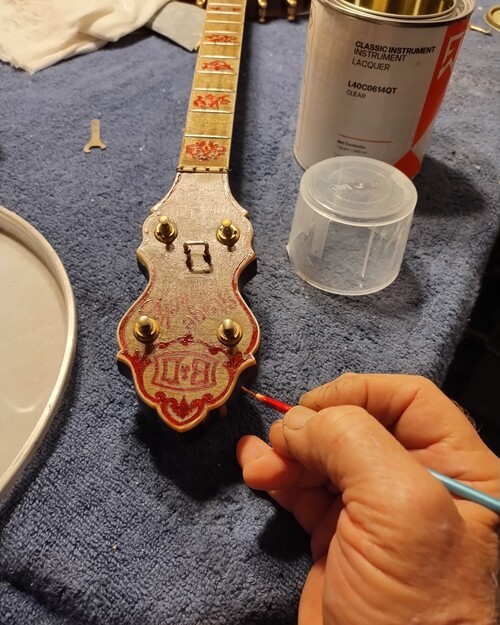
Starting some detail paint.
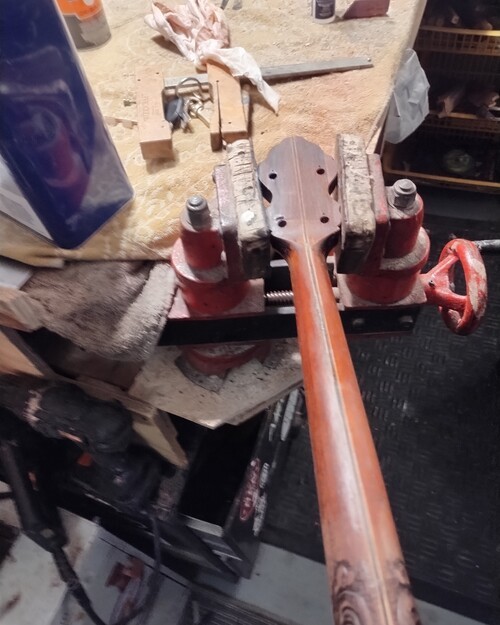
Almost a seamless seam, some areas were broken.
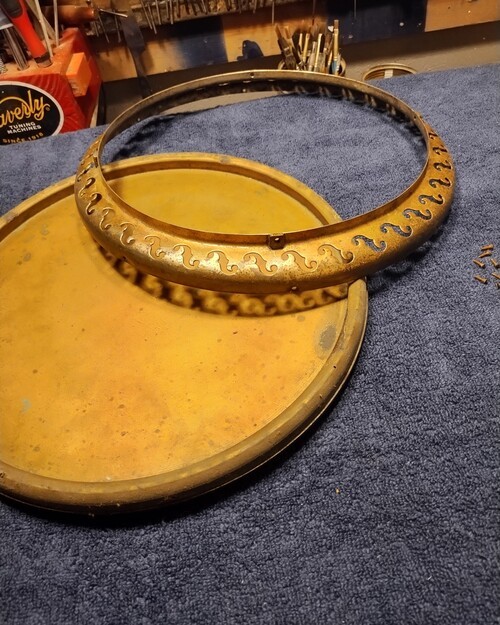
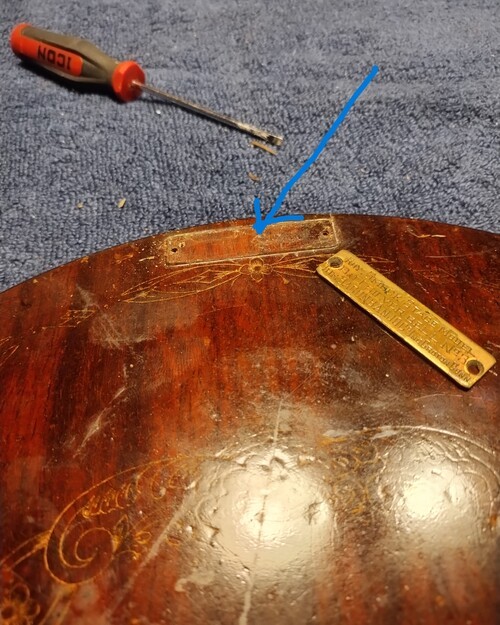
That is .020" thick under the plate. Why?
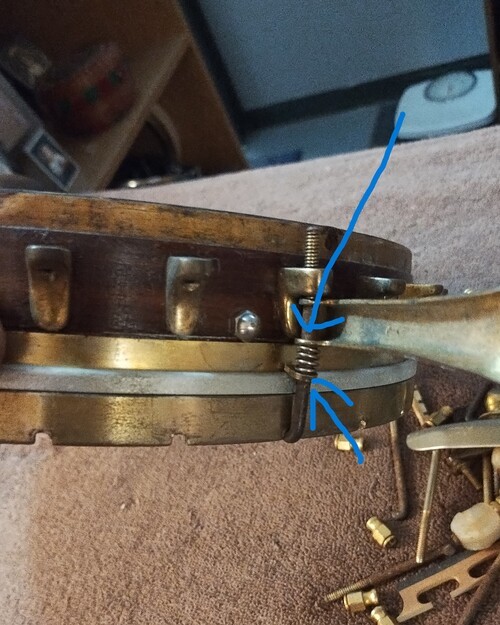
All mute assembly original. Early design.
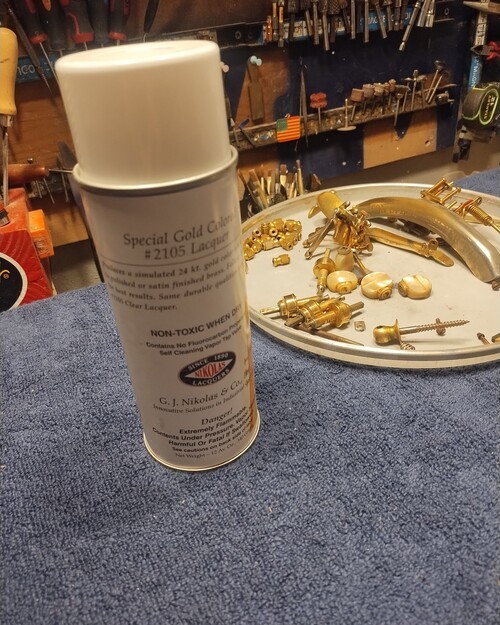
Best lcquer for brass since the 1800's. For the large meta; pieces.
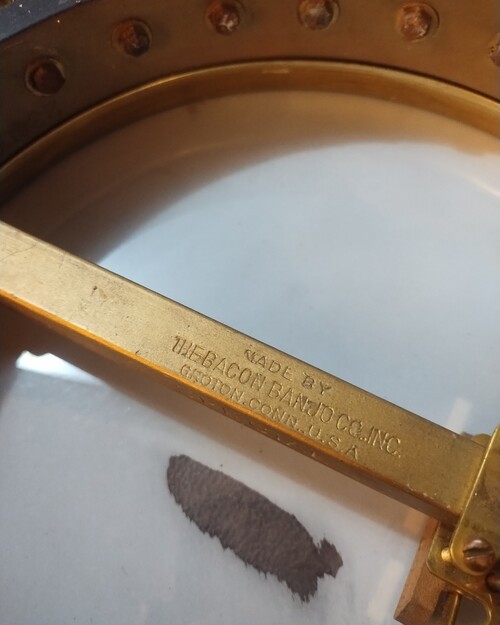
Makers mark.
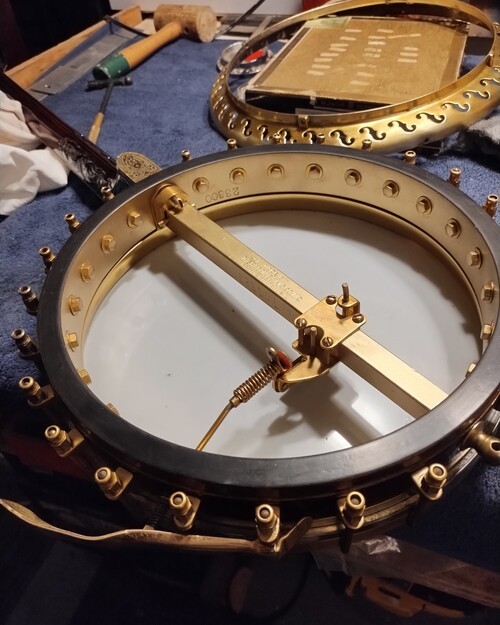
Mute now functional.
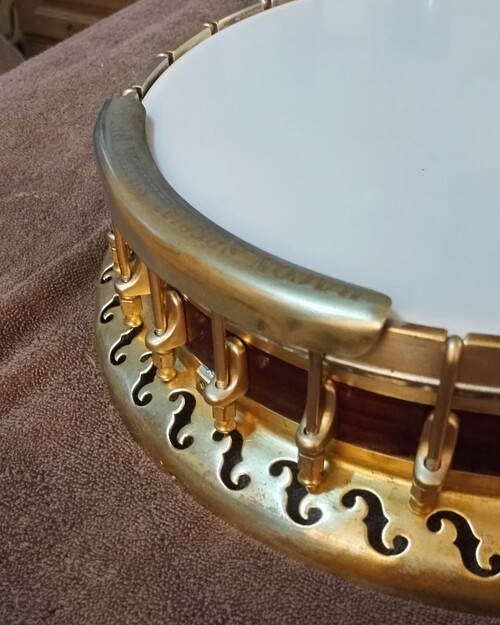
4 coats Nikolas on the armrest.
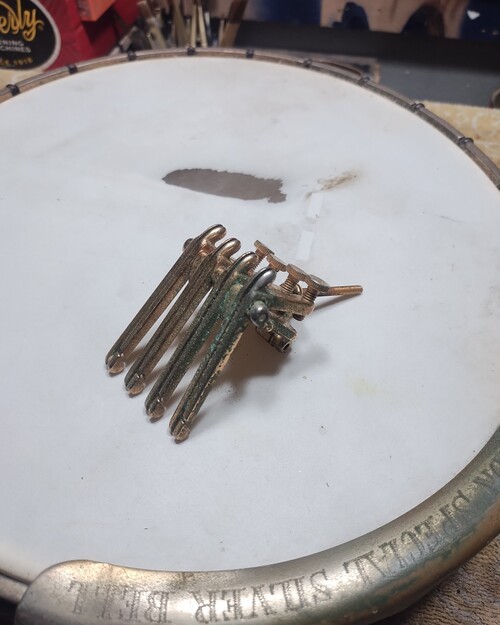
All 4 rolling.
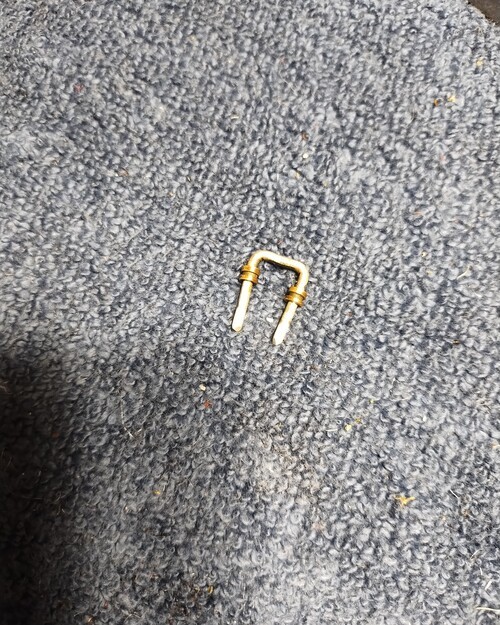
Wire is silver plated.Interesting. This, and the shoe bolts...
Final coat - clear.
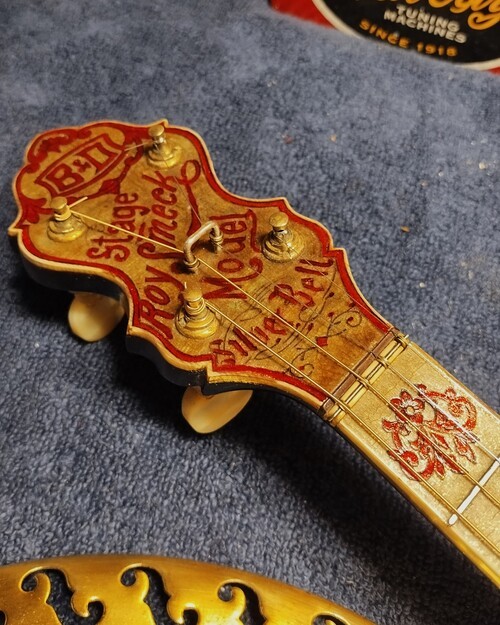
Strung to pitch, settling in.
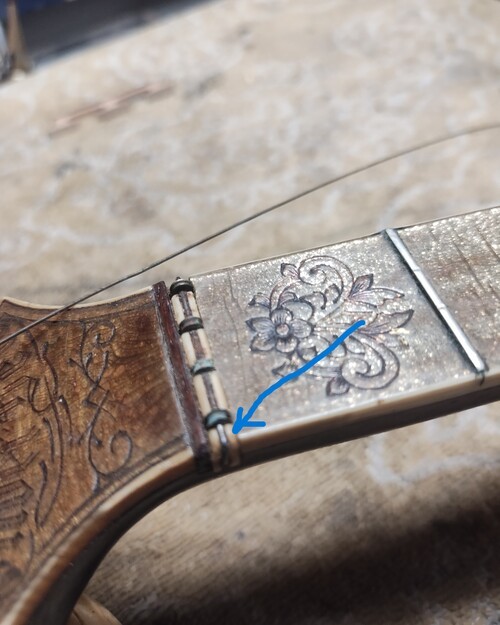
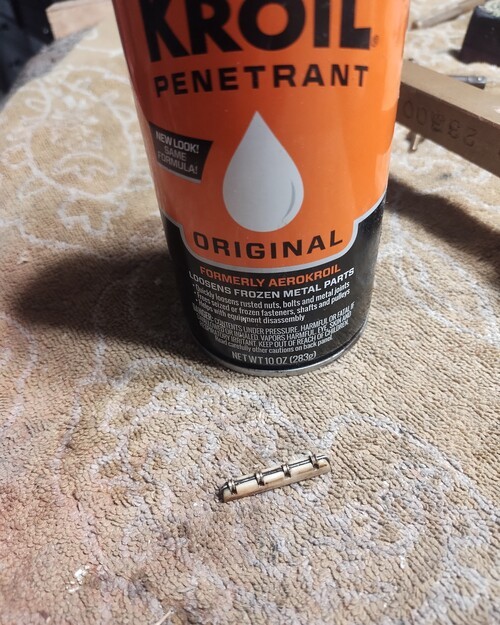
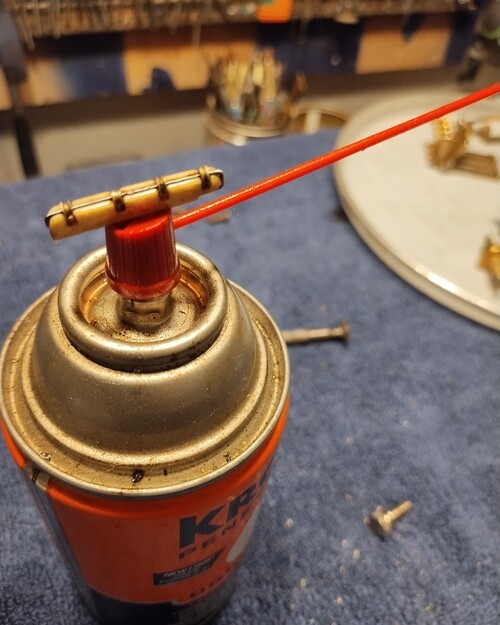
Getting some Kroil in to free the wheels.
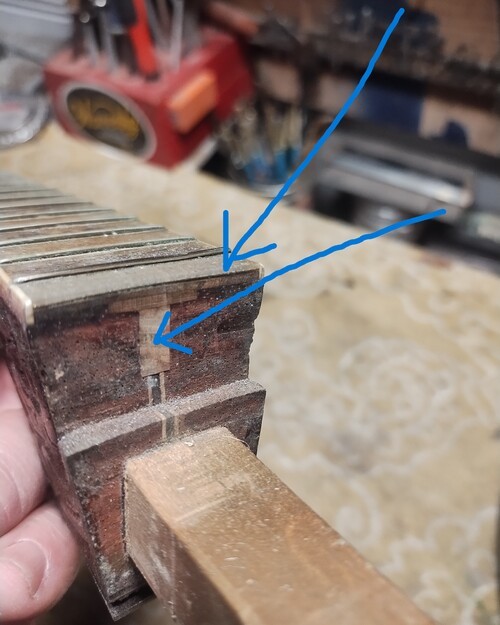
BD's with steel rods look like this. Celluloid thickness.
Say goodbye to the rest of the decal.
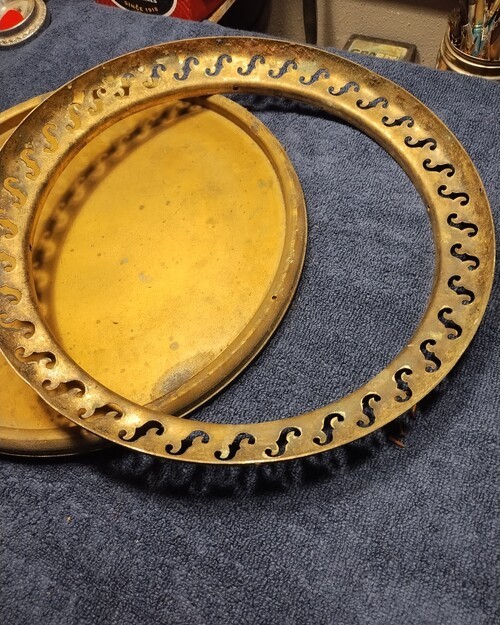
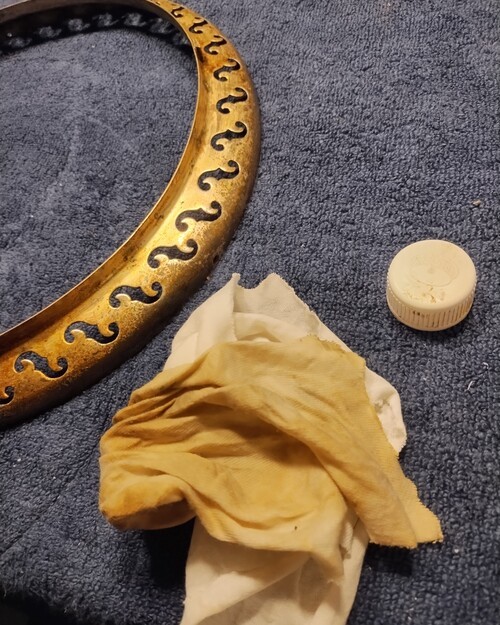
Removing the finish from the plating.
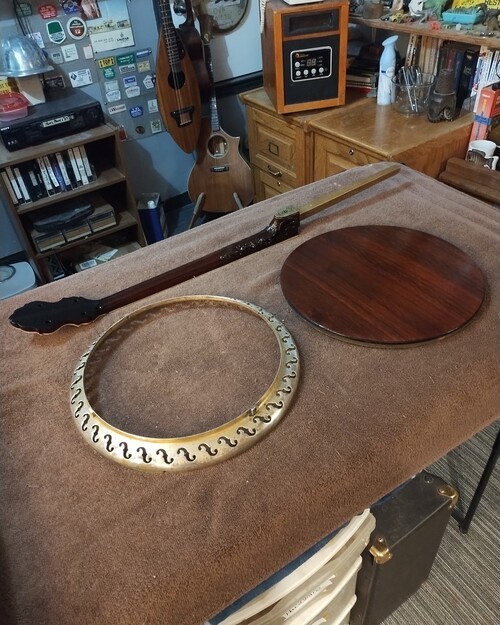
Going back on with the finish.
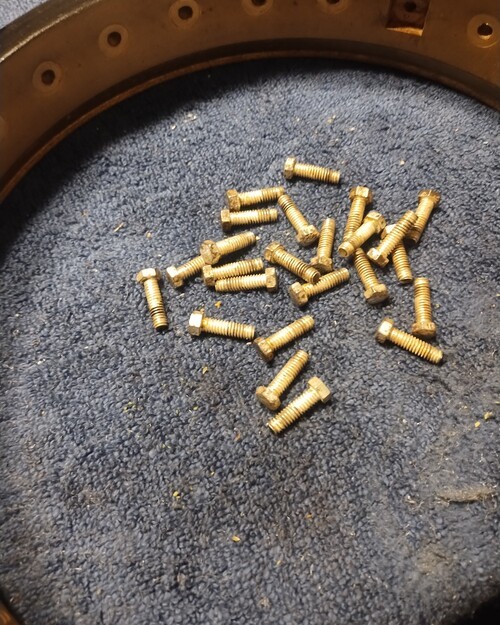
They used bolts meant for a #2, these were silver plated. Also not unusual.
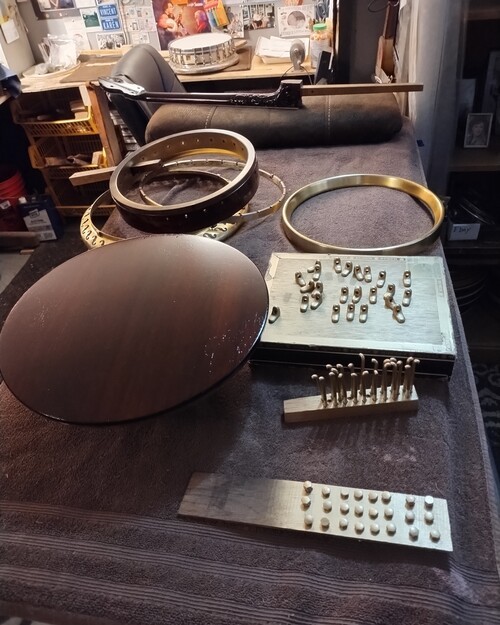
All metal coated.Including hooks.
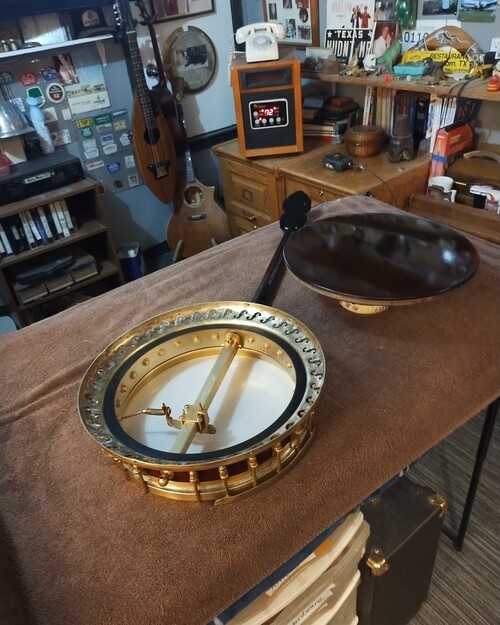
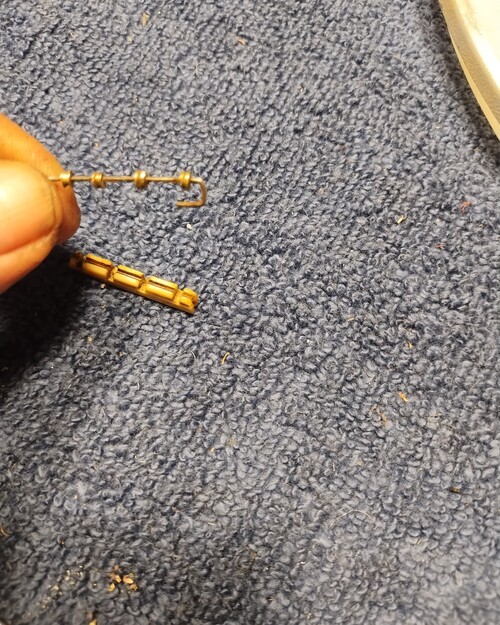
Out for cleaning,
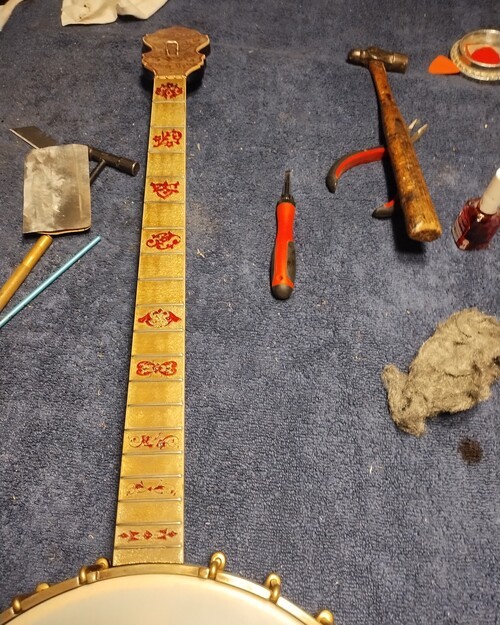
First coat of color magic detail paint.
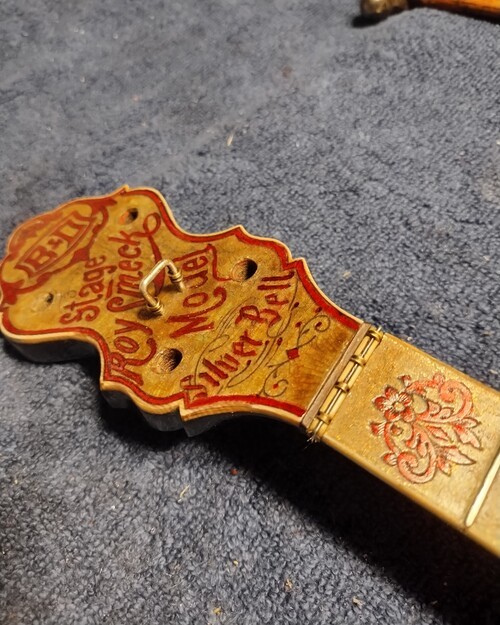
Back in with the nut, all functional.
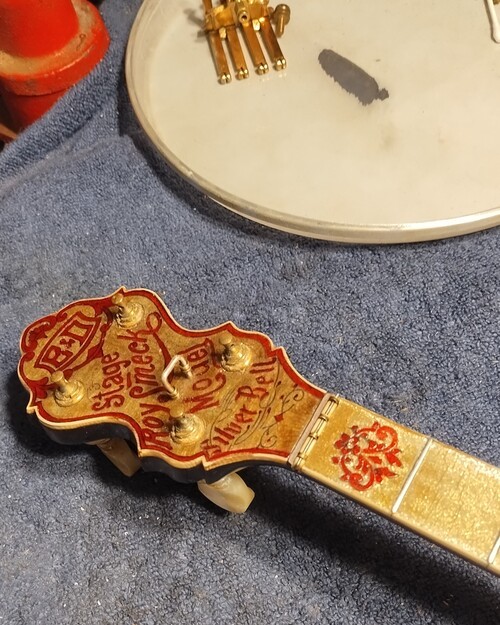
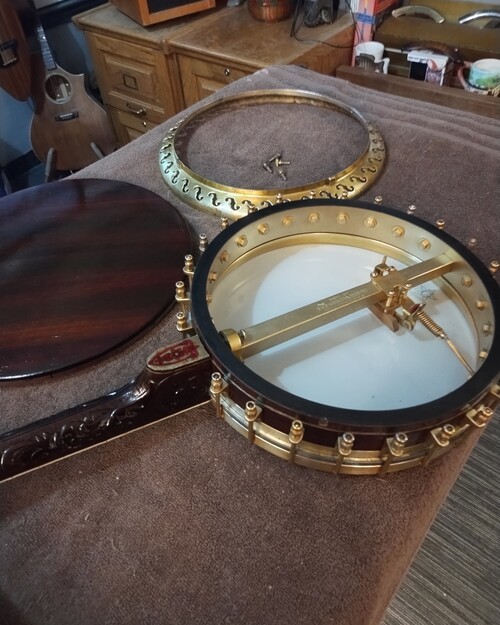
Heel cap finish completed.
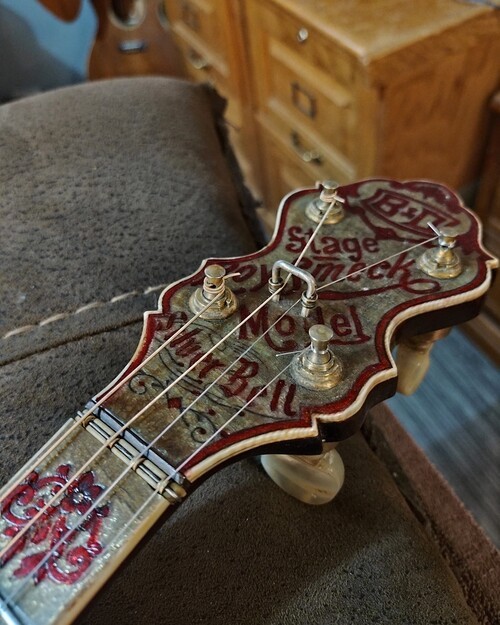
All working perfectly. I like it.
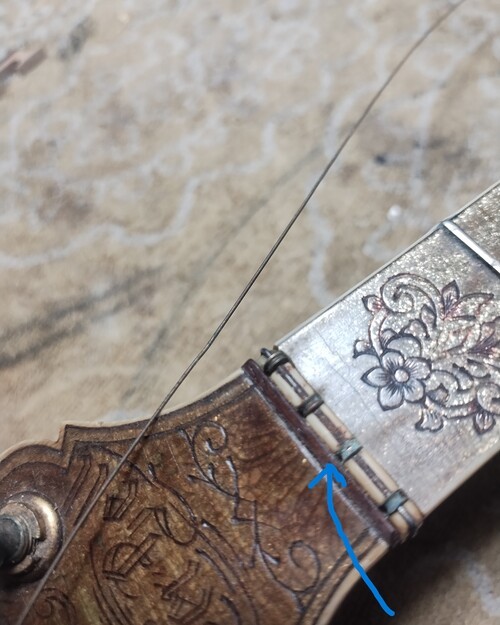
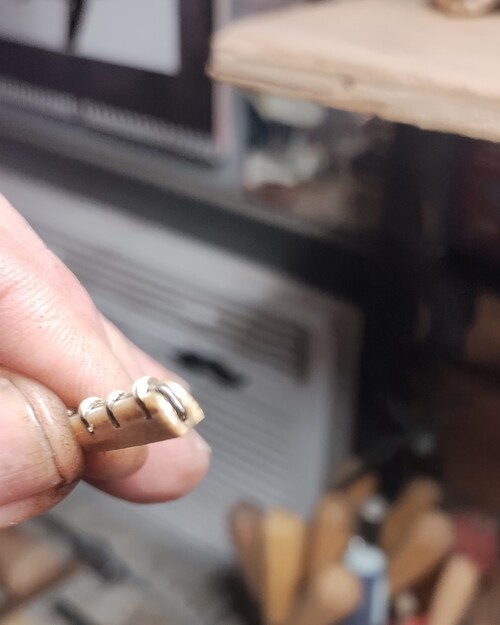
Such fine work.
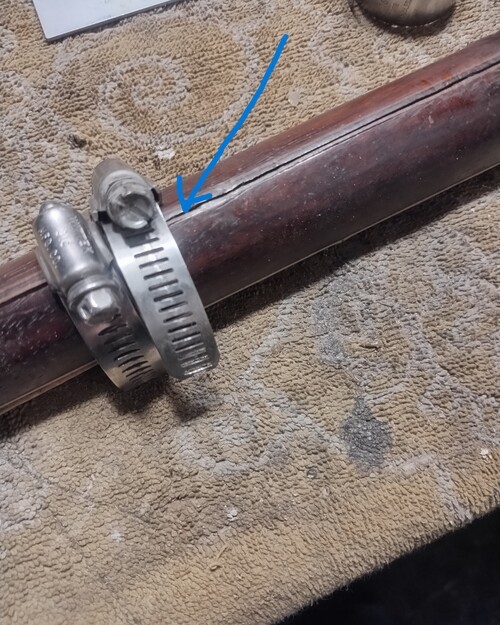
The only clamp I know that can pull this odd angle closed,
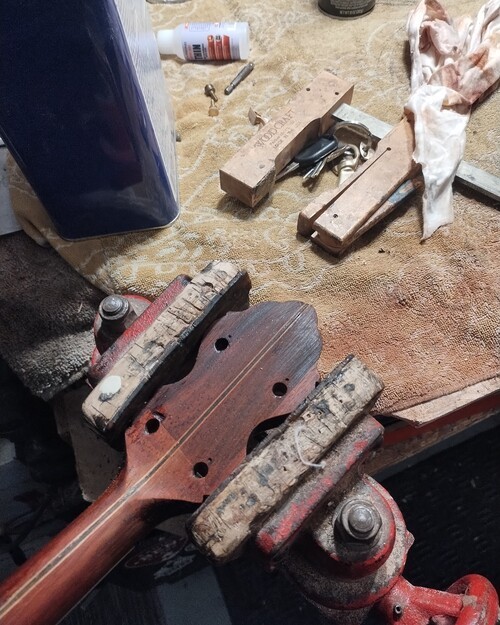
Final clamping of seam sealing.
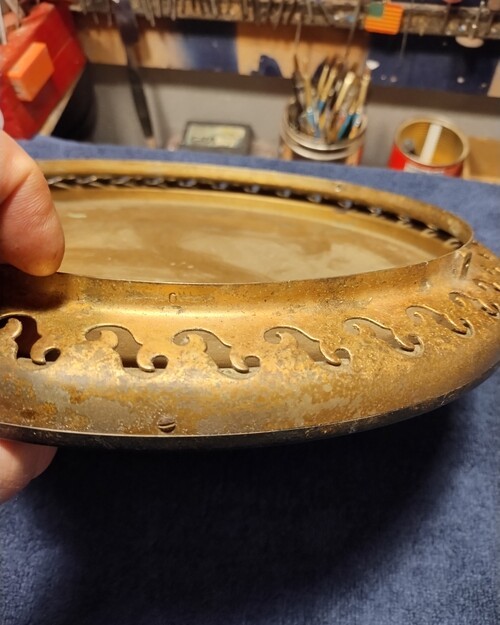
There is old protective finish over the plating.
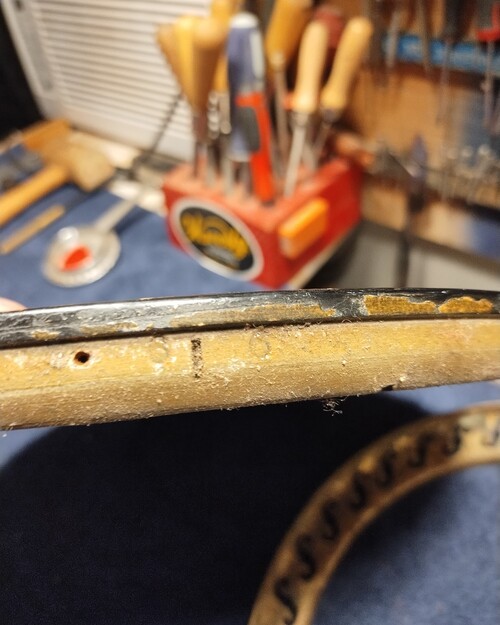
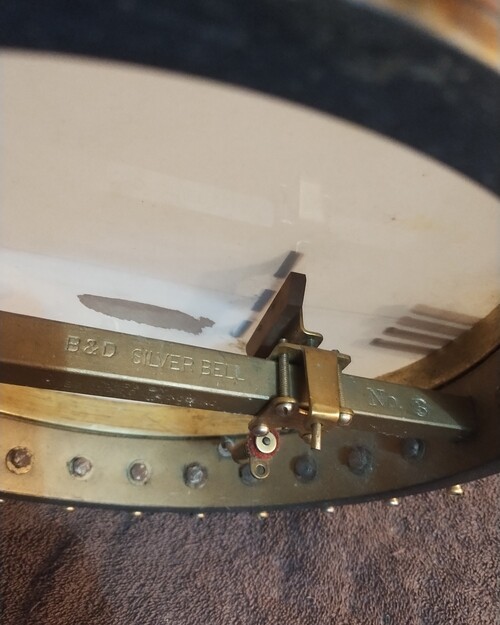
Another makers mark seen on most every BD. I have seen 55-66.
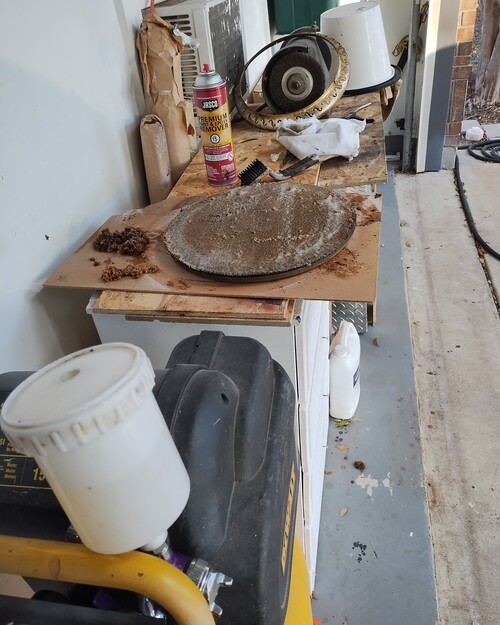
Stripping the back.
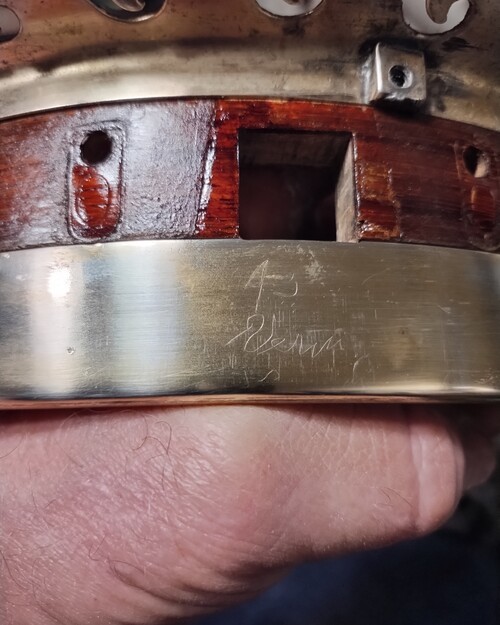
Another makers mark.
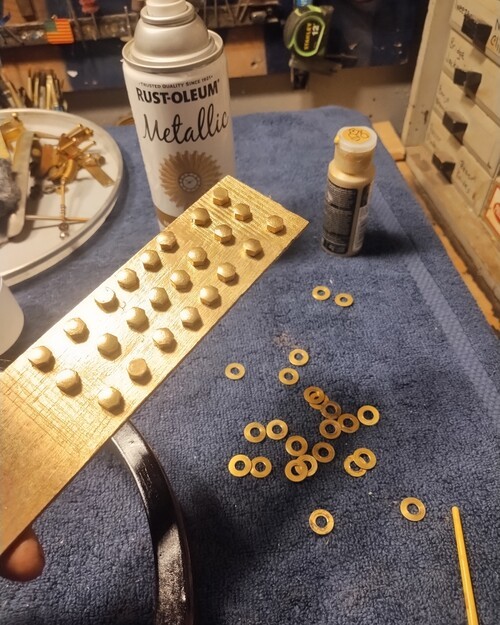
Using metallic gold, then clear lacquer to protect it.
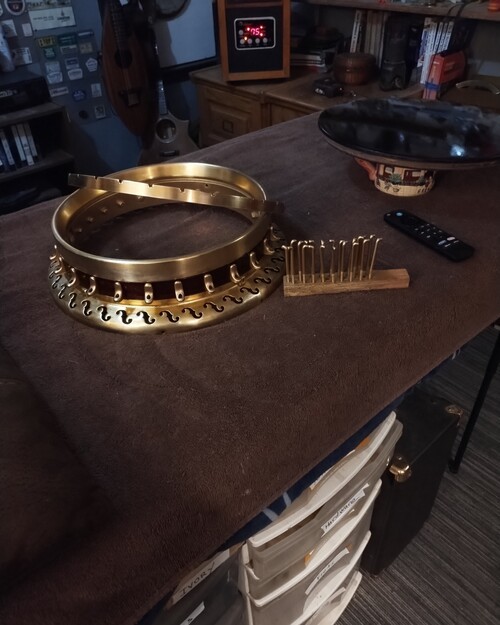
A nice looking econo gold.
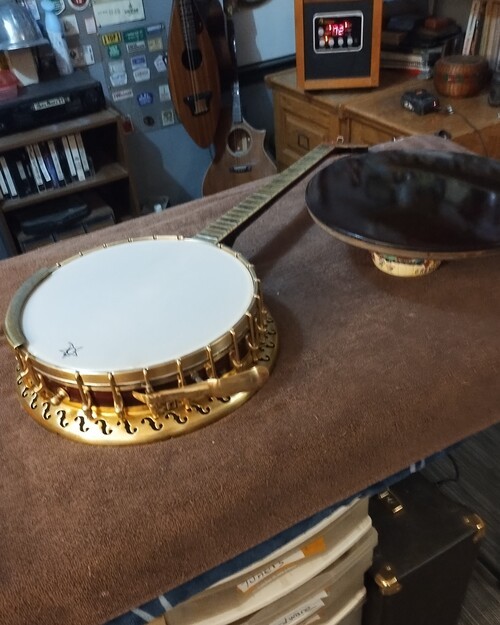
5 star bottom frosted head.
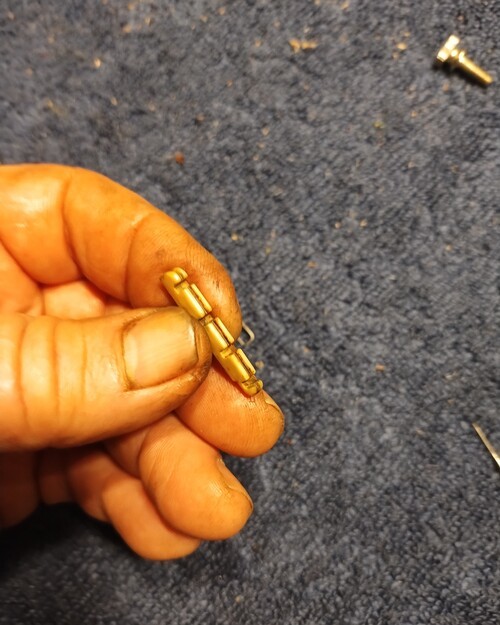
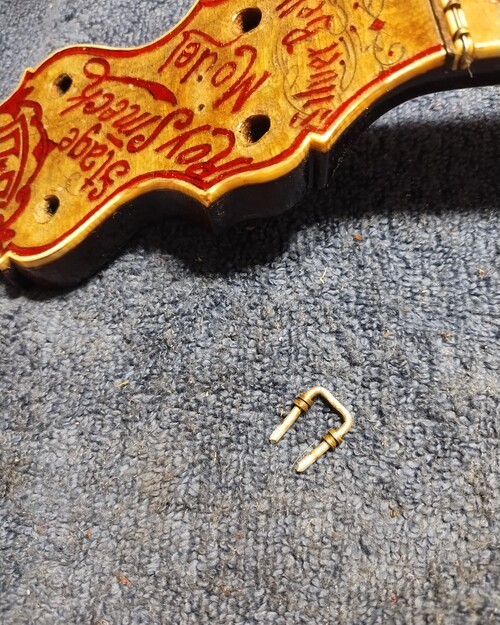
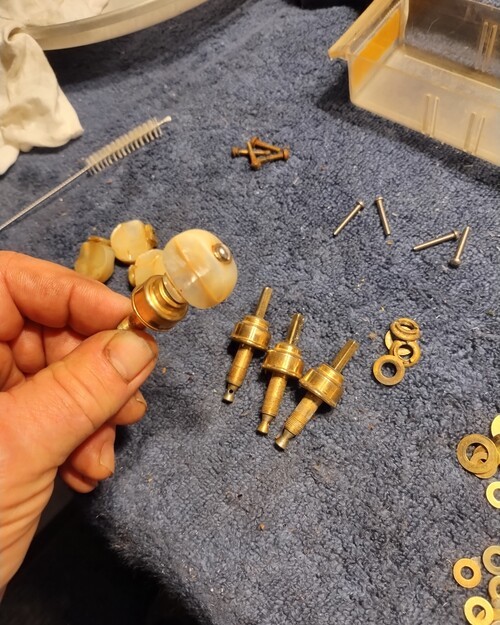
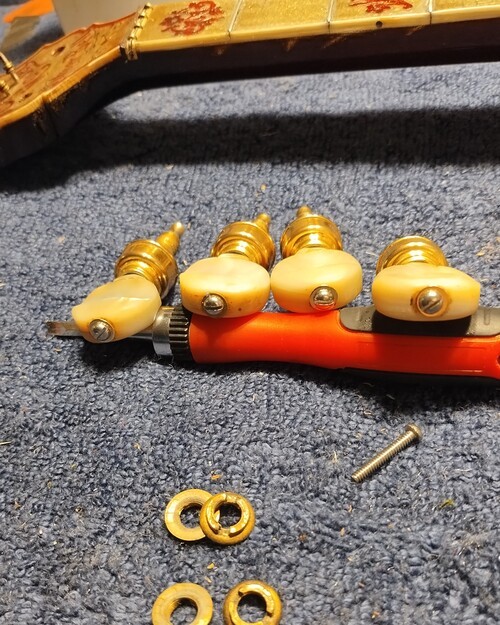
MOP's polished, new gold washers, nickel screws.
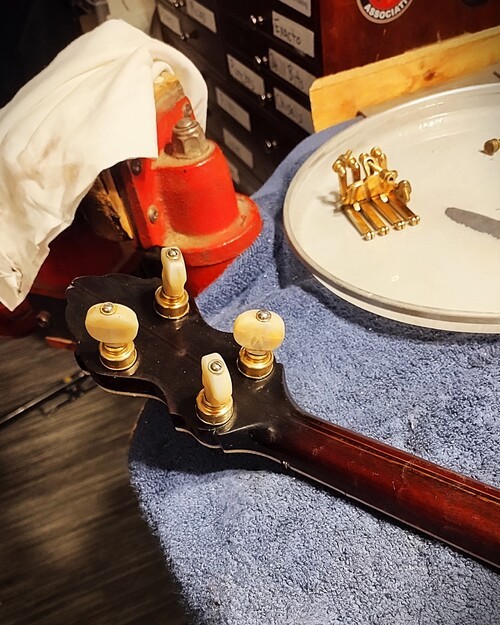
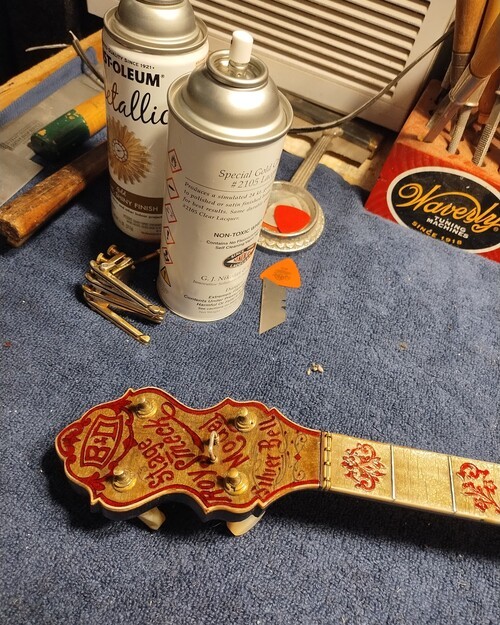
Nikolas used on tailpiece.
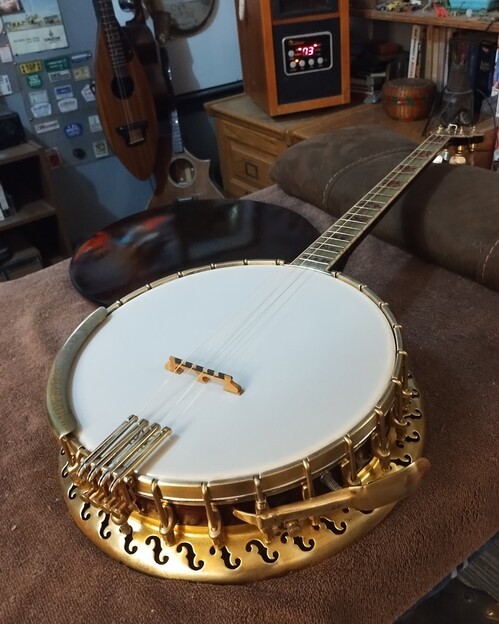
Neck is very flat, almost too flat. Needs to settle in some.
MORE TO FOLLOW
Thanks for looking and sharing,
VM
Thanks for looking and sharing,
VM