Work Page 7-26
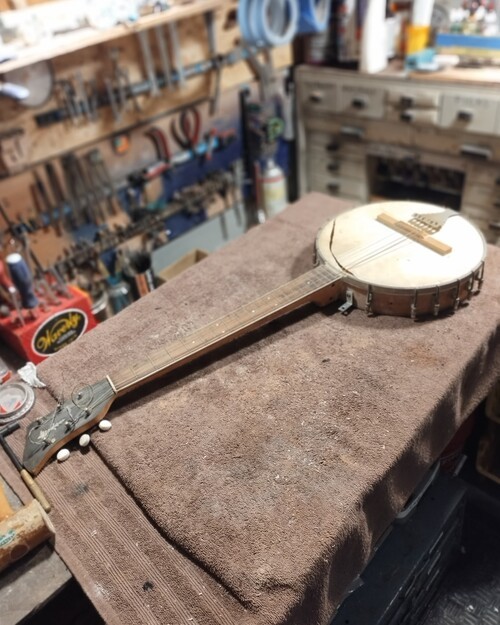
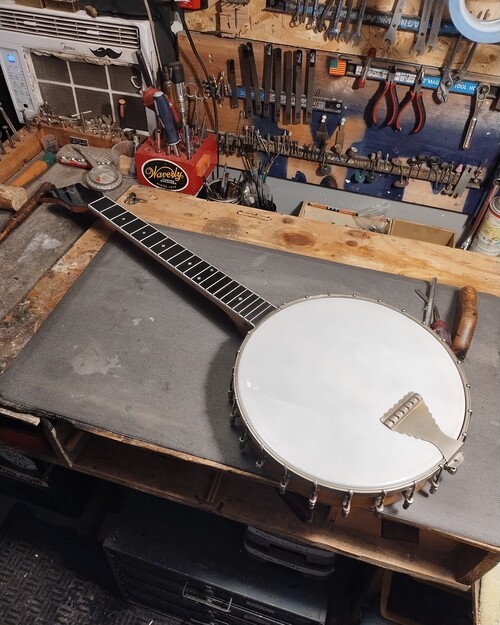
1920's Slingerland Guitar Banjo
Tear down - inspect
Make estimate on returning it to playing status.
Make estimate on returning it to playing status.
This instrument has seen hard times, and attempts at repair that failed along with modifications and missing hardware.
The neck has a severe upbow under tension causing an action too high for playing.
At first glance :
Tuners are mismatched - need replacement
Head is damaged, bridge (non-original) glued to the head.
Metal shimming in the heel
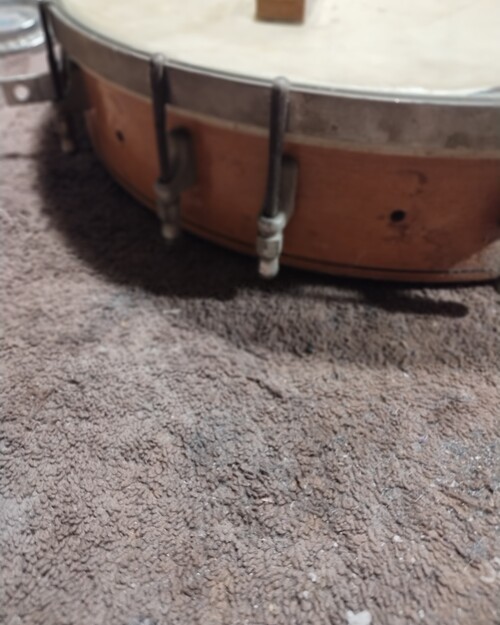
Missing some shoes and hook sets.
Wrong screw in neck yoke (cross threaded)
Heel is held together with 2 screws horizontally that screw into imbedded collars
(That operation was successful)
Dowel has wood putty all around it and attempt was made to reshape the heel angle with wood putty, and the dowel is loose and pulled forward 1/4"
So first I will disassemble it to see if dowel tenon is unbroken and remove all wood putty to prepare it for wood veneer to be added tot he areas where it was removed.
Then, I will speak with the owner because we have to decide how far to take it to make it at least play out properly.
The neck has a severe upbow under tension causing an action too high for playing.
At first glance :
Tuners are mismatched - need replacement
Head is damaged, bridge (non-original) glued to the head.
Metal shimming in the heel
Missing some shoes and hook sets.
Wrong screw in neck yoke (cross threaded)
Heel is held together with 2 screws horizontally that screw into imbedded collars
(That operation was successful)
Dowel has wood putty all around it and attempt was made to reshape the heel angle with wood putty, and the dowel is loose and pulled forward 1/4"
So first I will disassemble it to see if dowel tenon is unbroken and remove all wood putty to prepare it for wood veneer to be added tot he areas where it was removed.
Then, I will speak with the owner because we have to decide how far to take it to make it at least play out properly.
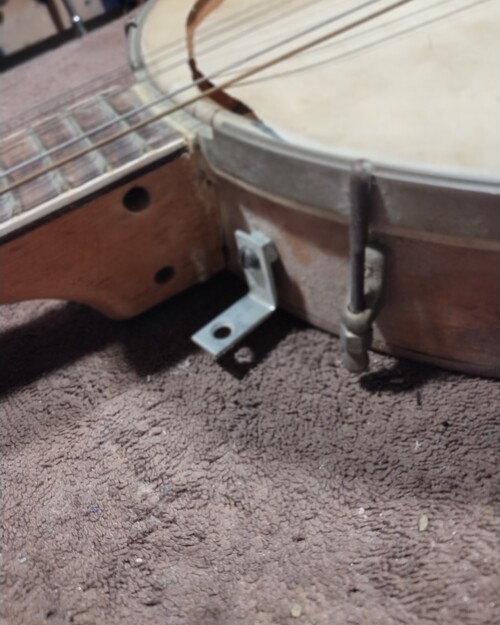
Probably the way a back plate was attached. Shoe gone.
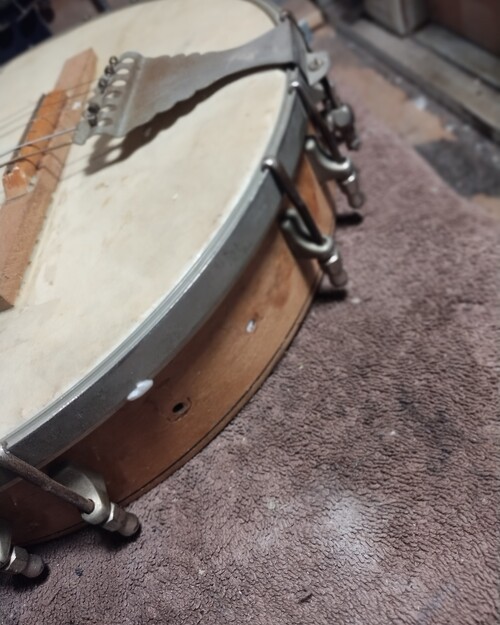
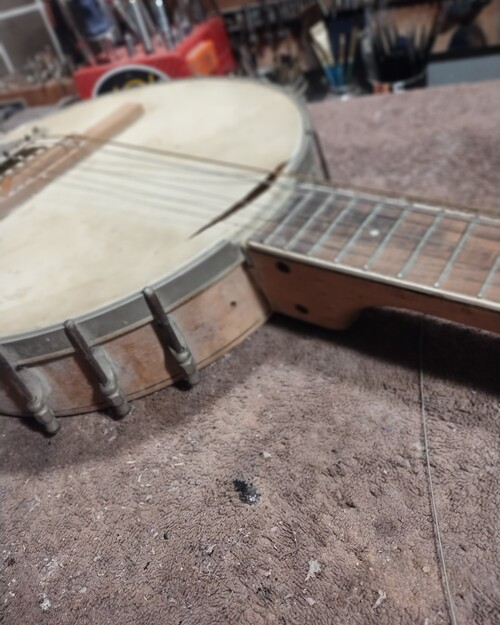
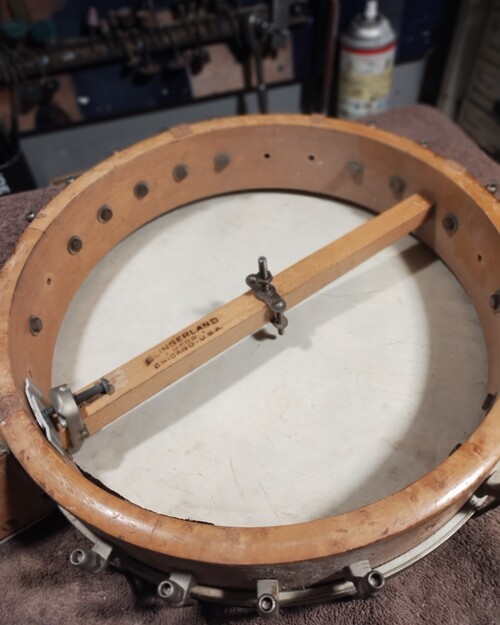
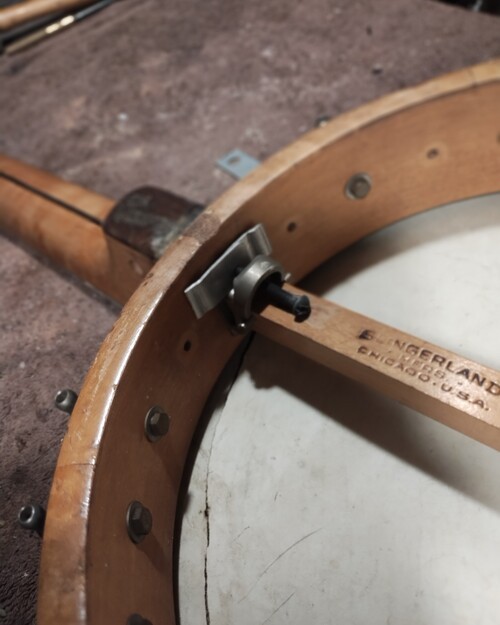
That screw is jammed tight, cross threaded.
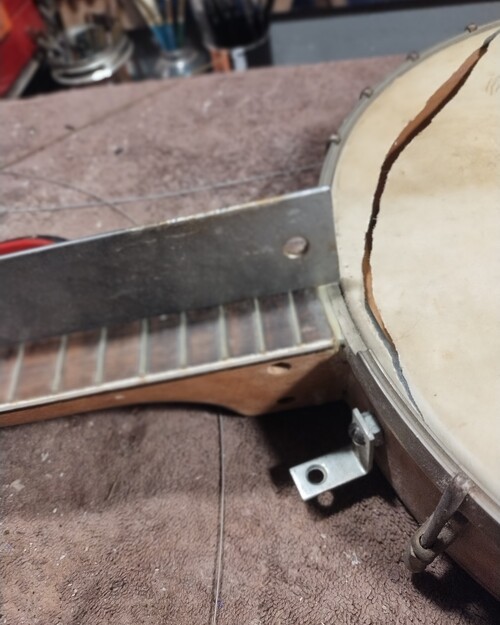
Neck set too low, head is higher than fingerboard.
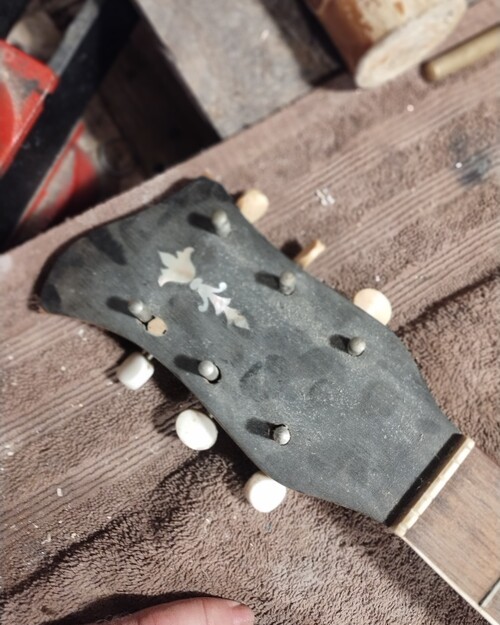
That is where the tuner hole was altered.
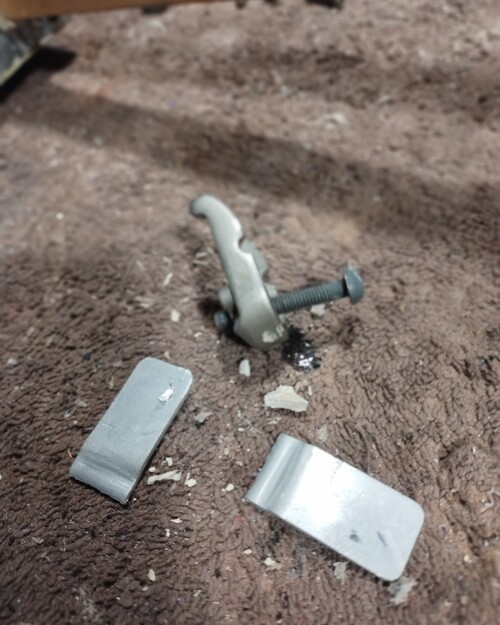
Got the pin out and shims.
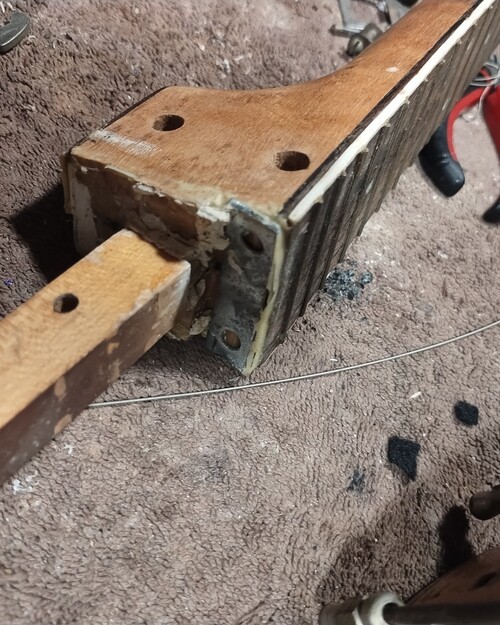
One more shim to go.
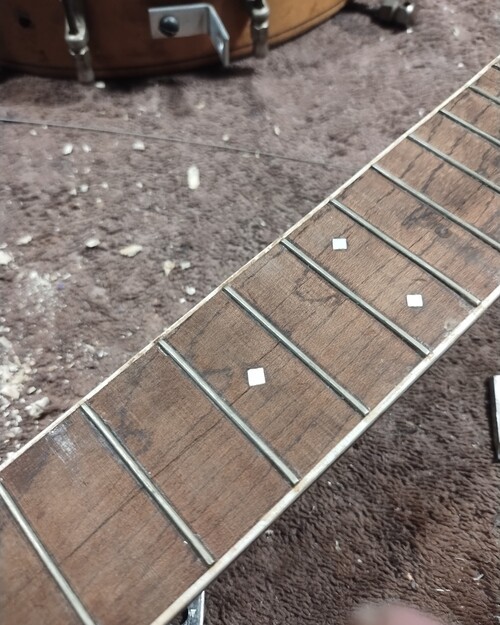
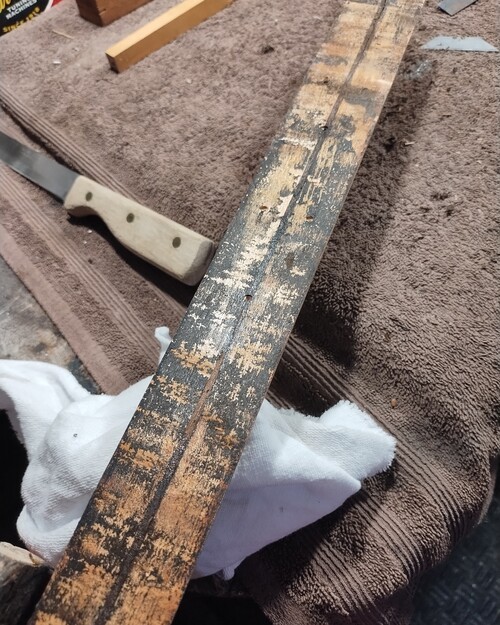
Pearwood degraded and cracking, needs sealing or new fingerboard.
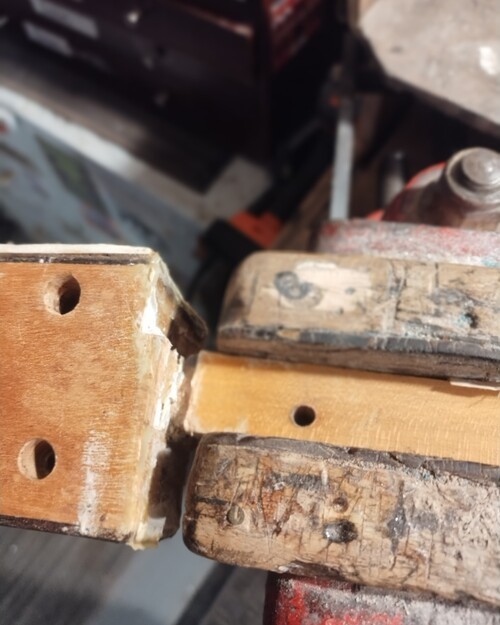
This is how far the dowel is out of its hole.
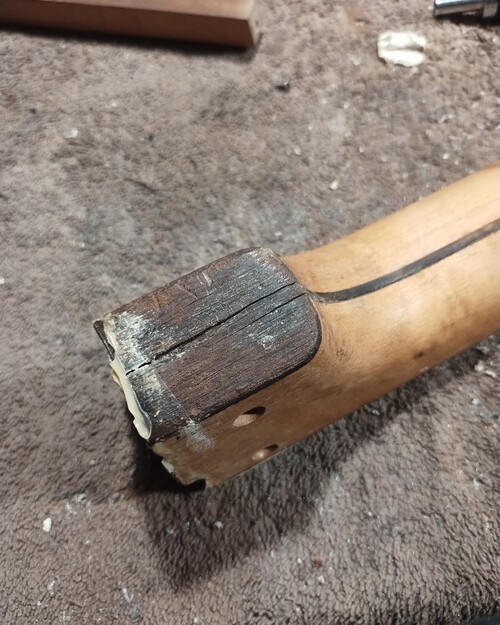
After screw removal now you can see the cracks.
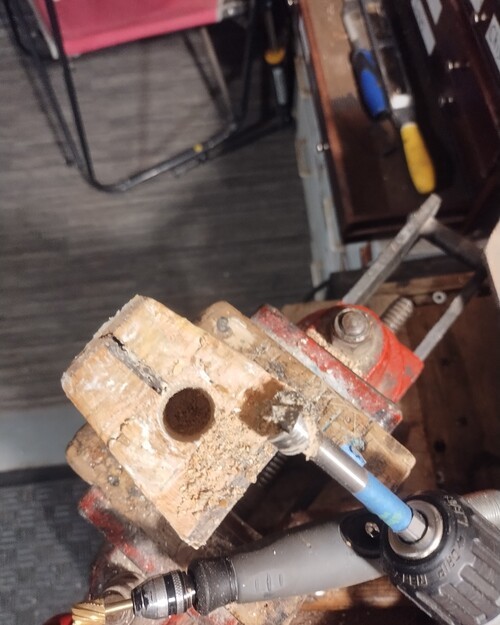
Forstner bit to get all the glue out, it was not done well.
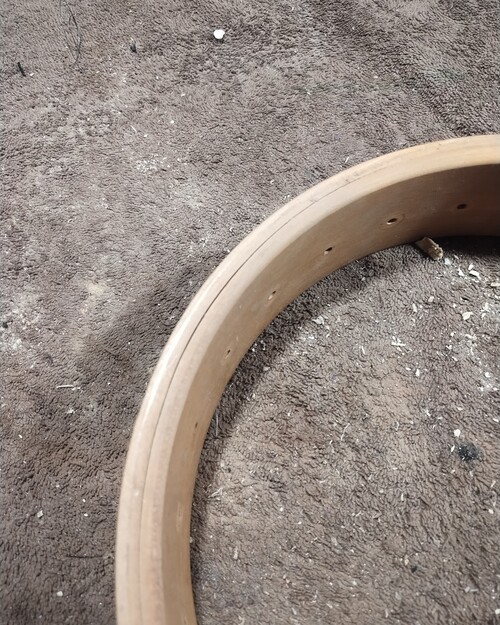
Delamination's to be sealed.
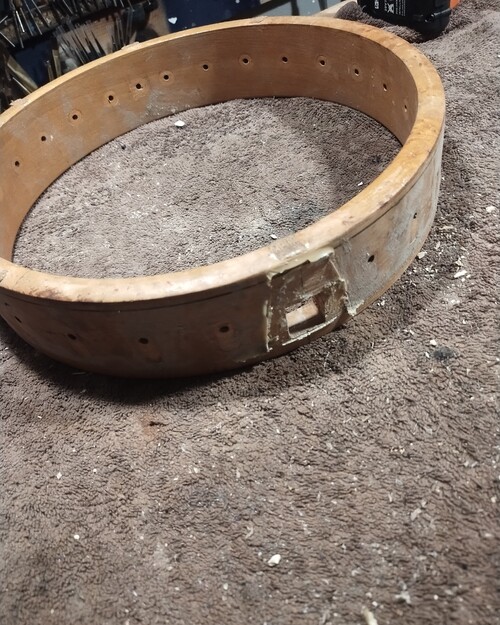
More putty/glue residue.
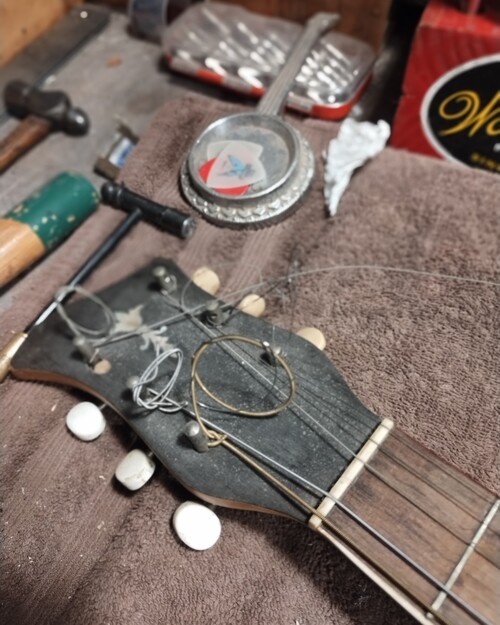
Looks like a blind man's tackle box.
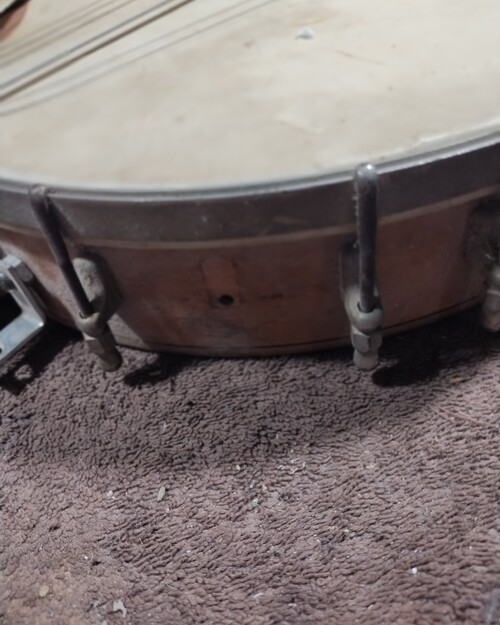
Missing hooks and shoes shown as I go along.
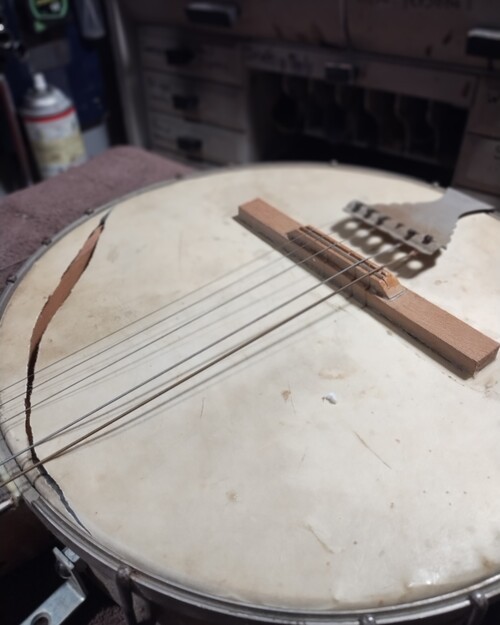
Bridge is glued to head, will not be re-used.
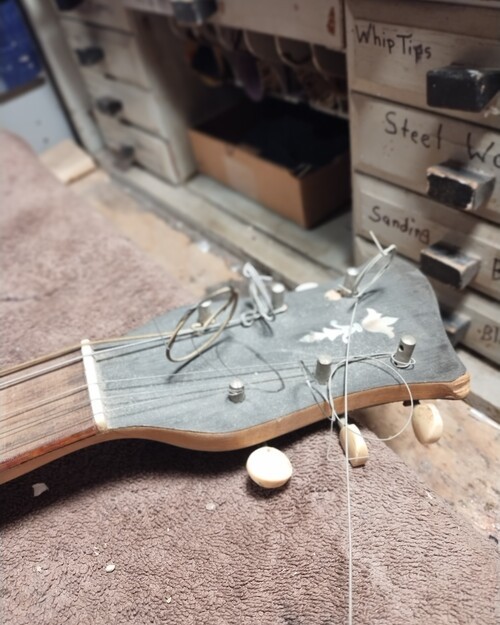
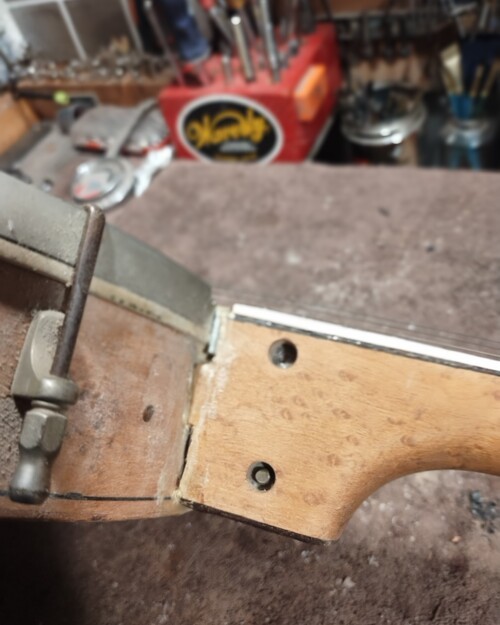
All of this needs to be addressed.
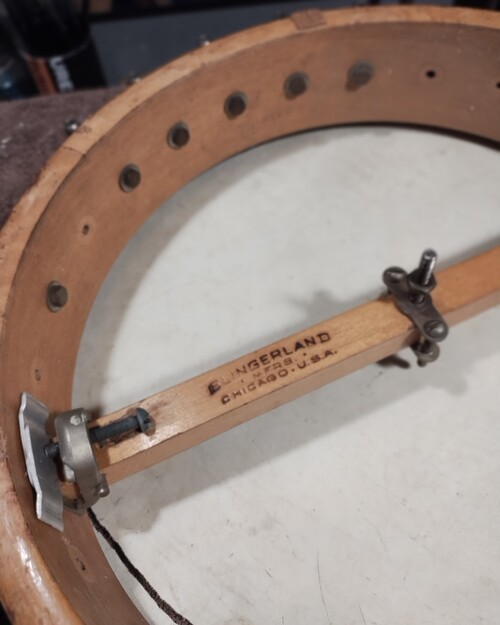
As dowel released, more tries to gain the action back.
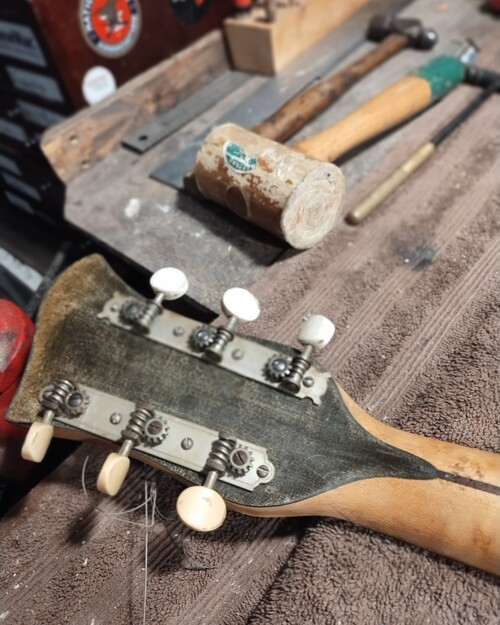
Holes altered on side that tuners are upside down.
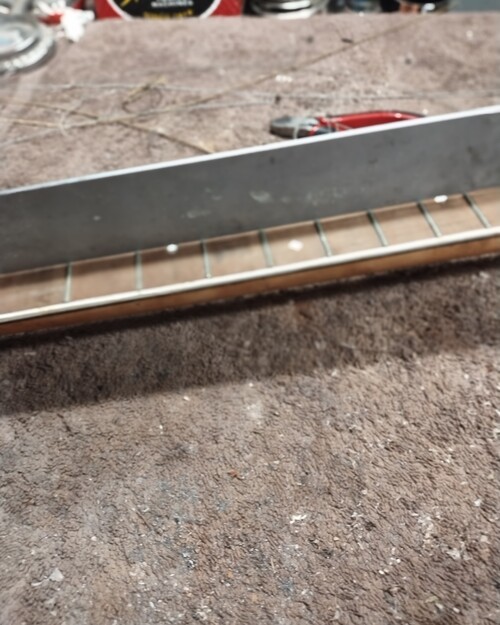
Bow can still be seen without strings.
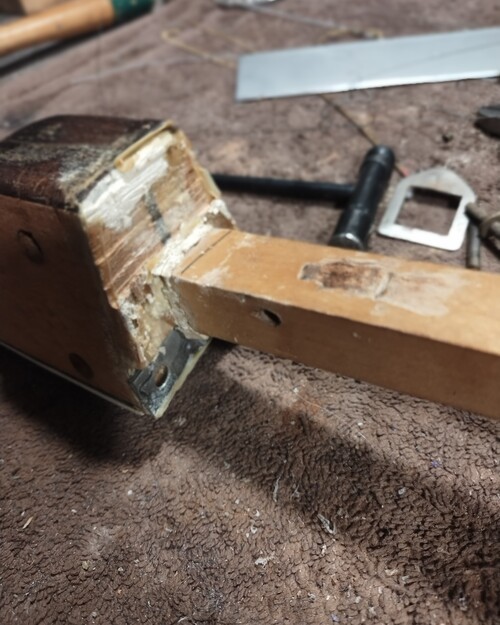
Wood putty, all will go bye bye.
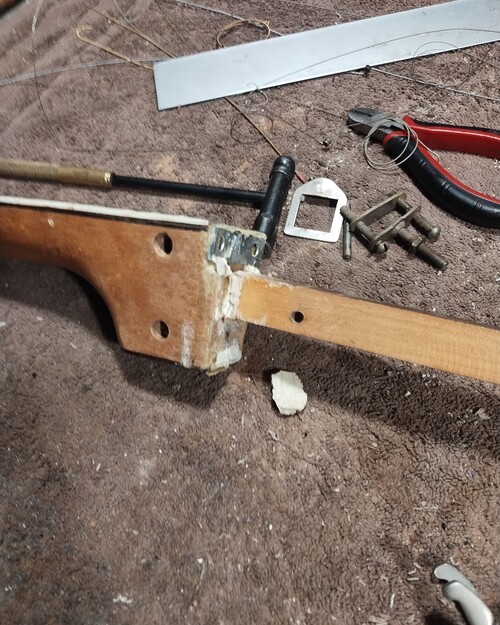
Chiseling the putty out.
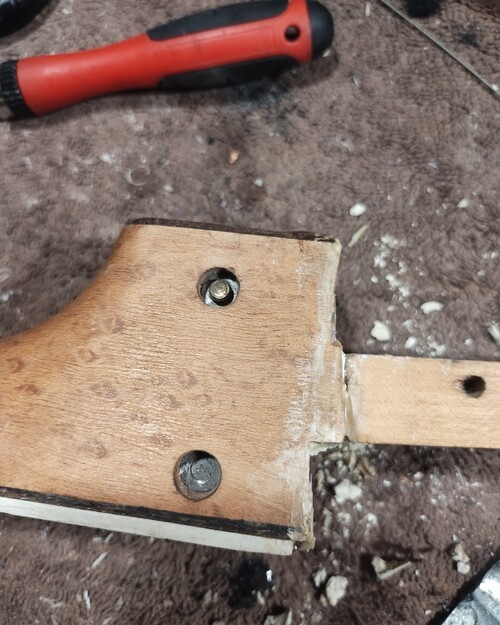
This was actually a solid fix for a no glue fix.
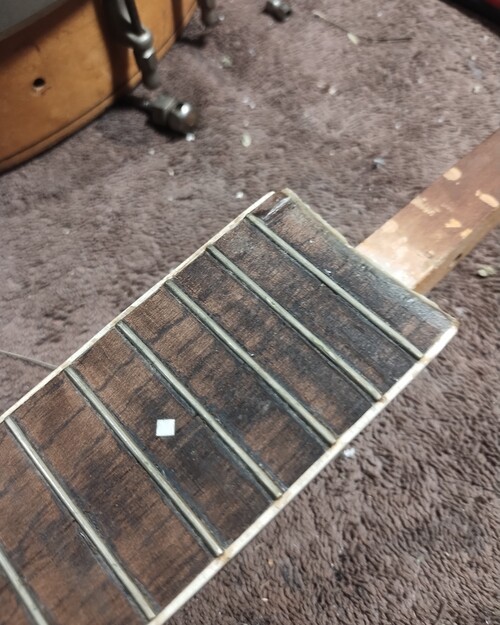
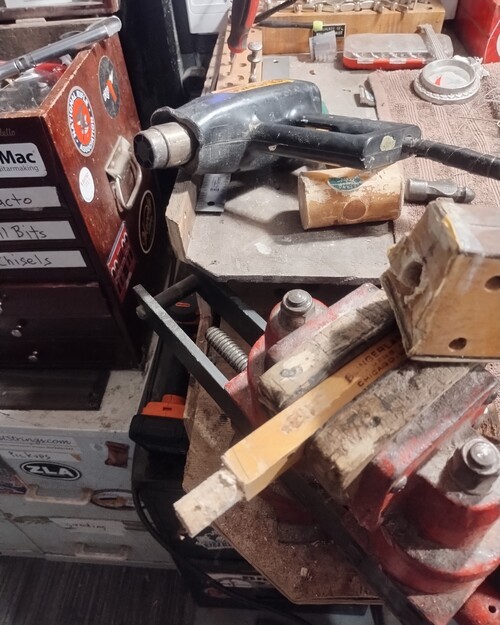
Not much heat to get it on out.
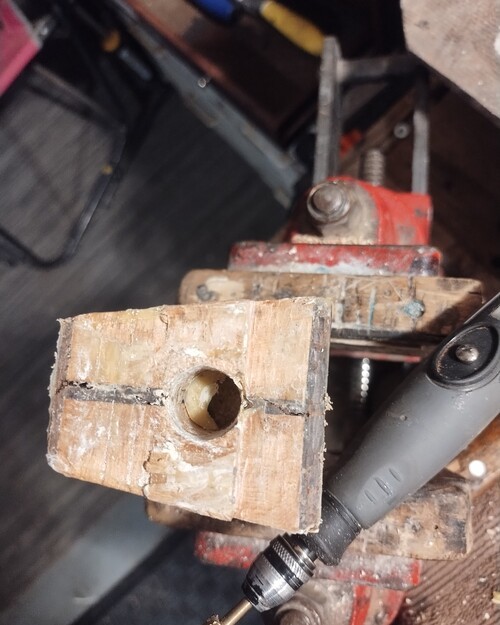
Using my burr to clean the wood putty.
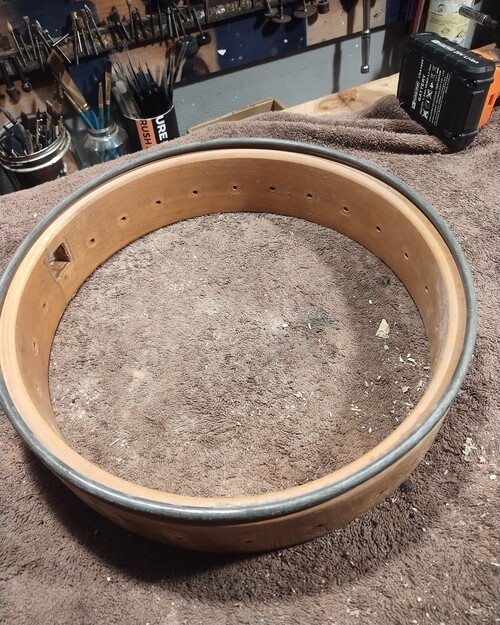
Rim stripped for inspection.
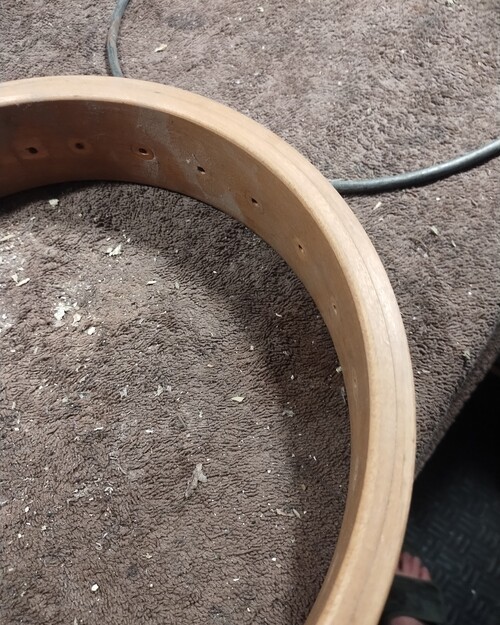
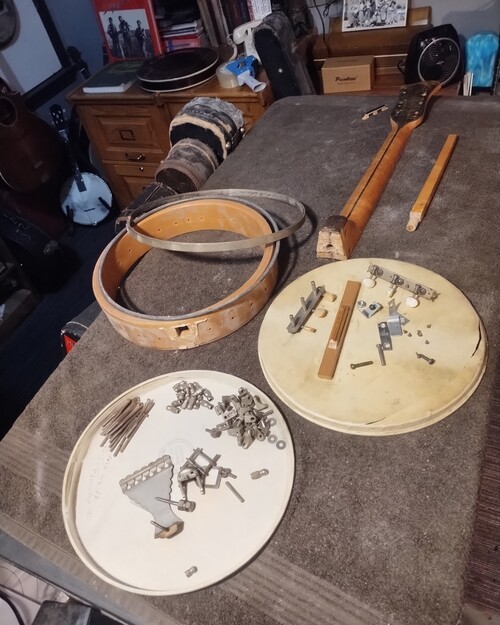
Dowel and heel cleaned.
Now I will start searching bins for the missing hardware.
I will suggest a few things as far as the work goes.
First an attempt to heat press the neck. Since it is laminated it is a toss-up as to how effective that is.
If it works, then compression fretting with modern fret wire, sealing all loose laminations, seal fingerboard, install new binding/ side marker dots.
Rebuild the heel to correct angle, reset the dowel, glue the heel properly, plug the holes where the screws were. Refinish the neck.
The rim is straight-forward. Strip/sand. Seal delamination's, refinish.
Clean all hardware, add missing hardware.
Replace skin head with plastic head, or face the needs that having a skin head requires.
Set up on light gauge strings.
I will suggest a few things as far as the work goes.
First an attempt to heat press the neck. Since it is laminated it is a toss-up as to how effective that is.
If it works, then compression fretting with modern fret wire, sealing all loose laminations, seal fingerboard, install new binding/ side marker dots.
Rebuild the heel to correct angle, reset the dowel, glue the heel properly, plug the holes where the screws were. Refinish the neck.
The rim is straight-forward. Strip/sand. Seal delamination's, refinish.
Clean all hardware, add missing hardware.
Replace skin head with plastic head, or face the needs that having a skin head requires.
Set up on light gauge strings.
Rim Assembly
I have stripped the rim and added new finish.
All hardware that I do have has been cleaned of rust and re-installed.
I have some shoes that I can make work if I have to that are close in style but am searching my sources for 6 more correct sets, I had 3 in stock, it was missing nine.
I installed a Remo 1200 medium crown head, bottom frosted.
I will stop here on the rim until I sort out the missing shoe set
All hardware that I do have has been cleaned of rust and re-installed.
I have some shoes that I can make work if I have to that are close in style but am searching my sources for 6 more correct sets, I had 3 in stock, it was missing nine.
I installed a Remo 1200 medium crown head, bottom frosted.
I will stop here on the rim until I sort out the missing shoe set
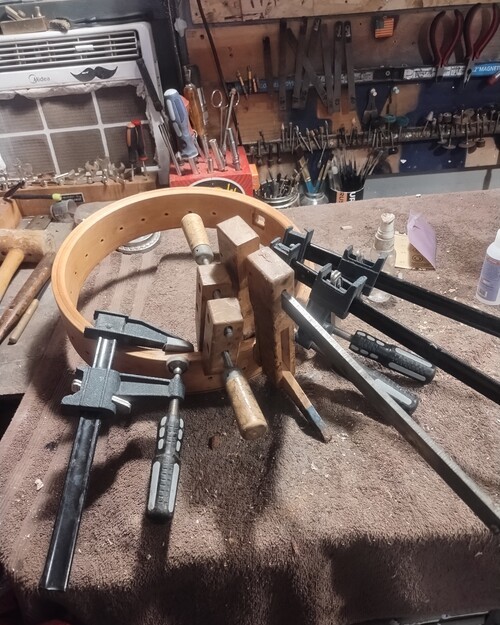
Delamination's all taken care of.
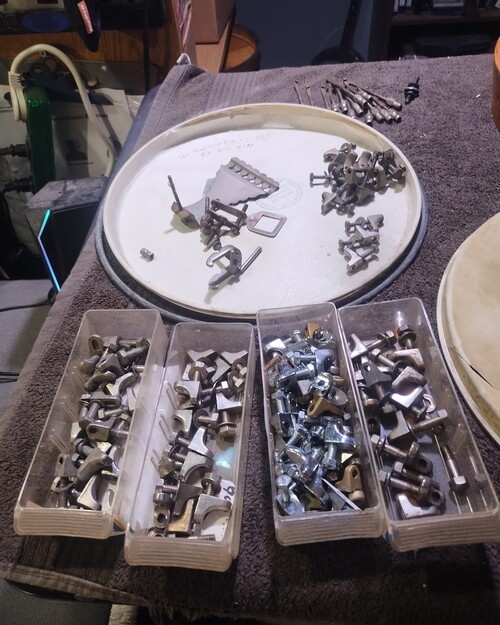
Out of all these I have 3 original's.
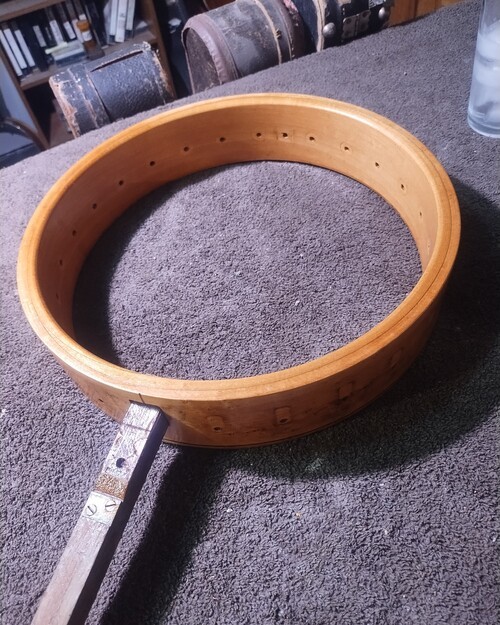
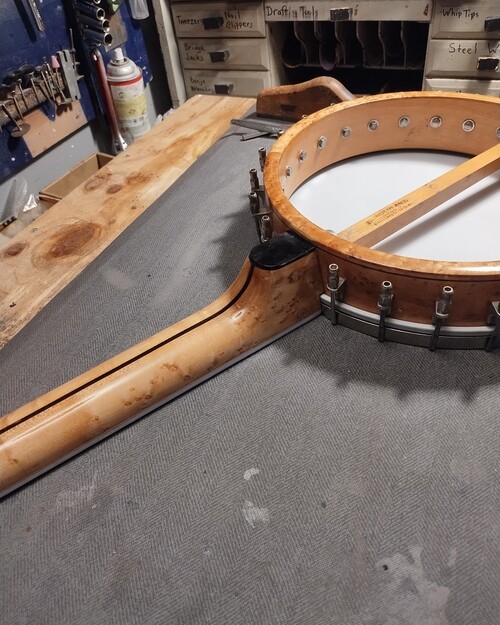
Rim finish complete, 3 coats nitrocellulose lacquer.
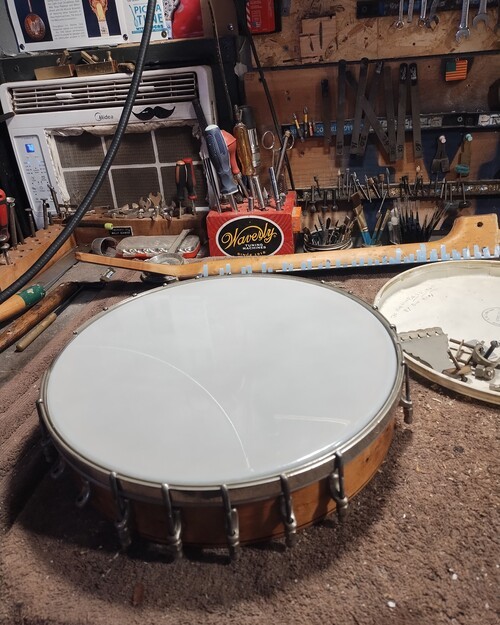
REMO head installed, not fully tightened yet.
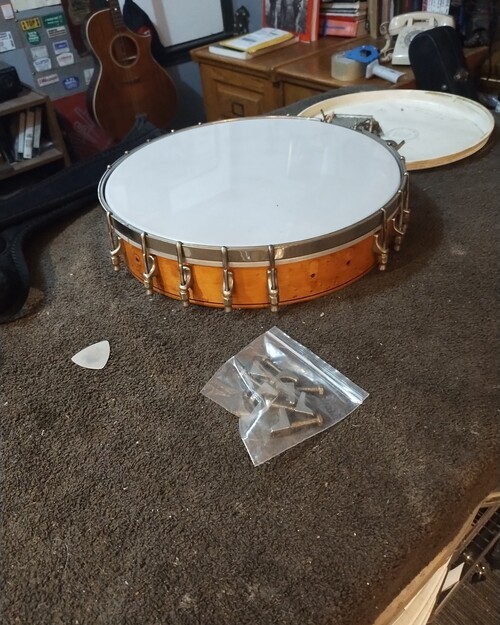
Correct hardware came in from my source in Tucson.
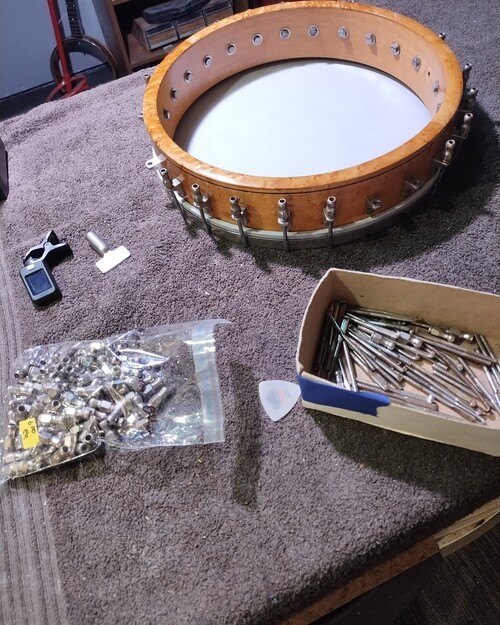
I have the flat hooks and nuts in stock.
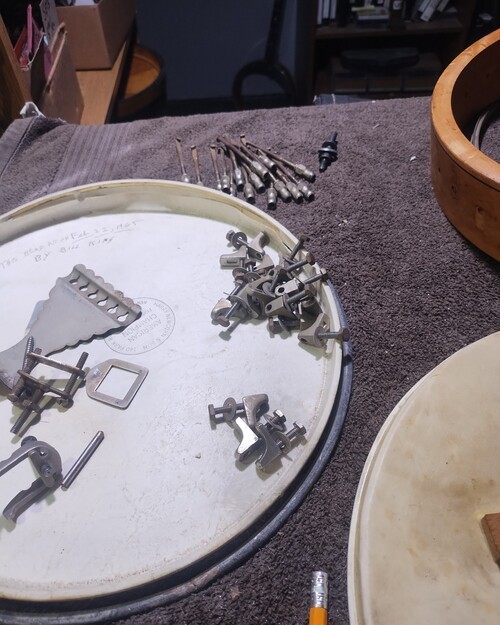
Checking for hardware in my bins.
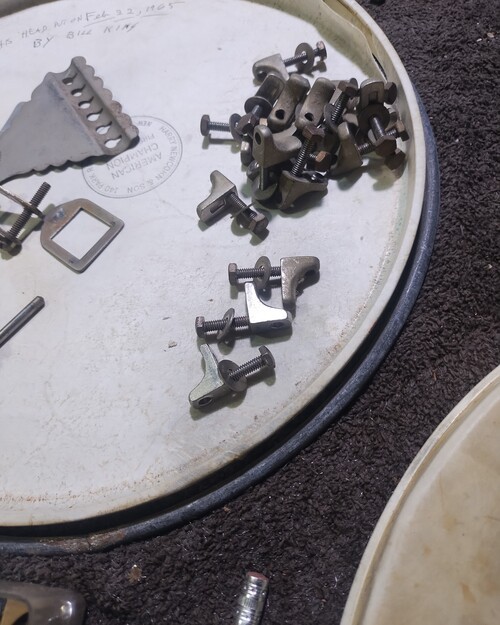
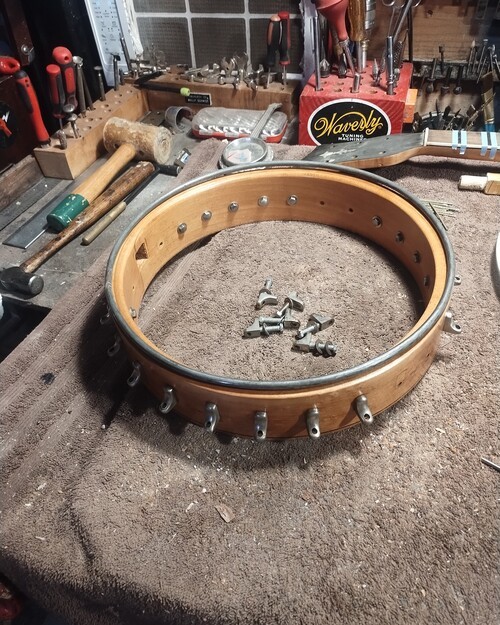
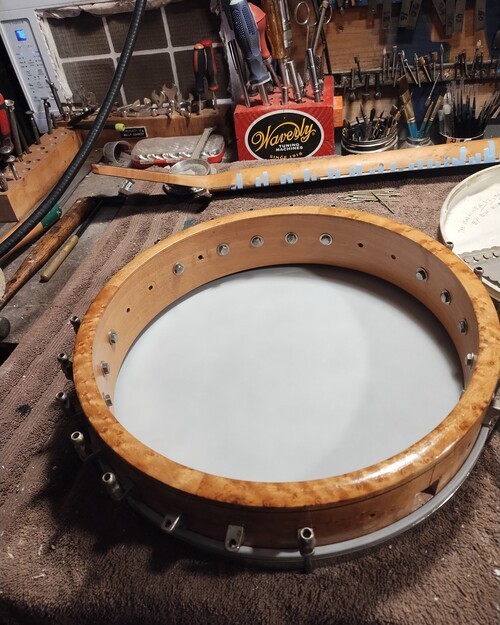
Waiting on hardware search to complete.
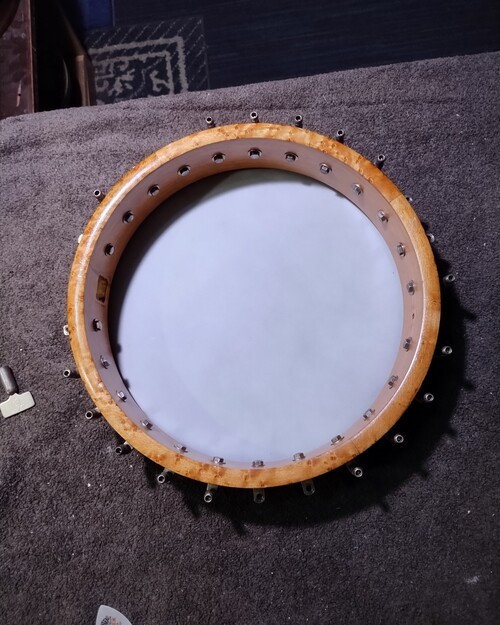
Now all matching anchor shoes and bolts.
Neck repairs
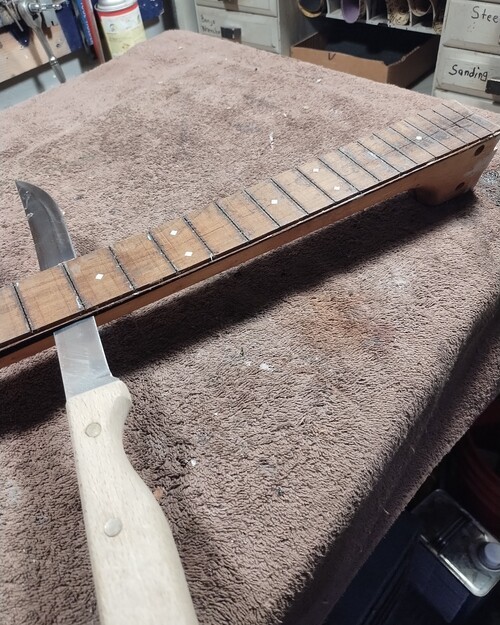
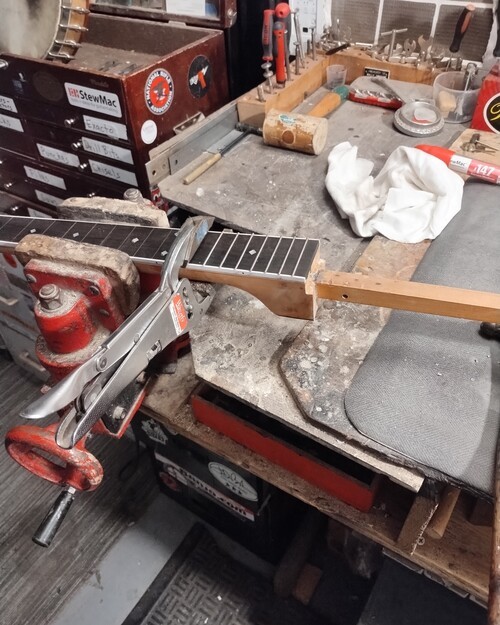
I will start by pulling the frets, taping off the pear wood so that there is no chip-outs around the slots. If you do not do this on pearwood, you will wish that you had.
After I pull them I press down the wood in the slots and then seal the edges of the slots with thin CA, that wicks up and under the wood and seals any chips that the tape held down.
After I pull them I press down the wood in the slots and then seal the edges of the slots with thin CA, that wicks up and under the wood and seals any chips that the tape held down.
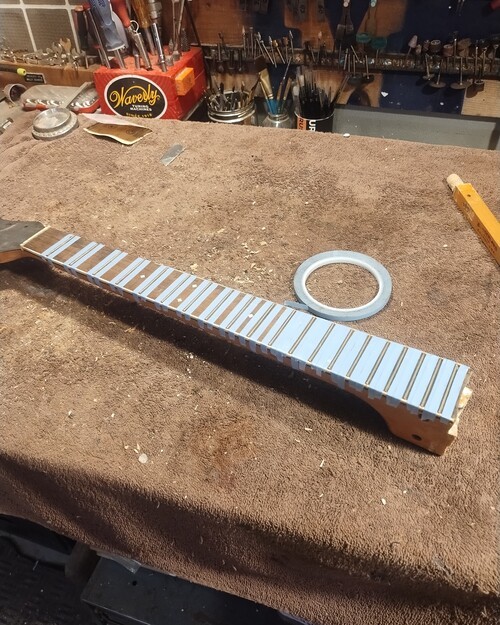
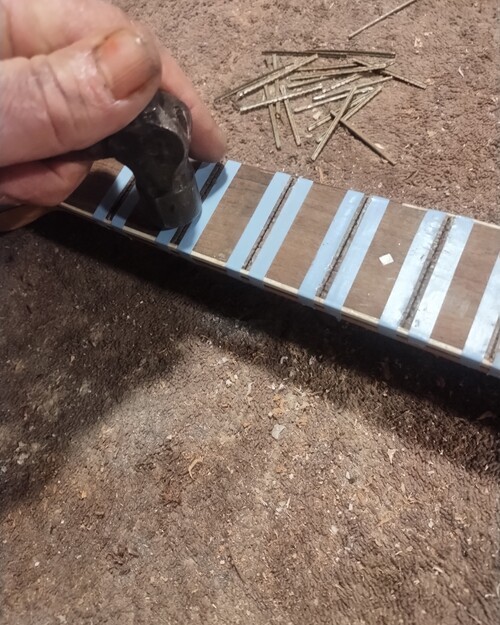
Pushing down the edges.
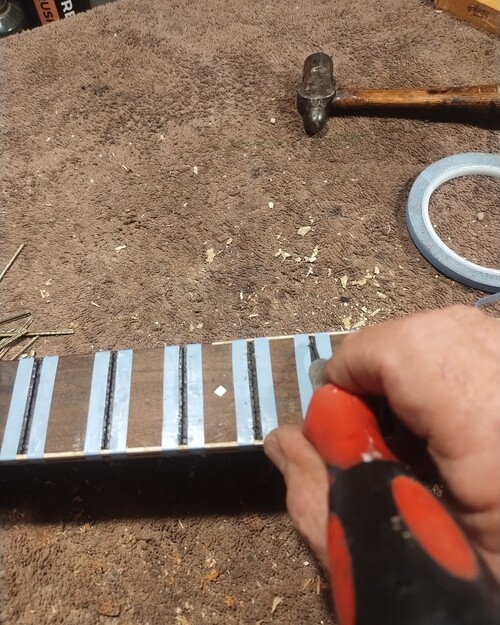
Clearing the excess.
1st 3rd was barely glued at all.
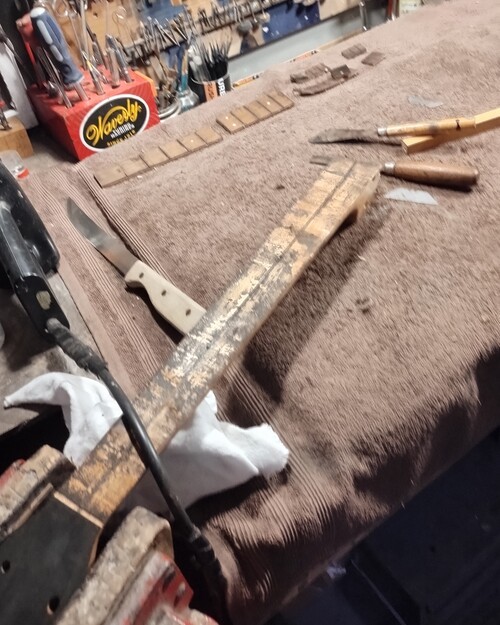
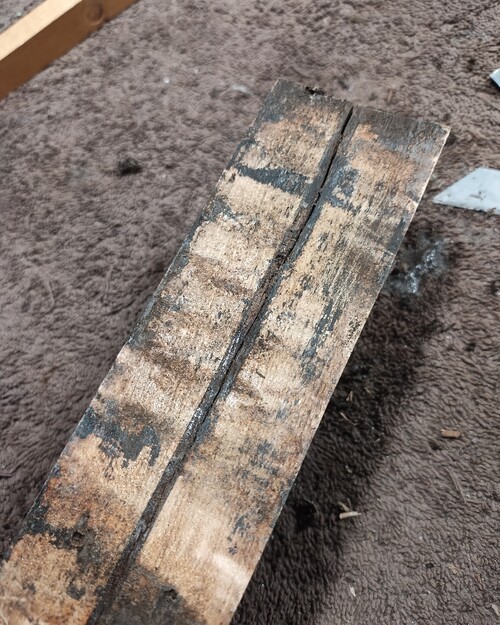
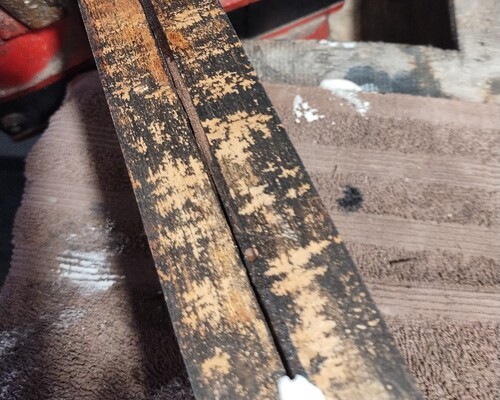
Center laminate separation 2/3's the length.
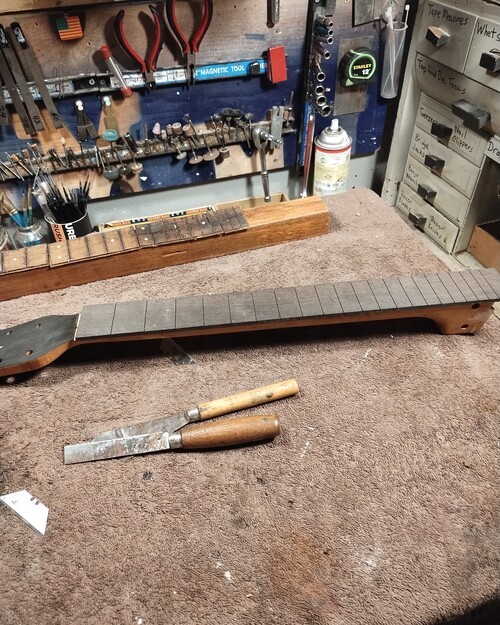
I will use AA grade rosewood, and original inlays.
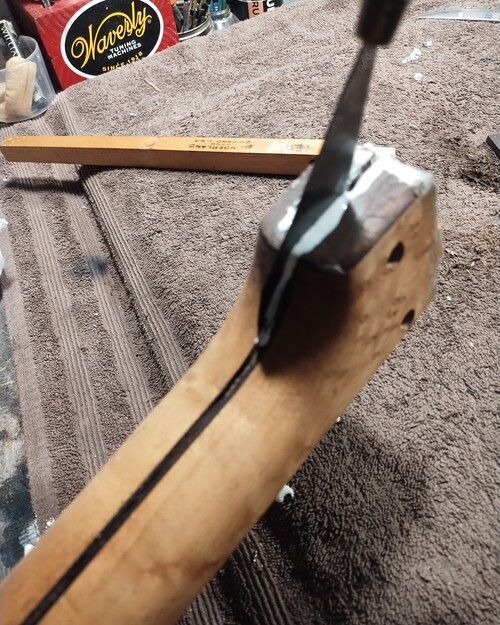
Spread the wood, feed the glue, make it squish, repeat.
A little more to go.
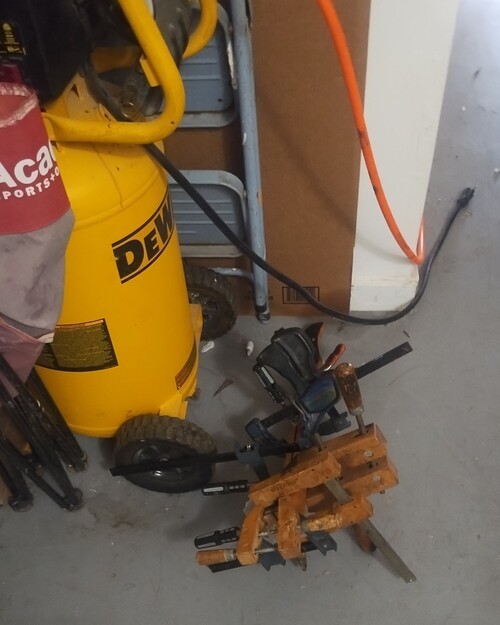
In clamps 24 hrs.
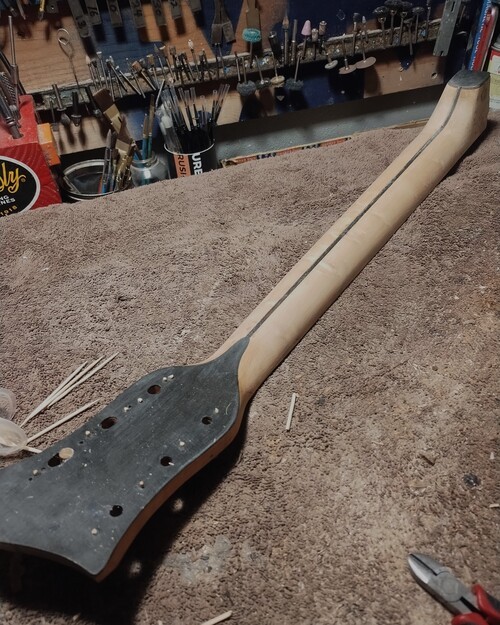
Filling screw holes.
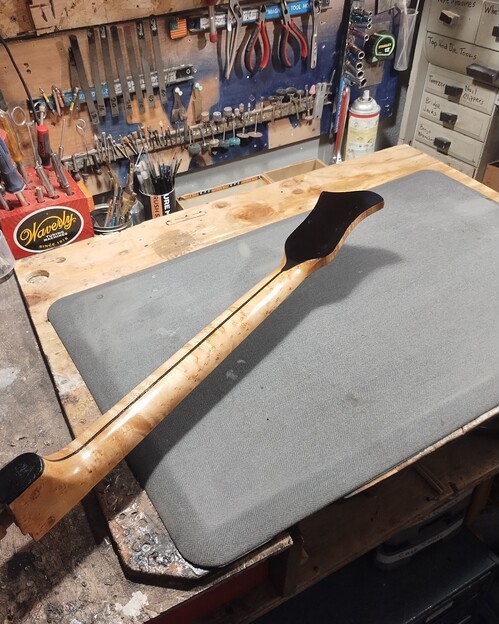
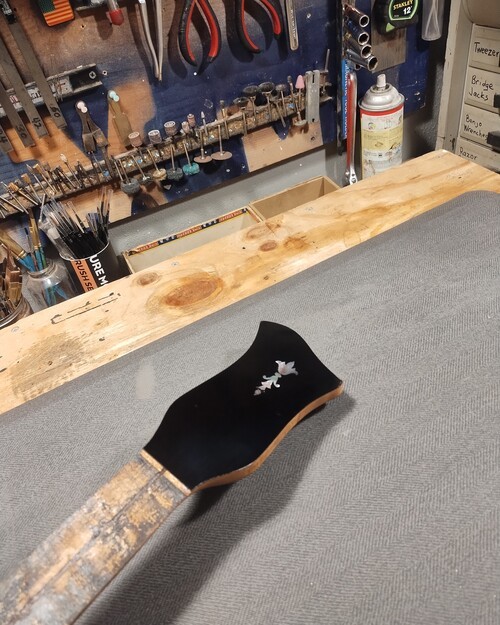
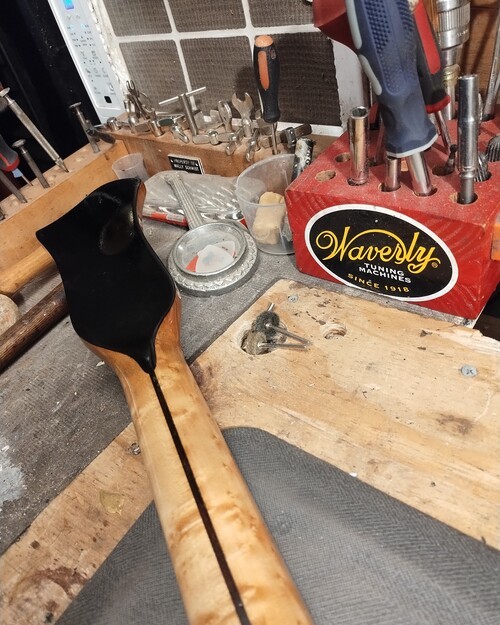
Heel cap added, both overlays dyed.
Next, prep for maple laminate.
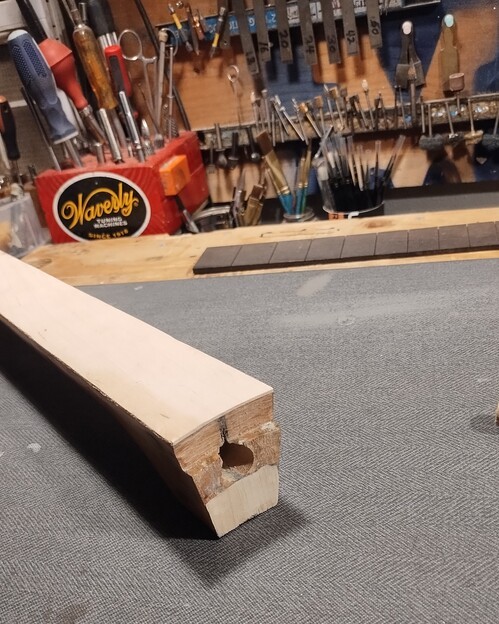
Heel area repaired.
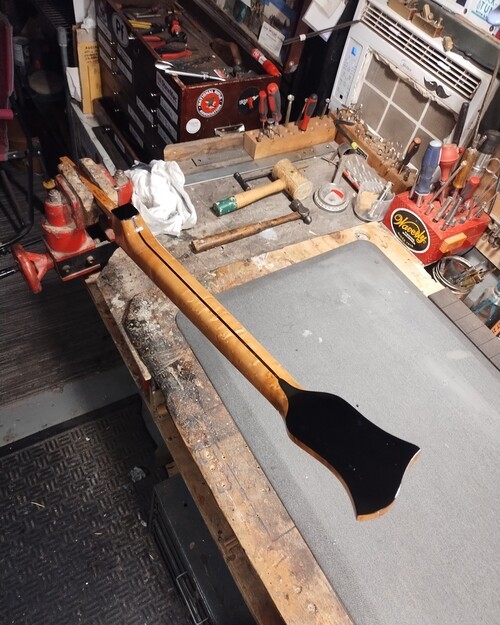
Another sealer coat and now for a fingerboard.
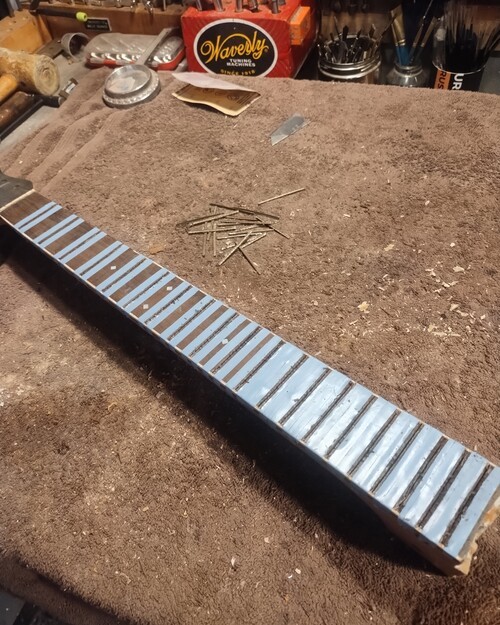
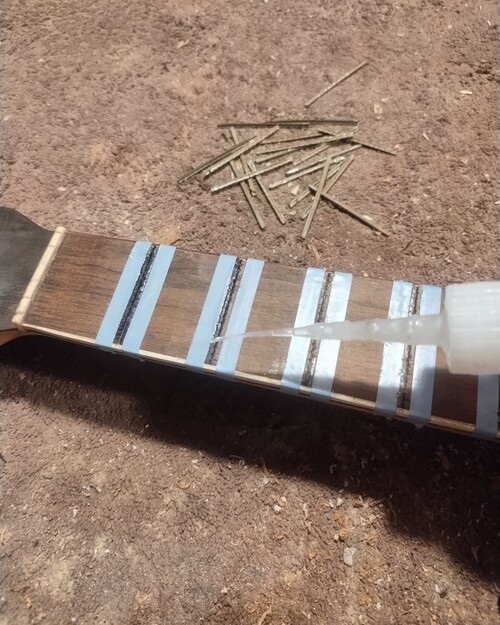
Sealing the slot edges.
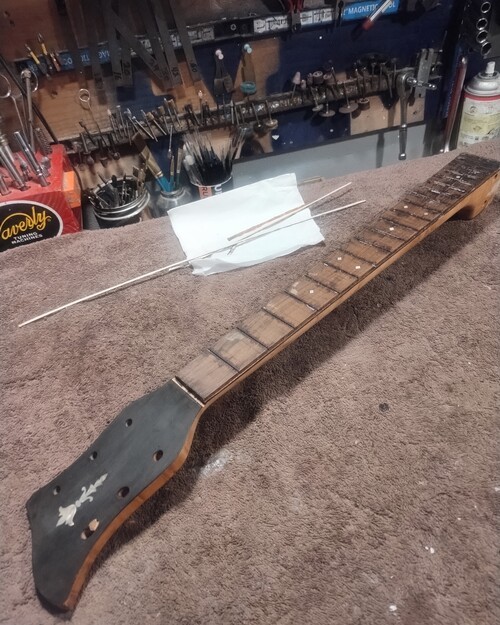
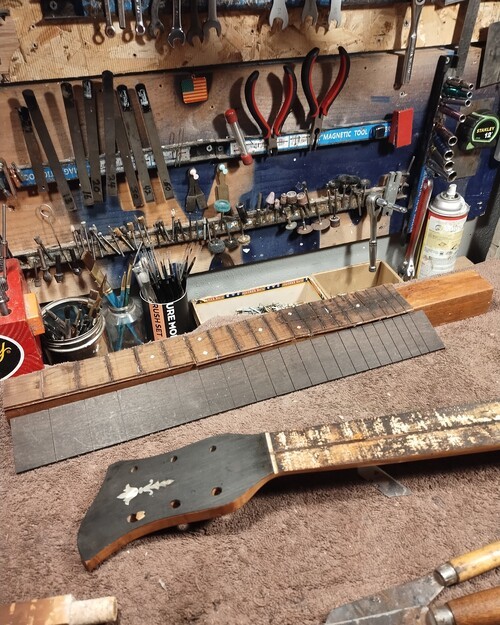
Binding off , board too degraded to save.
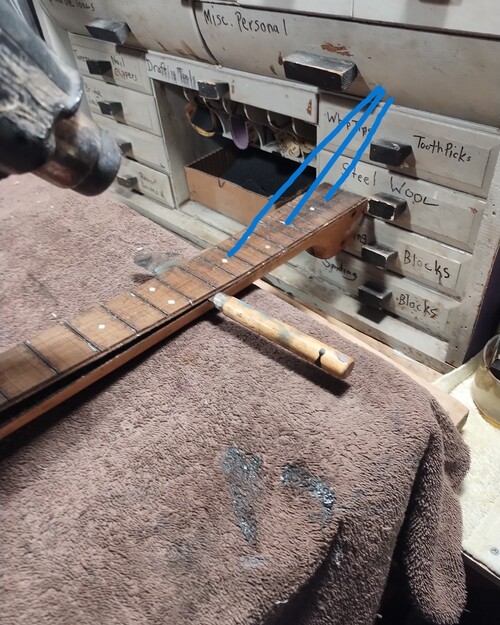
This is where it ia ll degraded and cracked up.
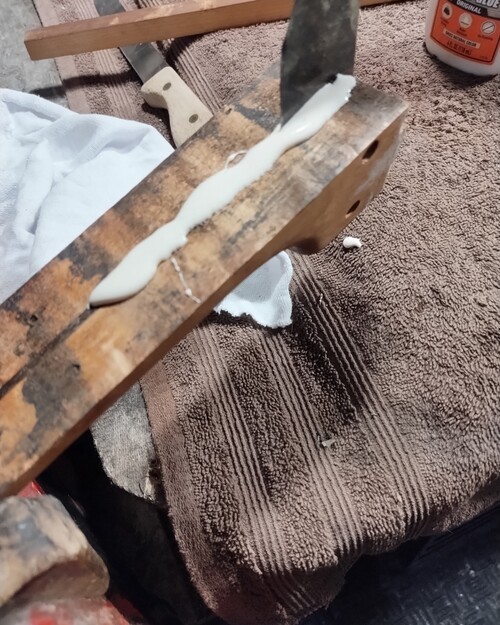
Now to feed glue down the seams.
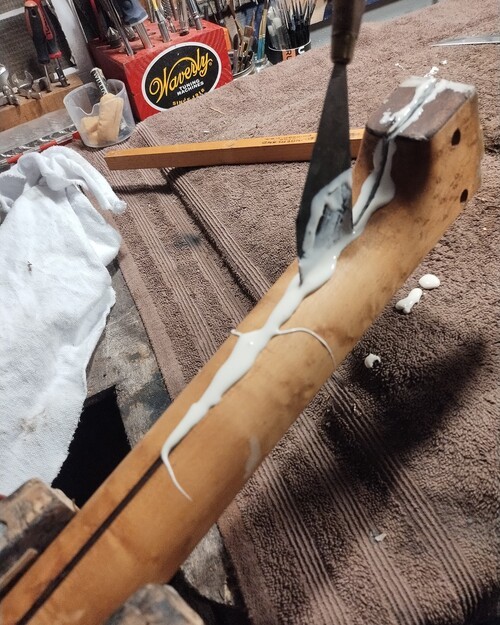
Moving up the neck.
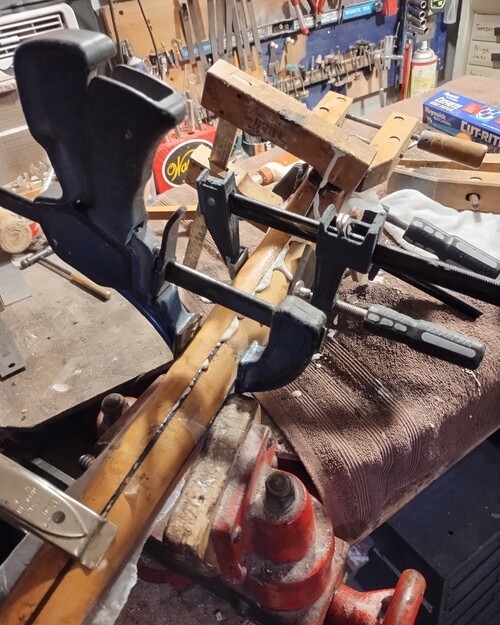
Beginning to clamp and press.
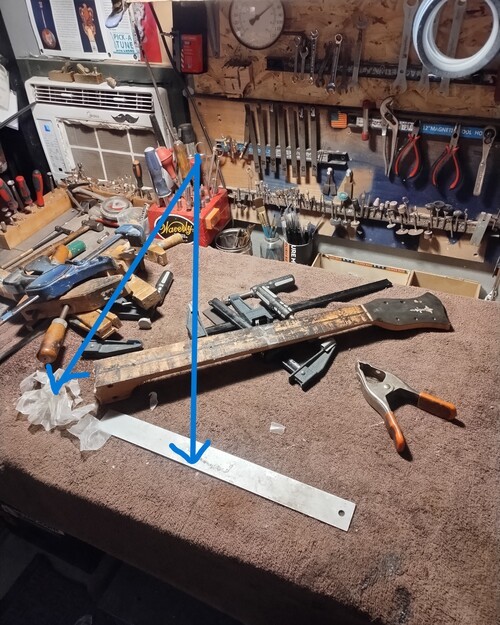
Wax paper and flat steel were used for quick release topside.
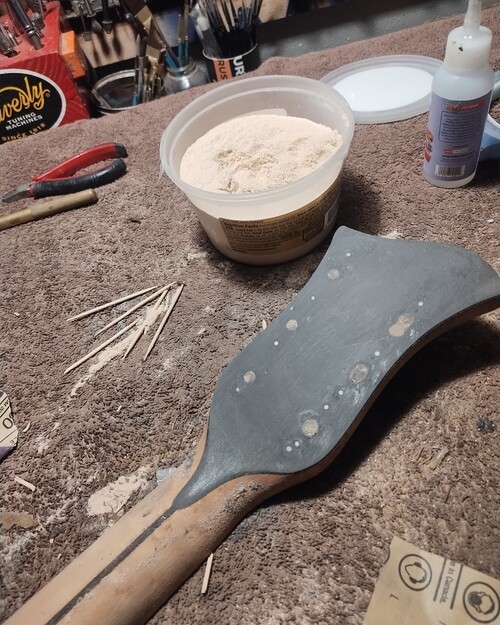
And all peg holes - wood flour./CA
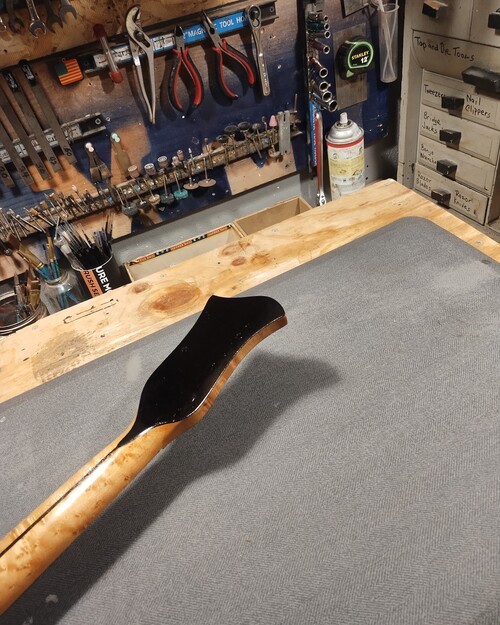
Sealer coat to protect things as I go.
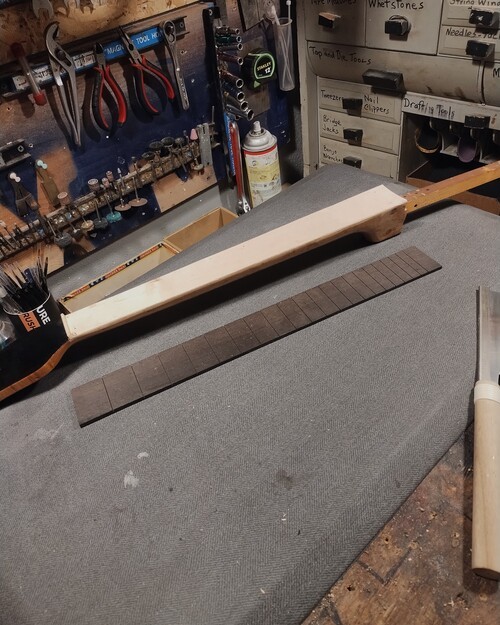
Cut to the chase, done, leveled.
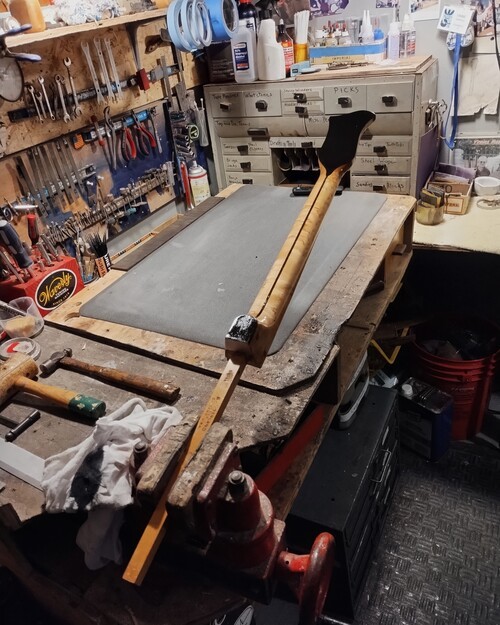
Dowel installed.
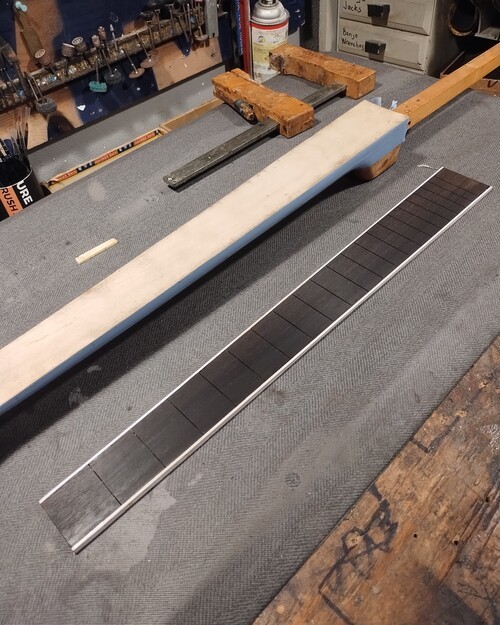
The owner wanted the fingerboard to be bound as it was before so I made a jig to cut the fingerboard into profile for the neck.
We will go from there.
We will go from there.
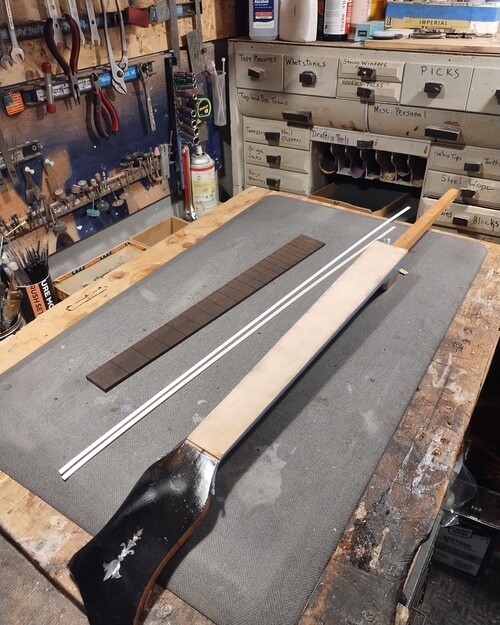
I will install binding first.
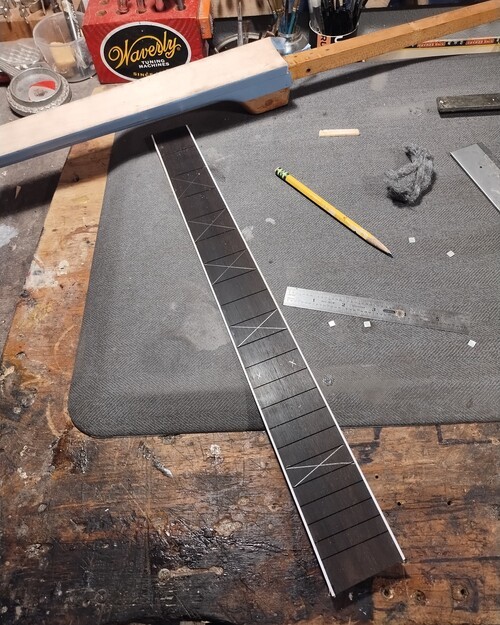
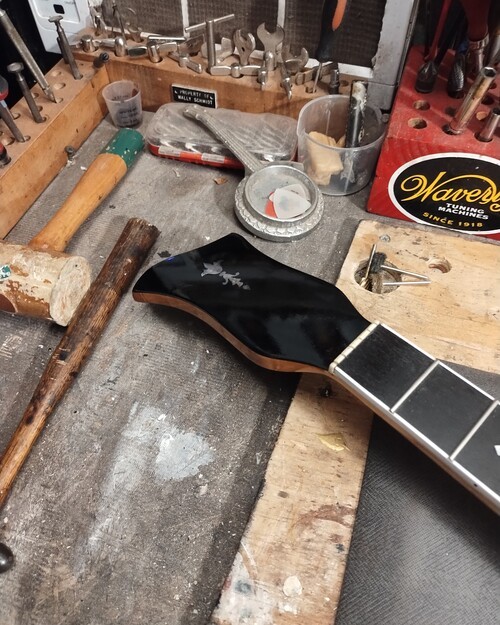
New MOP, same style as original.
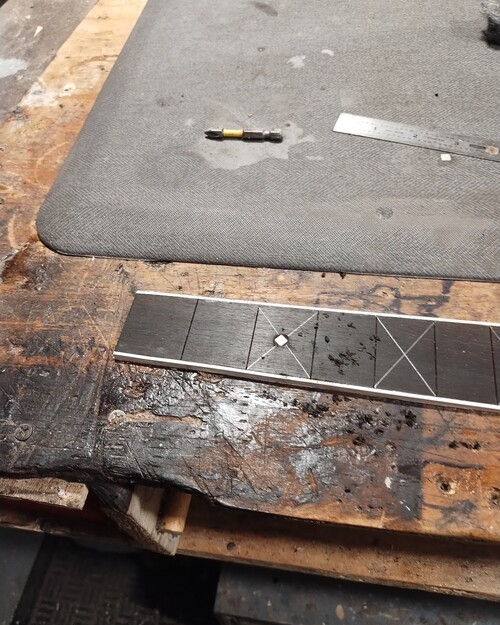
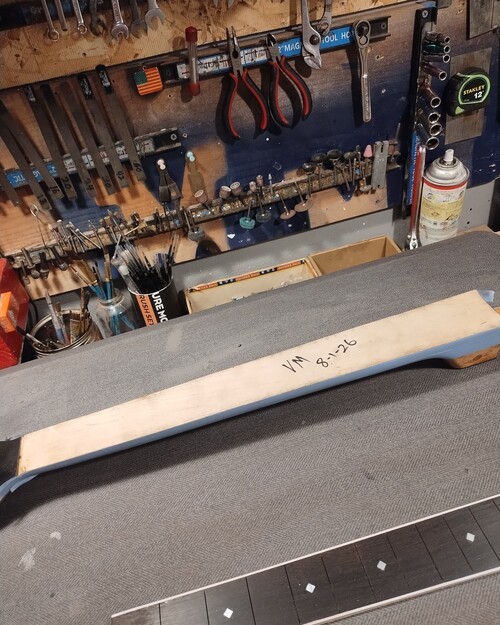
With luck, no one will ever see this.
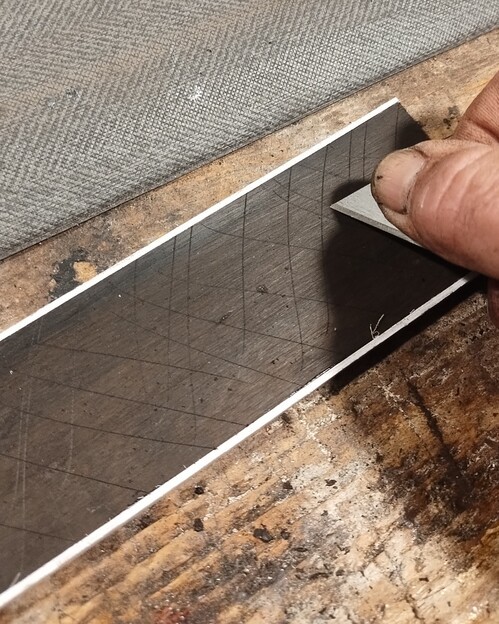
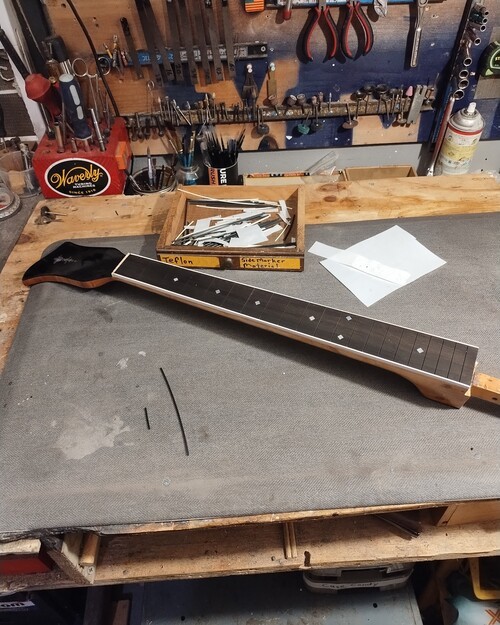
All profiled, adding side markers.
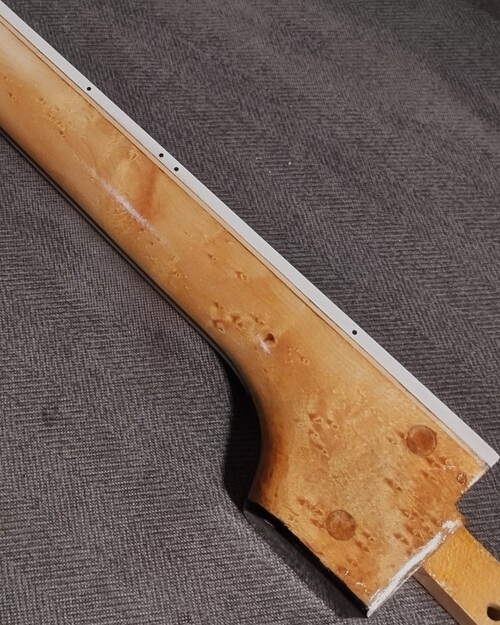
Ok, that is better. 2 dots at the octave.
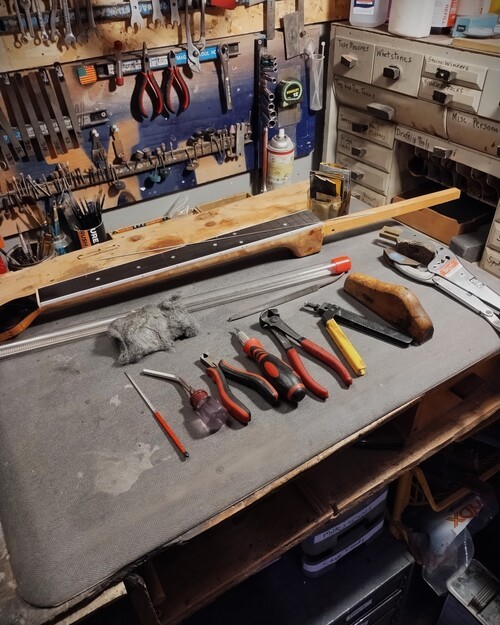
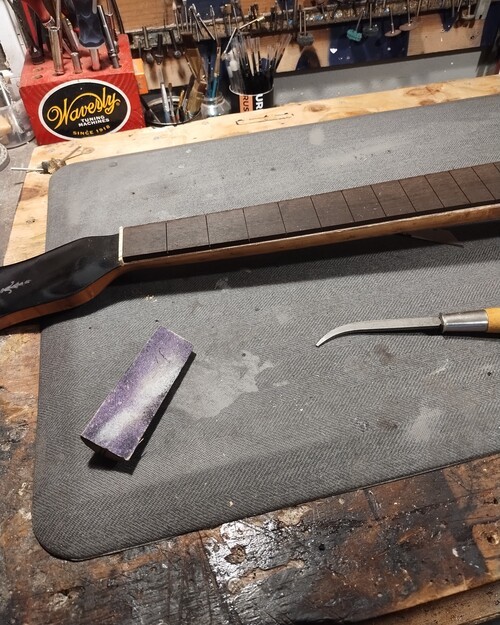
Ready for fretting.
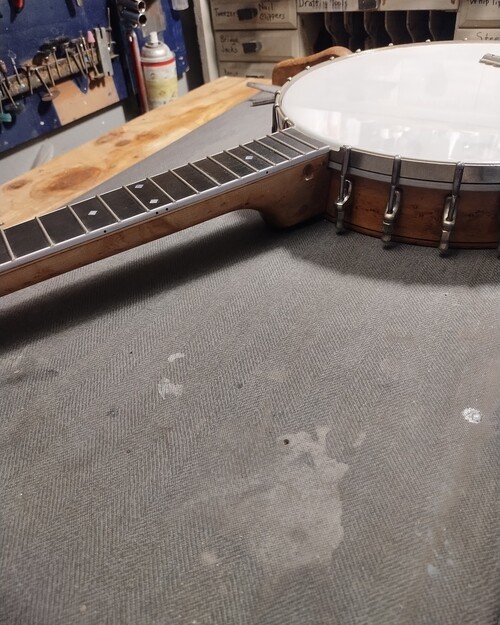
Good neck angle and elevation.
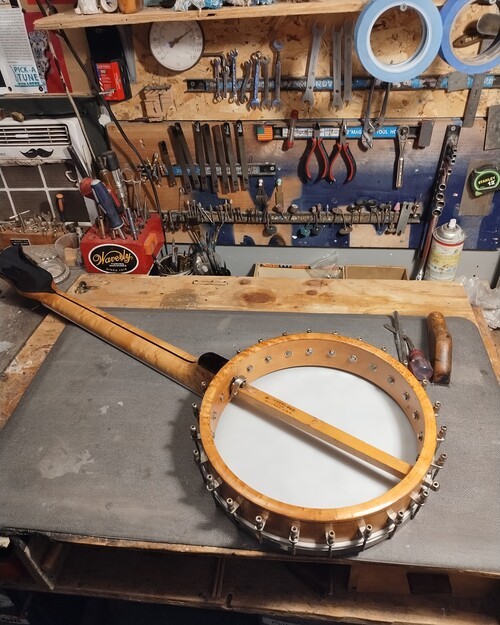
All looks as it should.
Ready for final fret dressing.
I will use white celluloid.
All leveled and ready for inlay.
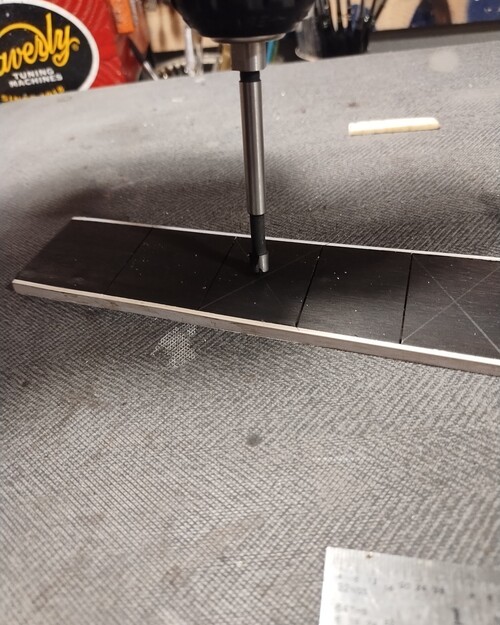
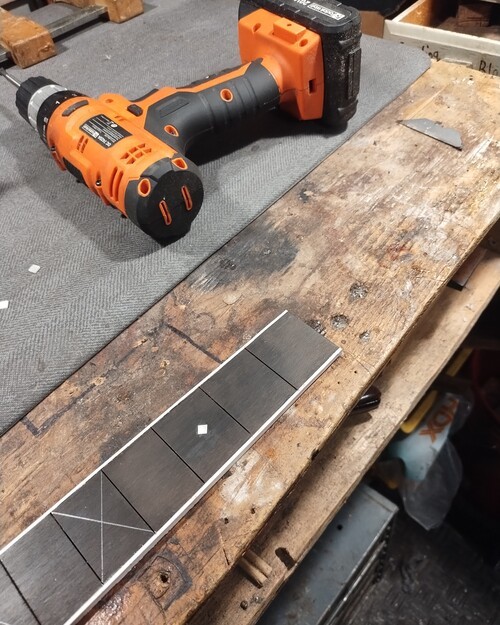
Now for the rest of them.
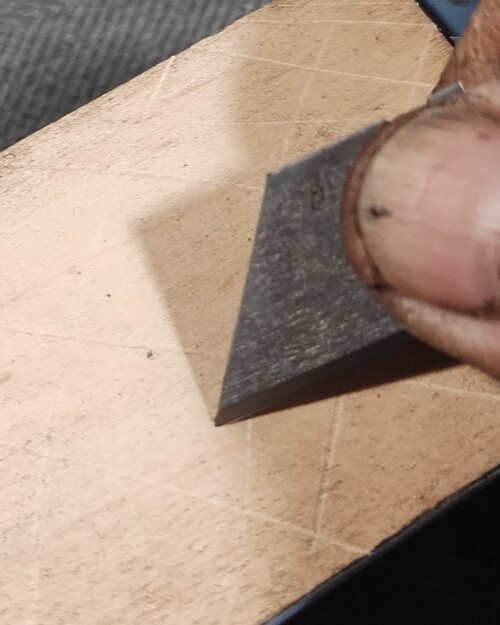
Scoring the wood for glue anchor.
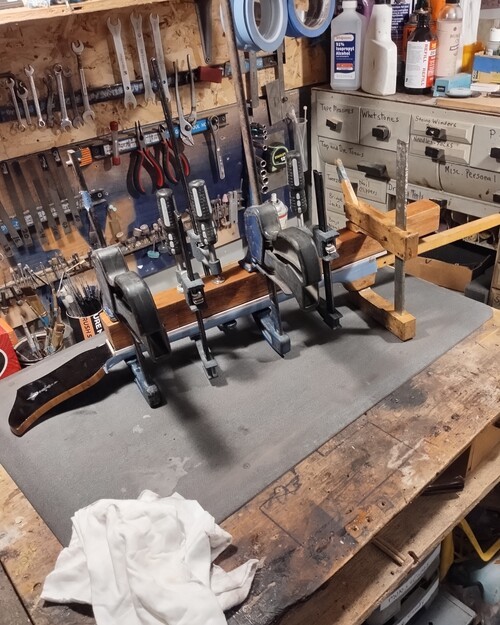
Curing.
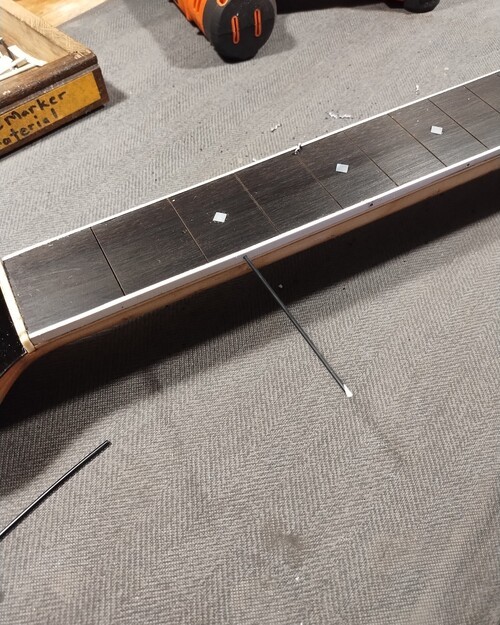
"Curb feelers"
StewMac # 147 wire.
I will make a new bone nut.
Tuning machines are ordered.
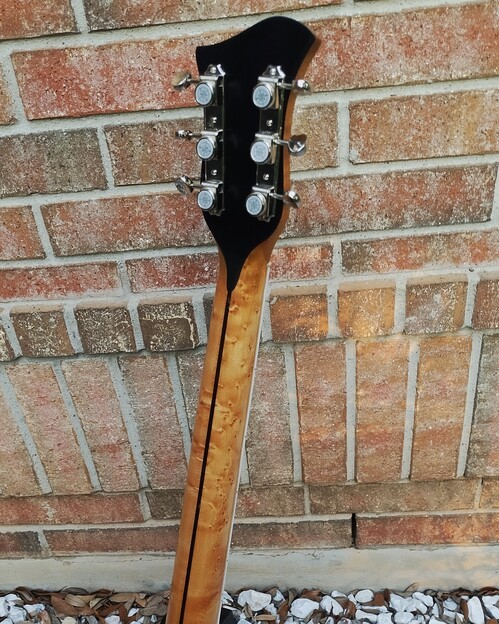
Tuning Machines
Guyker Locking Tuners
Plate style - 15:1 ratio
Guyker Locking Tuners
Plate style - 15:1 ratio
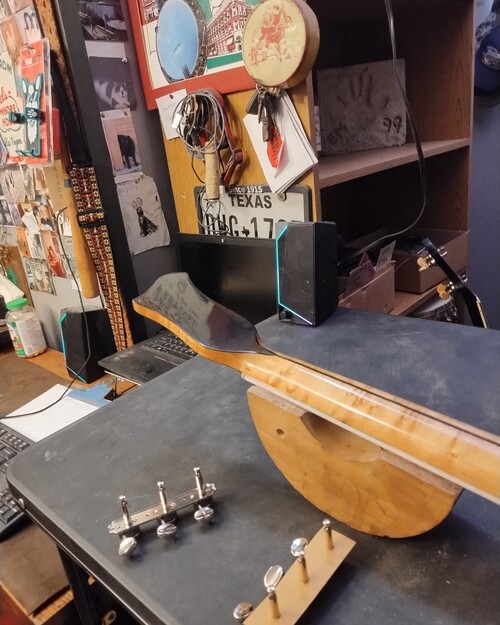
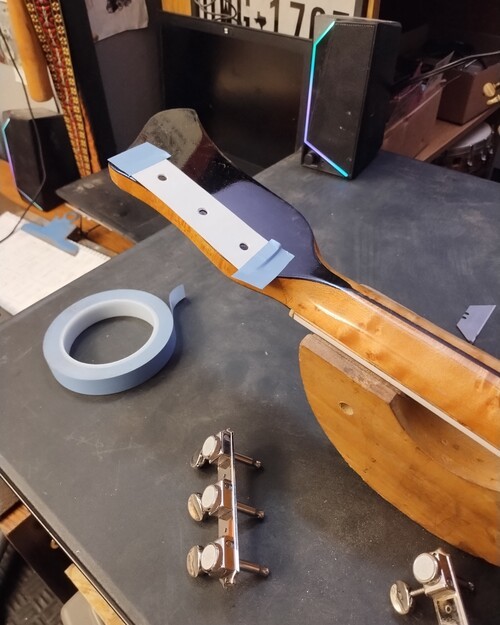
Made a drill template.
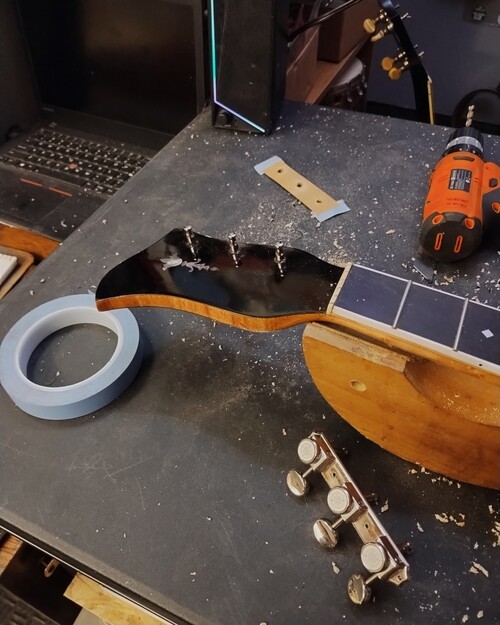
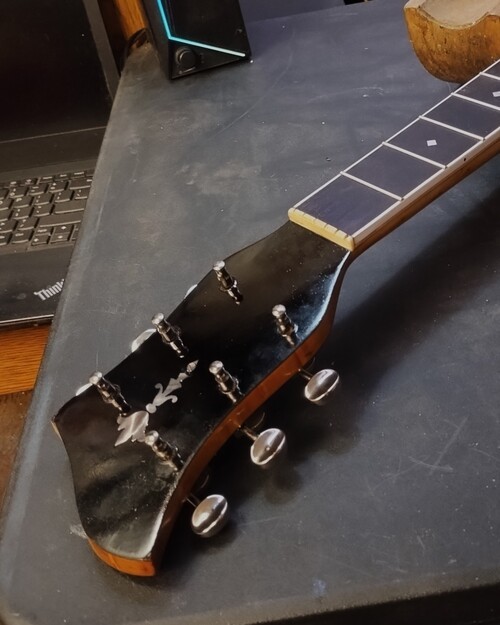
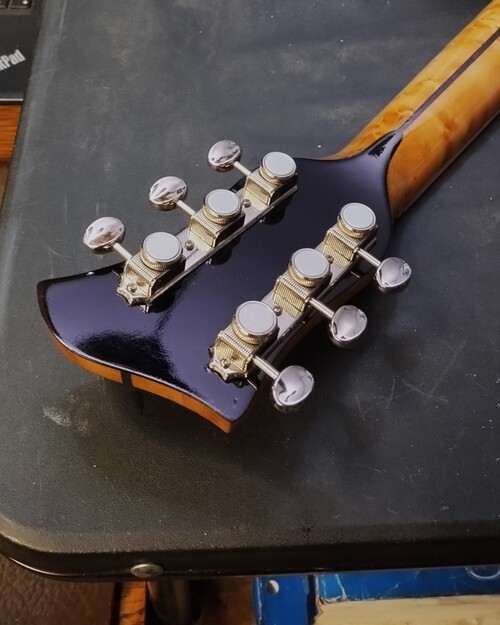
Very smooth.
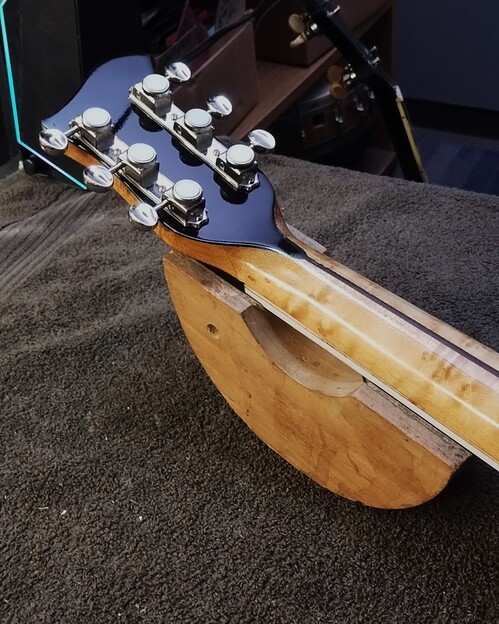
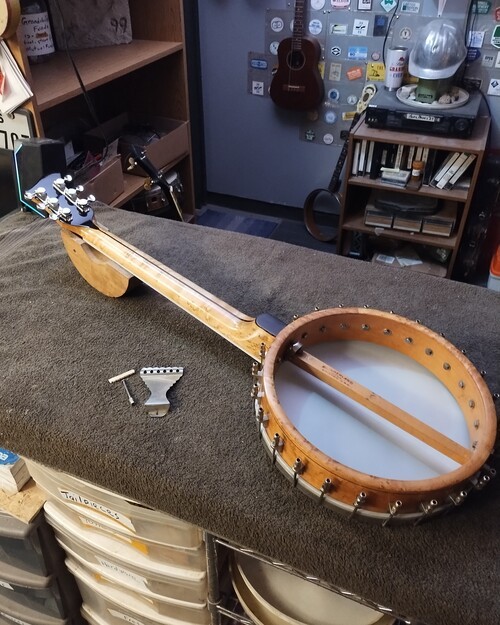
Ready for setup.
SETUP
I will show how the locking tuners work and how I do them.
I put enough slack to get at least 1/2 wrap on the posts, on the wounds. And then a full wrap on the steels, for insurance.
You must loosen them enough to get the string into and through the post.
I will show how the locking tuners work and how I do them.
I put enough slack to get at least 1/2 wrap on the posts, on the wounds. And then a full wrap on the steels, for insurance.
You must loosen them enough to get the string into and through the post.
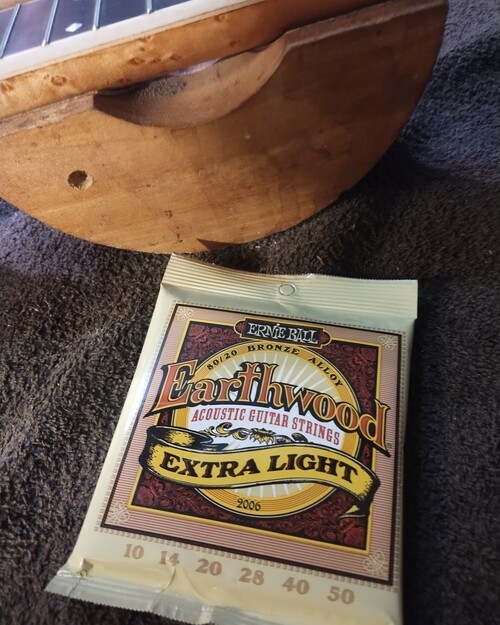
I will go with extra light seeing as there is no truss rod.
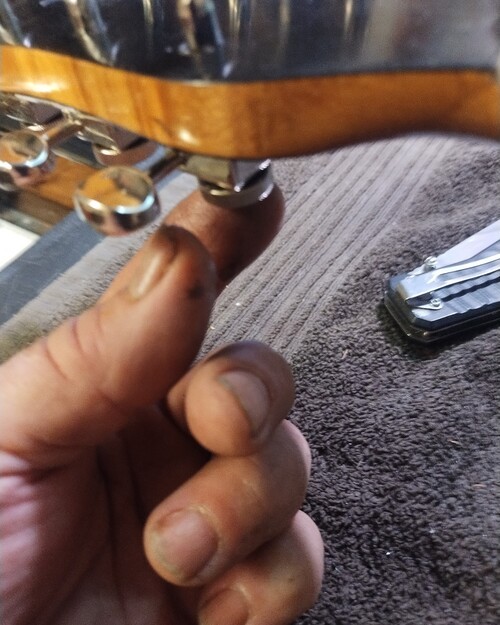
Loosening the thumbscrew.
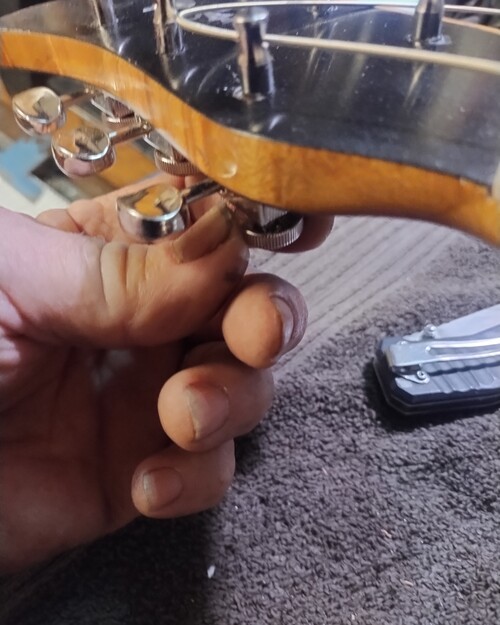
Tighten snugly.
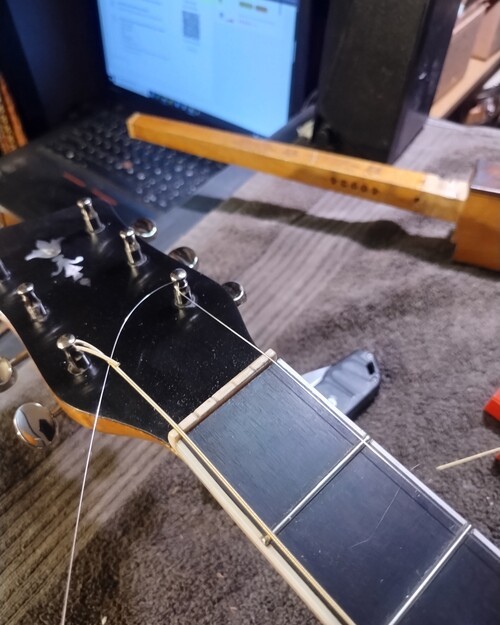
Full wrap on steels before locking.
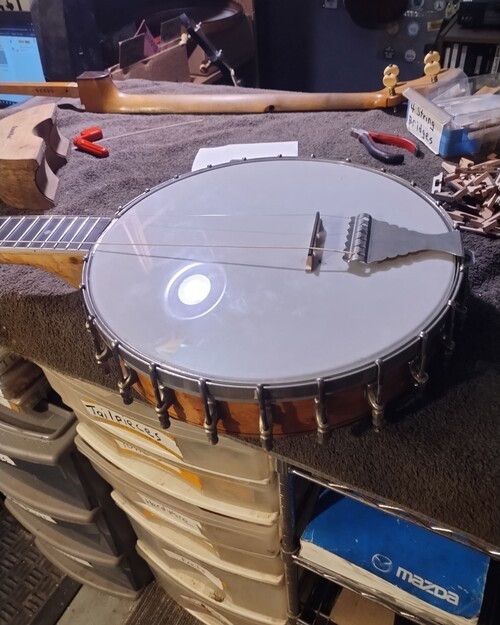
Bridge base cut at slant, for a better bite to the head.
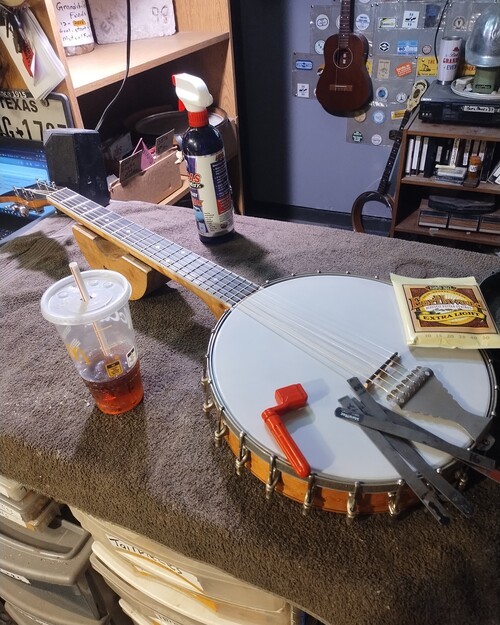
Tuned to pitch, action is normal so far, no fret-outs so far.
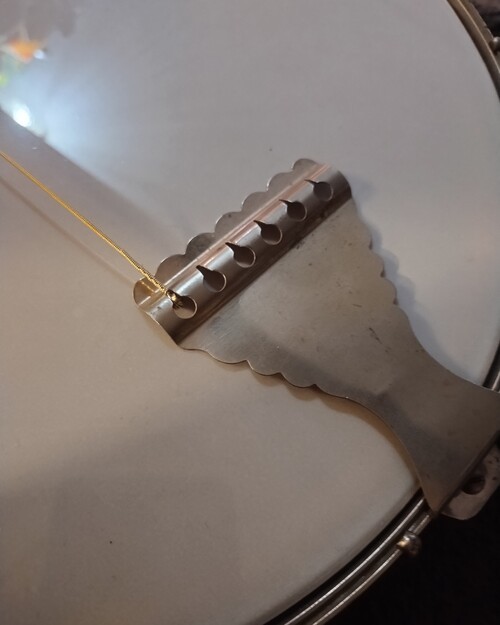
How the ball end slips into the tailpiece.
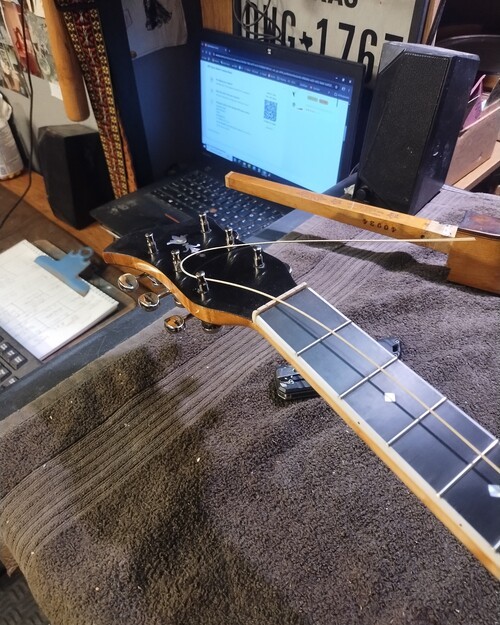
Just a little slack.
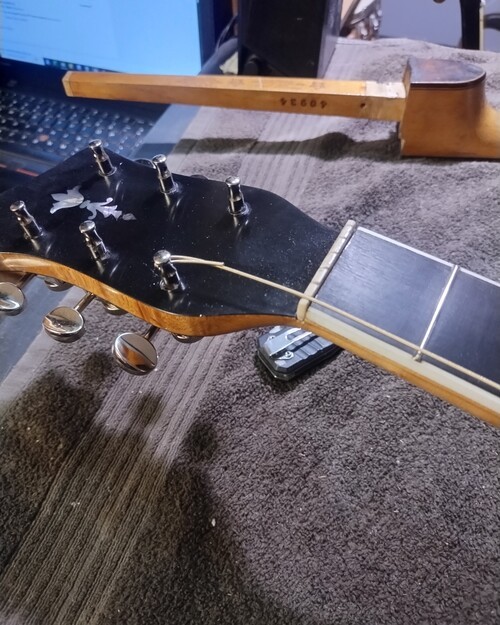
The tail will go under the string.
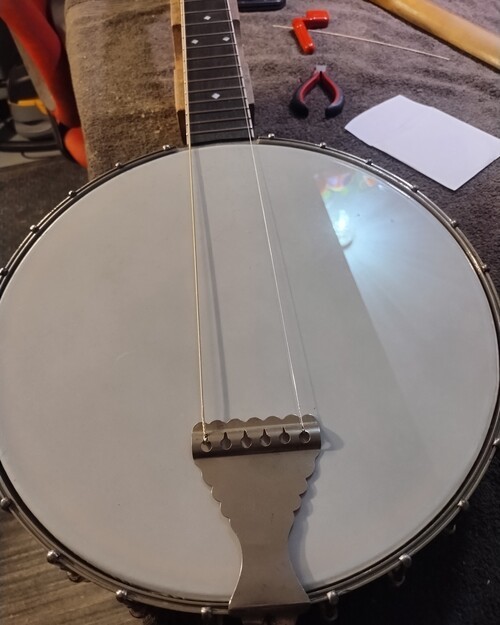
Heel cut is good, neck centered well.
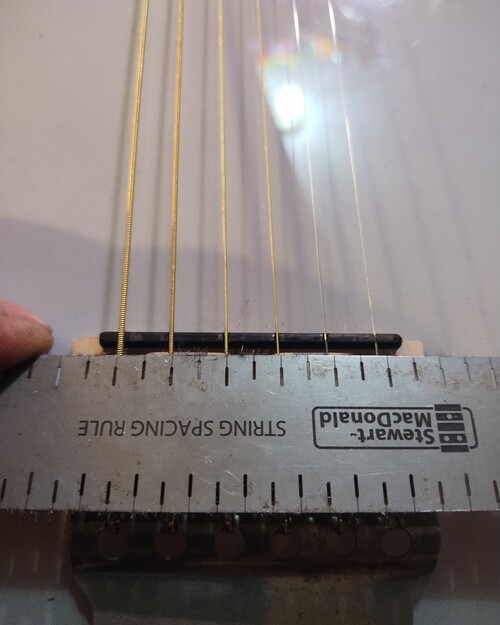
Getting the string spacings correct for width of fingerboard.
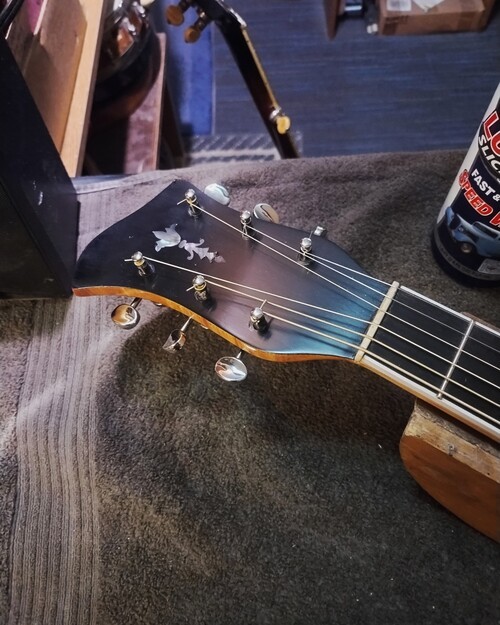
I will let it settle in before any final adjustments.
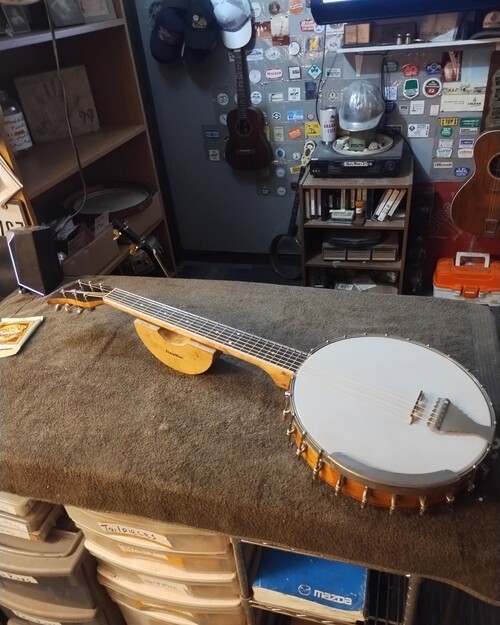
Added a period Elton armrest.
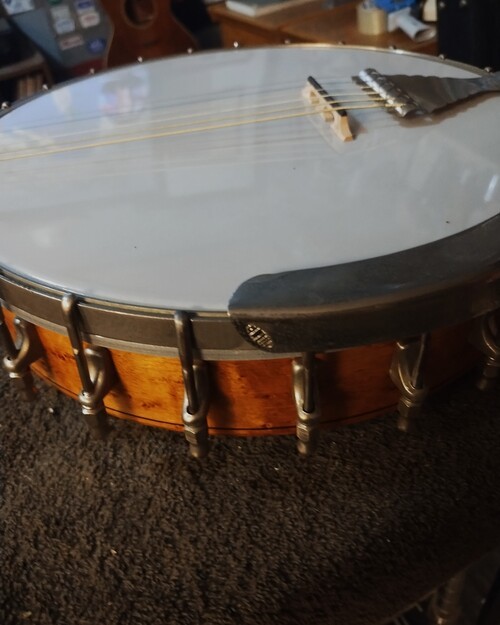
Nobody likes their arm on banjo hooks.
FINAL PICS
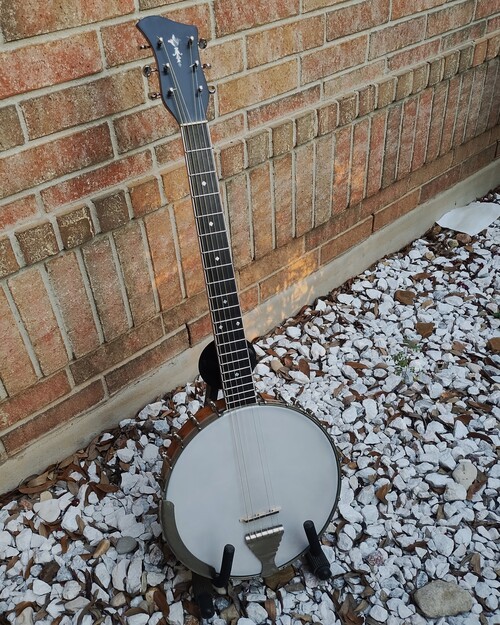
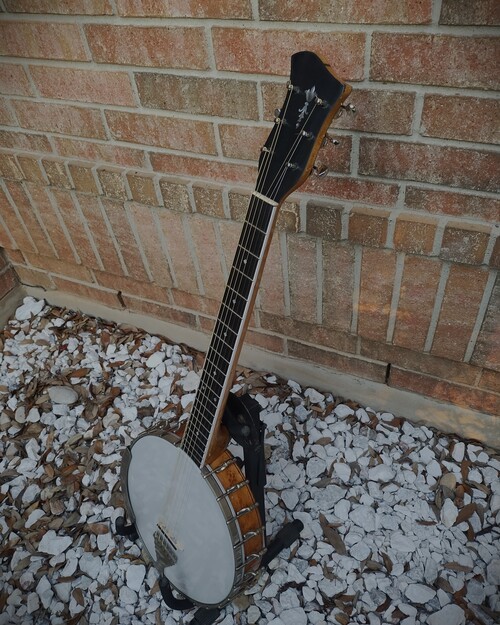
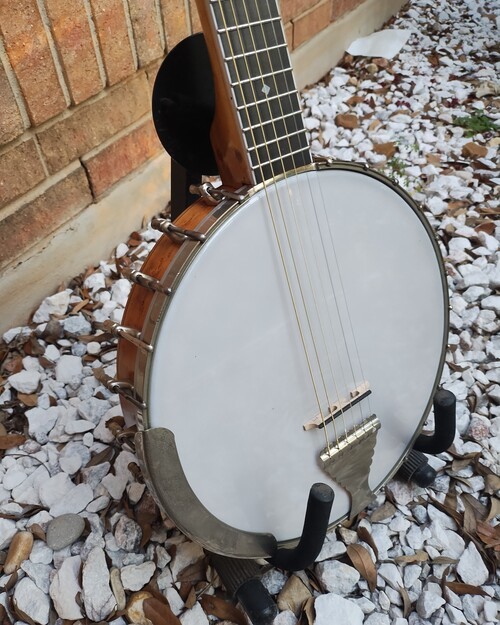
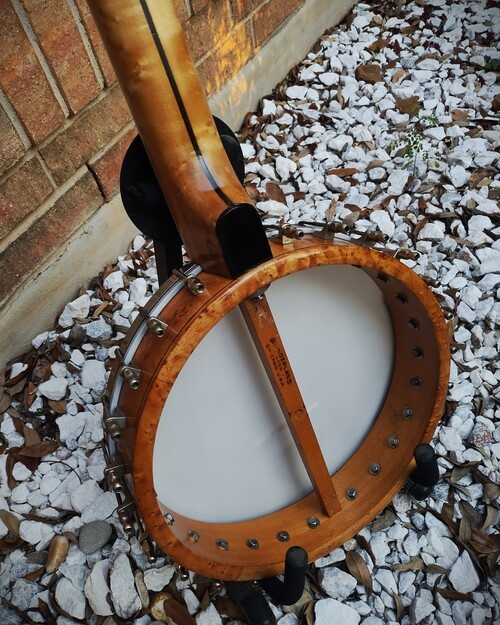
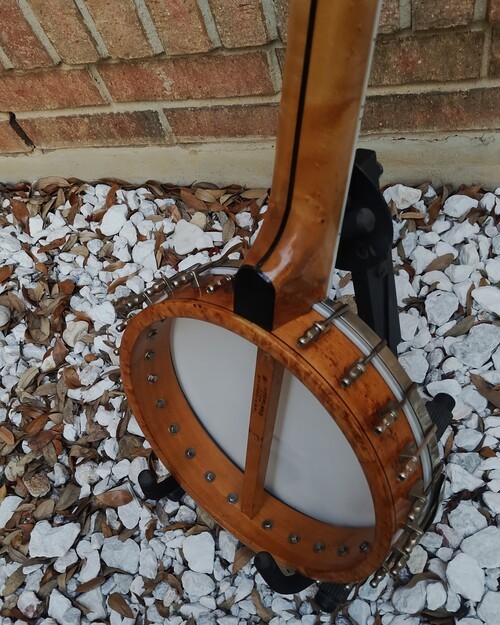
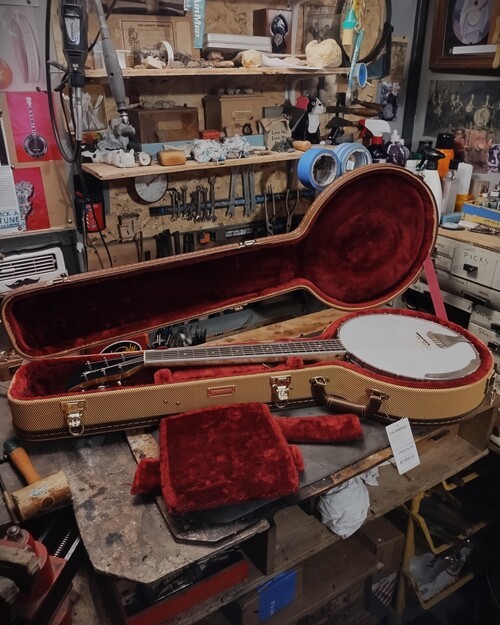
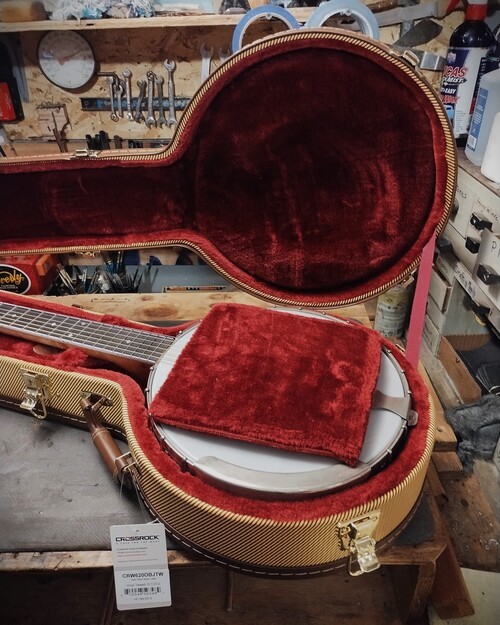
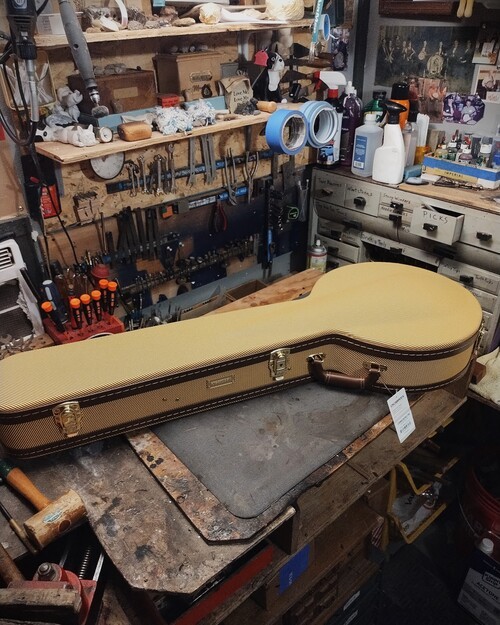
Nice open back case for 12", from eBay.
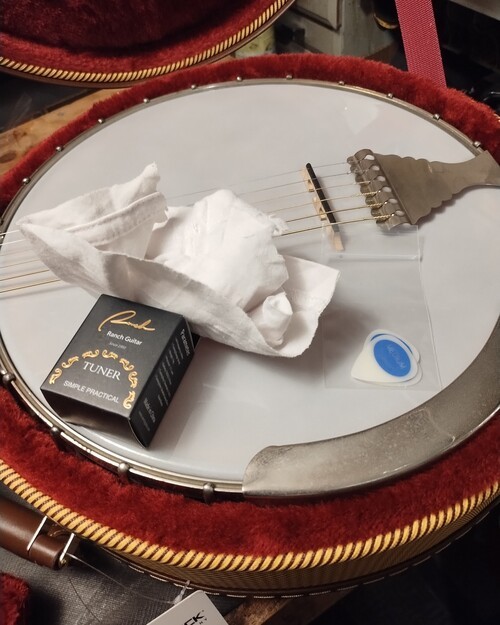
Starter pack to go into case pocket.
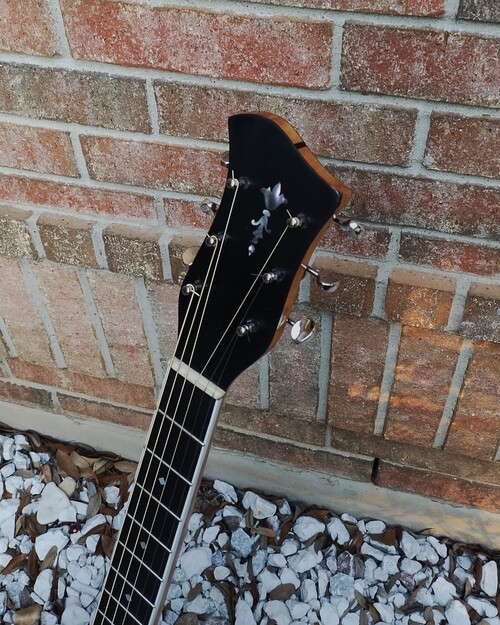
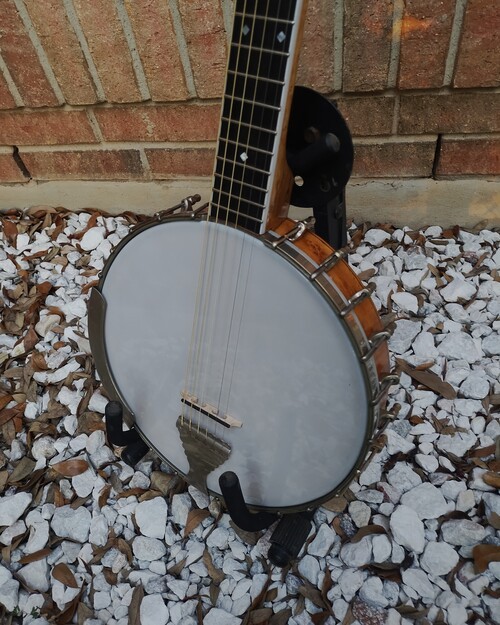
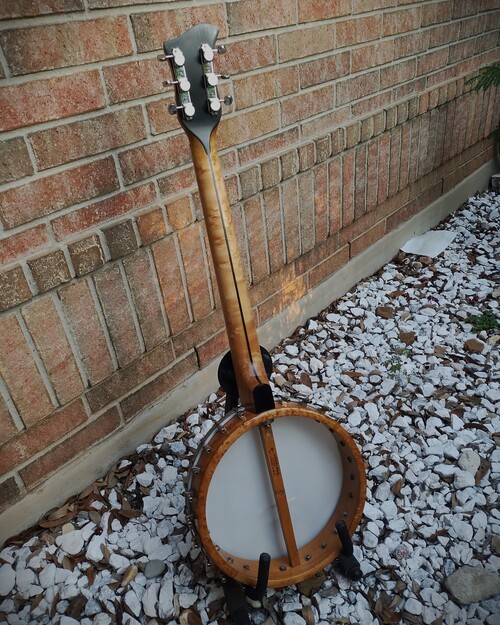
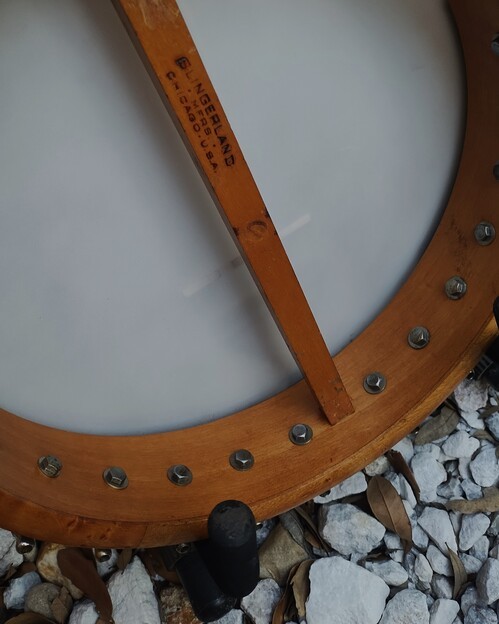
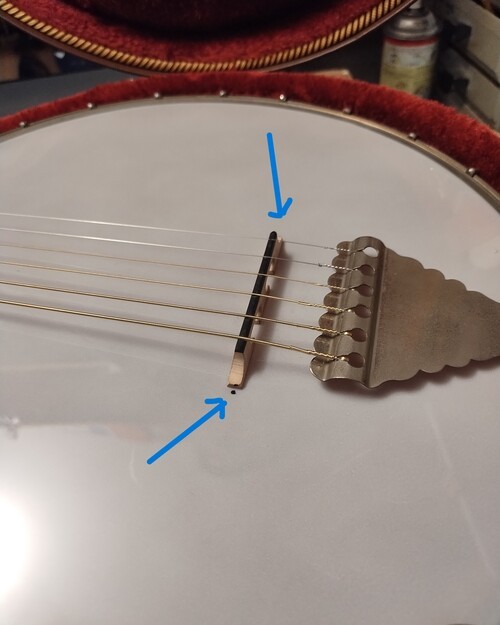
Dots on head for bridge placement.
Sound clip
https://www.youtube.com/shorts/pRuf69VShd4?feature=share
Thanks for looking and sharing,
VM
https://www.youtube.com/shorts/pRuf69VShd4?feature=share
Thanks for looking and sharing,
VM